
Description
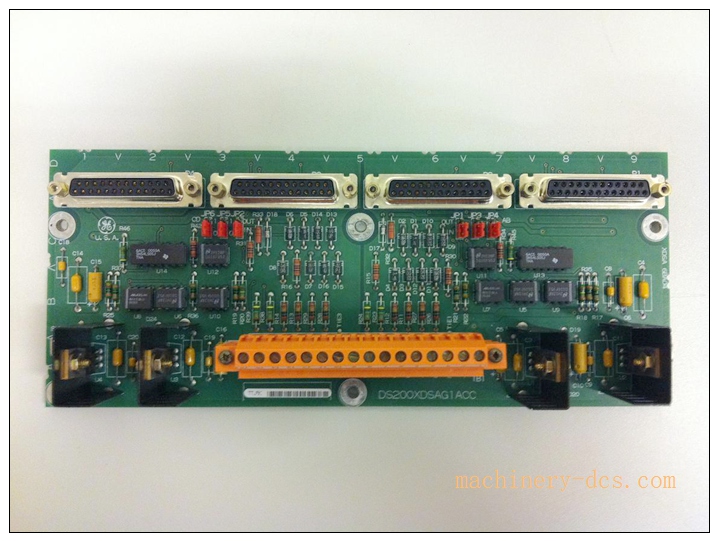
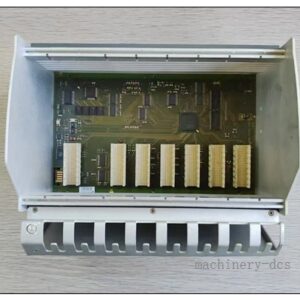
GE DS200XDSAG1ACC – Excitation Control Board for Mark V Turbine Control Systems (Speedtronic Series)
Executive Summary
The DS200XDSAG1ACC is a critical excitation control board designed by General Electric (GE) for its Mark V Series turbine control systems (part of the Speedtronic line). It serves as the core component for regulating and monitoring turbine generator excitation systems, ensuring stable voltage output, reactive power control, and overall system reliability. This module is a key element in industrial automation, particularly in power generation applications, where it bridges the generator excitation coils with the Mark V control system through precise signal processing and real-time control algorithms. The DS200XDSAG1ACC is now part of Emerson Automation’s product portfolio following GE’s acquisition.
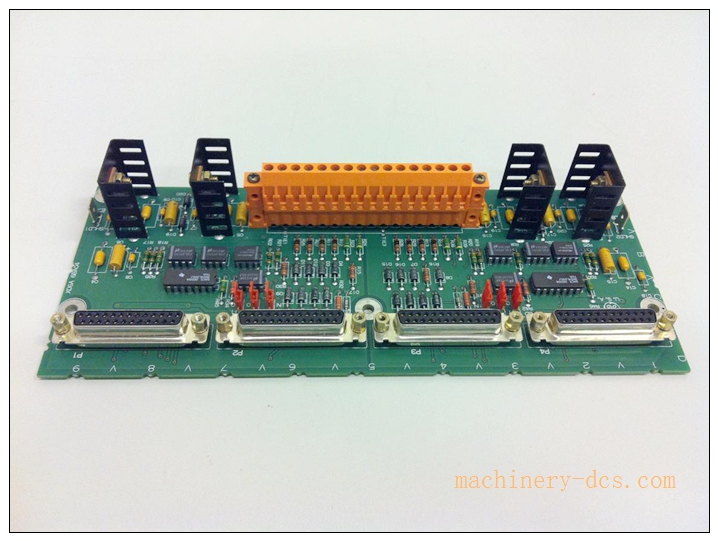
DS200XDSAG1ACC
Core Technical Specifications
| Parameter | Specification Details |
|---|---|
| Manufacturer | General Electric (GE) – now part of Emerson Automation |
| Part Number | DS200XDSAG1ACC |
| System Platform | GE Mark V Series Turbine Control Systems (Speedtronic Line) |
| Hardware Type | Excitation Control Board (UDSAG) |
| Microprocessor | 80196 (16-bit, 12 MHz) for real-time control algorithms |
| Memory | Multiple EPROM modules for firmware storage |
| Diagnostics | 21 4-character alphanumeric displays + 32 LEDs for status/fault indication |
| Input Voltage | 120V AC / 240V AC (±10%) |
| Output Current | Up to 10A (continuous) |
| Control Precision | ±0.5% (generator voltage regulation) |
| Operating Temperature | -20°C to +65°C |
| Power Consumption | 12.0 W typical |
| Dimensions | 300 mm x 250 mm x 40 mm |
| Weight | 6.80 kg |
| Certifications | UL 61010, CE, IEC 61131-2, ISO 9001:2015 (as applicable to its series) |
Key Features and Advantages
- High-Precision Control:
- Delivers ±0.5% generator voltage regulation accuracy, ensuring stable and efficient power generation.
- Regulates the generator’s magnetic field via excitation coils, directly controlling output voltage and reactive power.
- Robust Design and Durability:
- Engineered to withstand harsh industrial environments with an operating temperature range of -20°C to +65°C.
- Features galvanic isolation and high-grade components to resist electrical noise, vibration, and temperature extremes.
- Advanced Diagnostics and Monitoring:
- Equipped with a comprehensive diagnostic system: 21 alphanumeric displays and 32 LEDs provide real-time status, fault codes, and system health indicators.
- Facilitates predictive maintenance and rapid troubleshooting, significantly reducing downtime.
- Seamless System Integration:
- Designed to integrate perfectly with the GE Mark V control architecture. It communicates with the main Mark V processor (e.g., TCTG board) via a 40-pin connector, receiving setpoints (e.g., desired voltage) and transmitting status data (e.g., actual voltage, fault codes).
- Interfaces directly with generator excitation coils, often used in conjunction with EX2000/EX2100 series modules.
- Real-Time Processing:
- Powered by an Intel 80196 microprocessor (16-bit, 12 MHz), it executes complex control algorithms with deterministic timing, critical for turbine protection and stable operation.
Application Scenarios
The DS200XDSAG1ACC is primarily deployed in critical power generation and heavy industrial sectors:
- Power Generation Plants:
- Gas Turbines: Core component in GE’s Speedtronic Mark V control systems for Frame 5, Frame 6, Frame 7, and Frame 9 gas turbines used in simple and combined cycle power plants.
- Steam Turbines: Used in the excitation systems of steam turbines in thermal power plants.
- Hydroelectric Plants: Controls excitation in hydro-generators for grid synchronization and voltage stability.
- Oil & Gas Industry:
- Mechanical drive applications (e.g., compressors, pumps) powered by gas turbines, where precise speed and load control are essential.
- Industrial Process Plants:
- Large-scale cogeneration (CHP) plants in refineries, chemical complexes, and paper mills, where reliable on-site power generation is critical.
- Independent Power Producers (IPPs) & Utilities:
- Used in facilities requiring high-reliability excitation control to meet grid codes and ensure seamless power delivery.
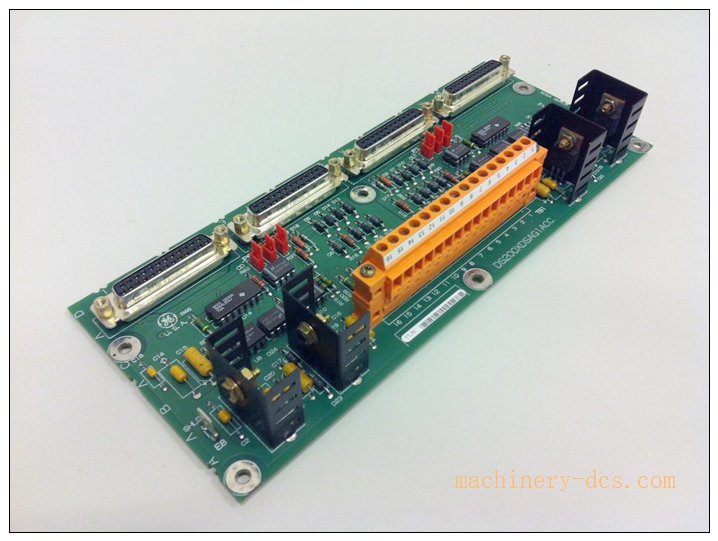
DS200XDSAG1ACC
Brand-Related Model Recommendations
The following are related modules within the GE Mark V and DS200 series ecosystem:
| Model Number | Description | Relationship to DS200XDSAG1ACC |
|---|---|---|
| DS200TCQAG1B | Analog I/O Board (RST) | Part of the DS200 series, handles analog input/output signals in the Mark V system. |
| DS2020EXPSG3 | Exciter Power Supply Module | Provides power to the excitation system, often works alongside the excitation control board. |
| DS2020FECNRP025A | Field Excitation Module (25A) | Supplies higher field current (25A) to the generator excitation coils, complementary to the control board. |
| DS200LPPA340A | Line Protection Module | Provides protection functions for the excitation system, ensuring system safety. |
| DS200PDMAG3 | Power Distribution Module | Distributes power within the turbine control cabinet, supplying the and other modules. |
Frequently Asked Questions (FAQ)
Q1: What is the primary function of the module?
A: Its primary function is to control and regulate the excitation current supplied to the generator’s field coils. By doing so, it precisely controls the generator’s output voltage and reactive power, ensuring stable synchronization with the electrical grid and protecting the generator during disturbances.
Q2: How does the communicate within the Mark V system?
A: It communicates with the Mark V main controller through a 40-pin ribbon cable connector. It receives voltage and reactive power setpoints from the main processor and returns real-time data on excitation parameters, fault conditions, and module status.
Q3: What are the common diagnostic capabilities of this board?
A: The board features an extensive diagnostic system:
- 21 alphanumeric displays show specific fault codes, operational messages, and parameter values.
- 32 LEDs provide instant visual indication of board status, communication health, and various fault conditions (e.g., overcurrent, undervoltage, communication loss).
Q4: Is the still supported by GE?
A: The module is confirmed to be End-of-Life (EOL) as of March 18, 2025. While GE may provide limited support for existing installed bases, new modules are typically sourced from specialized industrial automation suppliers offering surplus, refurbished, or aftermarket replacements. Always ensure you are sourcing from a reputable vendor.
Q5: What are the key steps for troubleshooting a suspected faulty ?
A: 1. Consult the diagnostics: Use the alphanumeric displays and LEDs to identify specific fault codes.
2. Check inputs and outputs: Verify that all input power (120/240V AC) is within tolerance and that output connections to the excitation coils are secure and not shorted.
3. Inspect for physical damage: Look for burn marks, bulging capacitors, or other signs of component failure.
4. Verify communication: Check the ribbon cable connections to the Mark V main processor for proper seating and continuity.
5. Review system event logs: Check the Mark V controller’s event history for related faults that occurred around the same time.
6. Consider replacement: If diagnostics point to a board failure and simple fixes don’t resolve it, replacement is often the most efficient solution given the complexity of the board.
💎 Conclusion
The is a highly specialized and critical component within GE’s Mark V turbine control systems, renowned for its precision control, robust design, and comprehensive diagnostic capabilities. Its role in regulating generator excitation is fundamental to the stable and efficient operation of power generation assets worldwide. While now an EOL product, it continues to be a vital spare part in maintaining the operational integrity of legacy GE gas turbine installations. For any maintenance, repair, or replacement needs, partnering with experienced industrial automation suppliers is essential to ensure compatibility and reliability.

 Start Chat


 Send an Email