
Description
Triconex 3101 Trident Main Processor Module, TMR Safety Controller CPU Module
Product Description
The Triconex 3101 is the triple modular redundant (TMR) main processor module for the Triconex Trident safety instrumented system. It serves as the central CPU executing safety logic, control algorithms, sequence of events (SOE) capture, and I/O voting management. This module integrates dual MPC860 processors: the SX application processor runs user safety logic, while the IOX processor manages I/O bus communication and diagnostics. Three independent MP modules operate in parallel with 2oo3 voting to tolerate single-point hardware faults without disrupting safety functions. It stores user application programs, SOE logs and retentive variables in CRC-protected flash, DRAM and NVRAM memory. Front-panel LEDs display operational status including PASS, FAULT, ACTIVE, PROGRAM and ALARM states. It provides serial links, TriStation programming ports and I/O bus interfaces to communicate with Trident I/O modules and external HMI systems. The 3101 is a legacy Trident processor, end-of-life, widely used in retrofitting and spare part maintenance for existing SIS installations.
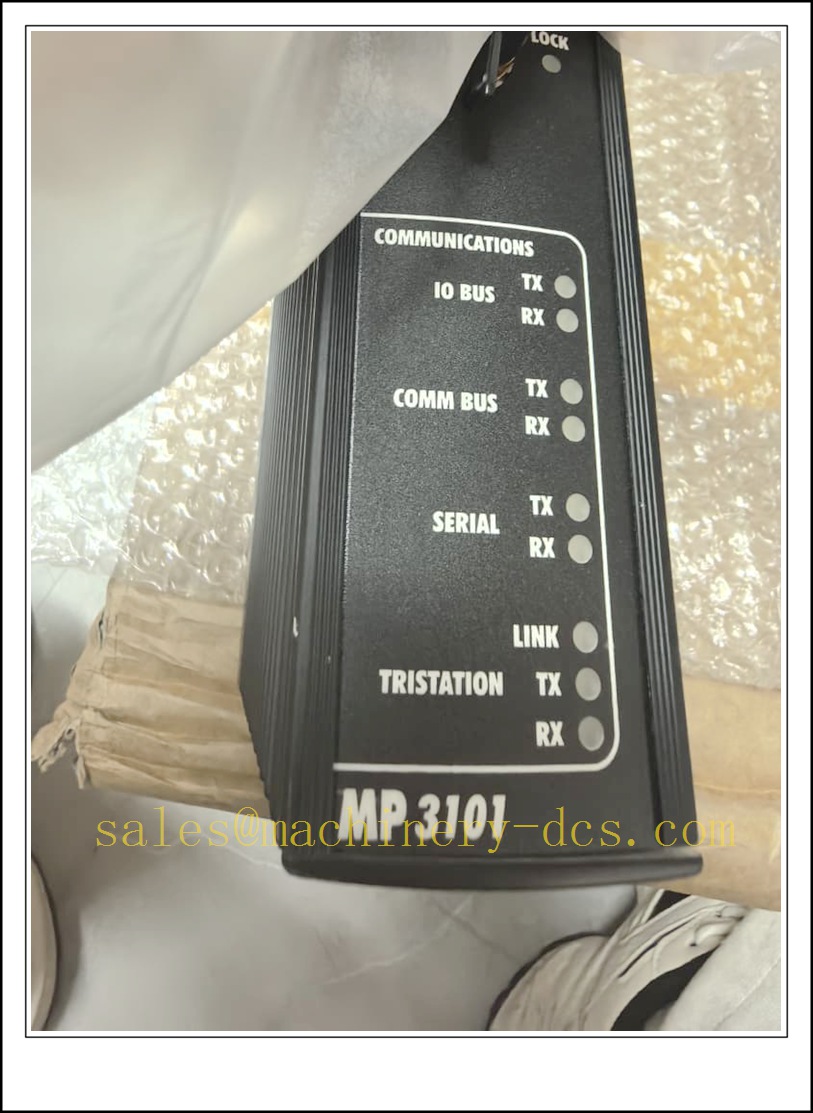
TRICONEX 3101
Technical Specifications
- Brand: Triconex (Schneider Electric)
- Model: 3101
- Module Type: Trident Main Processor (MP)
- Architecture: TMR Triple Modular Redundancy, 2oo3 voting
- Processor: Dual Motorola MPC860, 32-bit, 50 MHz (SX + IOX)
- Flash PROM: 6 MB, CRC protected for firmware and application
- SX DRAM: 16 MB, parity checked, for logic execution and SOE
- IOX DRAM: 16 MB, parity checked, for I/O management
- NVRAM: 8 KB, CRC protected, retentive variables
- Shared Memory: 128 KB parity RAM between SX and IOX
- Diagnostic Bus: 2 Mbps HDLC for I/O diagnostic data
- Nominal Logic Power: 24 VDC
- Operating Voltage Range: 19.2 VDC ~ 30 VDC
- Max Power Consumption: 8 W
- Hot Swap: Supported within a redundant Trident MP group
- Operating Temperature: 0 °C to +60 °C
- Storage Temperature: -40 °C to +85 °C
- Relative Humidity: 5% to 95% non-condensing
- Safety Certification: SIL 3 per IEC 61508
- Programming Software: TriStation 1131 for Trident
- Communication Ports: Serial link, TriStation programming port, I/O bus
- Weight: Approximately 1.5 kg
Application Scenarios
- Legacy petrochemical and refinery ESD emergency shutdown systems
- Onshore oil & gas wellhead and process safety interlock retrofits
- Power plant boiler protection and turbine safety systems using Trident
- Burner Management System (BMS) for existing Trident SIS cabinets
- Chemical plant safety instrumented functions requiring SIL 3 fault tolerance
- Pipeline pressure safety and fire & gas systems for maintenance spare replacement
- Hazardous Class I Div 2 / Zone 2 safety systems based on Trident platform
- Critical process sites supporting SOE sequence-of-events fault diagnostics
8 Related Triconex Model Recommendations
- 3102 – Trident Redundant Communication Module
- 3503E – 32-Point Commoned Digital Input Module
- 3603E – 16-Channel Commoned Digital Output Module
- 3703E – 8-Channel Analog Input Module
- 3704E – 8-Channel Analog Output Module
- 4000098-510 – Tricon / Trident Redundant Power Supply
- 3501 – Trident Chassis and Backplane Assembly
- 3805E – Tricon Modern Main Processor (Replacement Platform)
Compatibility & Installation Pitfalls
Compatibility
- Designed exclusively for the Triconex Trident chassis and Trident backplane; not compatible with the newer Tricon 3805E rack family.
- Requires TriStation 1131 software for programming and download; modern TriStation for Tricon will not work.
- Must be deployed in a TMR triplet of three 3101 processors to achieve SIL 3 voting.
- Works with Trident-series I/O modules only; Tricon 3700 / 3600 family I/O cannot be mixed on the same backplane.
- Application logic resides in the processor flash; spare replacement requires re-download of the validated Trident application.
- Firmware must match the Trident chassis backplane and I/O module firmware revision to preserve SIL certification.
Installation Pitfalls
- Hot-swap is only safe when the remaining two MPs are healthy and maintaining voting; avoid hot-swap during a single-MP fault condition.
- This is a legacy EOL processor; verify spare availability and obsolescence management before committing to long-term projects.
- Incorrect TriStation 1131 version will fail to communicate or corrupt application firmware; do not use Tricon TriStation releases.
- Serial and programming cables are Trident-specific; generic serial adapters may introduce communication noise and failed downloads.
- The front-panel ACTIVE LED only indicates master MP status; a PASS LED does not prove the user safety logic is validated.
- NVRAM retentive variables can be cleared on power cycle under certain fault conditions; critical trip setpoints must be stored in application logic.
- Ground loops on programming or serial communication lines cause intermittent SOE timestamp errors and MP communication drops.
- Mismatched firmware revisions between 3101 MPs in the same triplet can break voting and invalidate SIL 3 integrity.
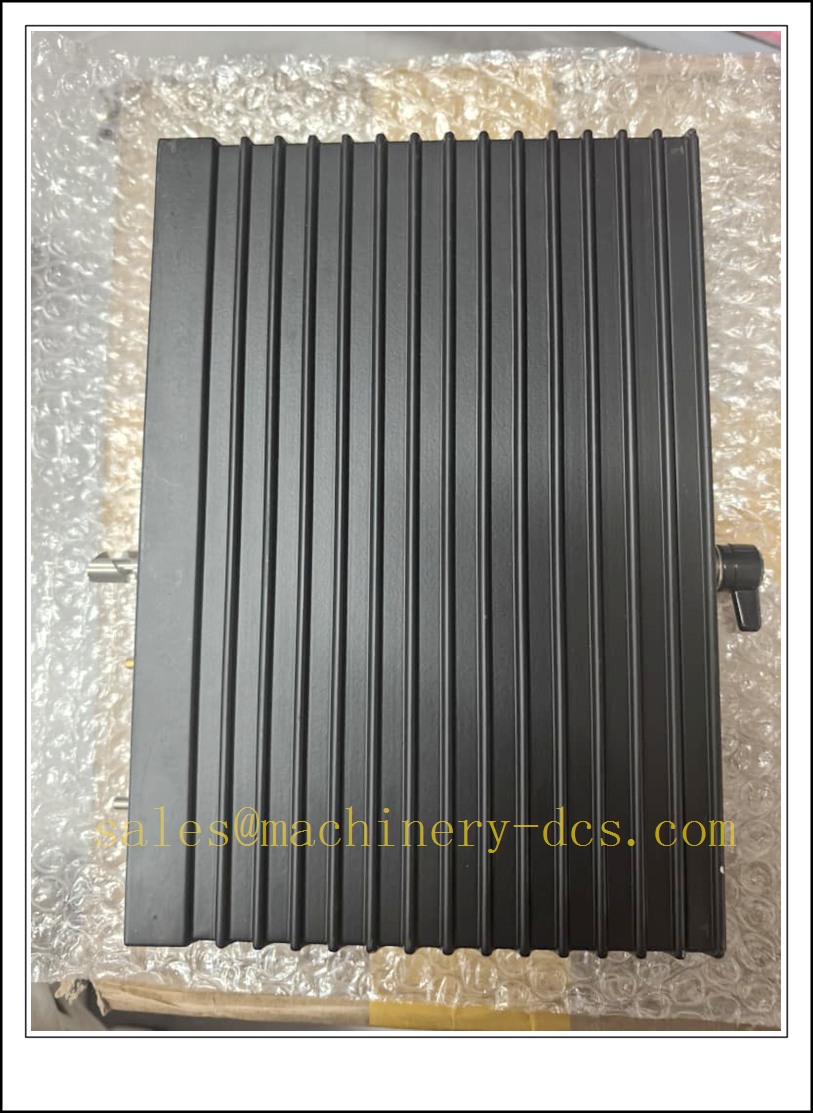
TRICONEX 3101
Standard Operating Procedure (SOP)
SOP for 3101 Trident Main Processor Inspection, Installation and Functional Test
- Pre-Installation Inspection Inspect the module for physical damage, connector pin deformation or contamination. Confirm part number is 3101 for Trident platform. Review existing Trident firmware compatibility and TriStation 1131 software revision. Secure the validated application source file and SOE configuration. Apply lockout-tagout to all associated ESD safety loops before rack access.
- Rack Installation Power down the Trident chassis if removing the last healthy processor of the TMR triplet. Insert the 3101 into the designated MP slot and fasten the module latch. Confirm mechanical keying matches the Trident backplane. Connect programming and serial communication cables per approved drawings, segregate low-speed communication wiring from high-power AC cables.
- Software Download and Configuration Launch TriStation 1131 and connect to the Trident rack. Upload the existing validated safety application. Download the application firmware and logic to the new 3101 processor. Verify all three MPs synchronize application code and reach PASS status. Resolve firmware mismatch, parity or bus fault alarms. Archive the compiled application and SOE configuration for IEC 61508 audit.
- Processor Voting and Diagnostics Test Force simulated I/O alarm conditions to confirm 2oo3 voting operates correctly across the three 3101 modules. Isolate one processor to simulate a fault and confirm the remaining two MPs continue executing safety logic without spurious trips. Verify SOE timestamp capture and fault logging function as expected. Record voting response and diagnostic results in the SIS proof-test log.
- I/O and Interlock Functional Verification Initiate test trip conditions on field inputs. Confirm the 3101 executes the safety sequence and drives corresponding I/O modules to the correct failsafe state. Verify fault alarms propagate to the HMI and front panel LEDs. Confirm loss-of-MP diagnostics trigger the appropriate maintenance alert without tripping the safety function.
- Return to Service Clear all test forces, fault latches and temporary SOE test events. Remove lockout tags and restore the SIS safety interlock to online mode. Monitor MP PASS/FAULT status, I/O bus health and SOE logging for the required observation period. Notify operations that Trident safety logic execution is active.
- Periodic Maintenance and Replacement During planned outages, inspect backplane connectors, power wiring and communication terminations. Execute TMR fault insertion tests per the site SIL proof-test schedule. If a 3101 reports unrecoverable parity or bus faults, confirm the other two MPs are healthy before hot-swap. After replacement, download the validated application, confirm triplet synchronization, re-run voting and full interlock test before releasing the processor to safety duty.

 Start Chat


 Send an Email