
Description
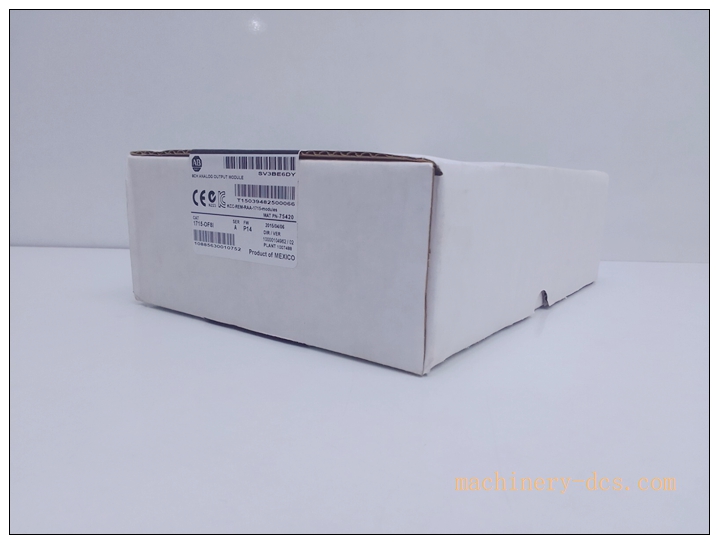
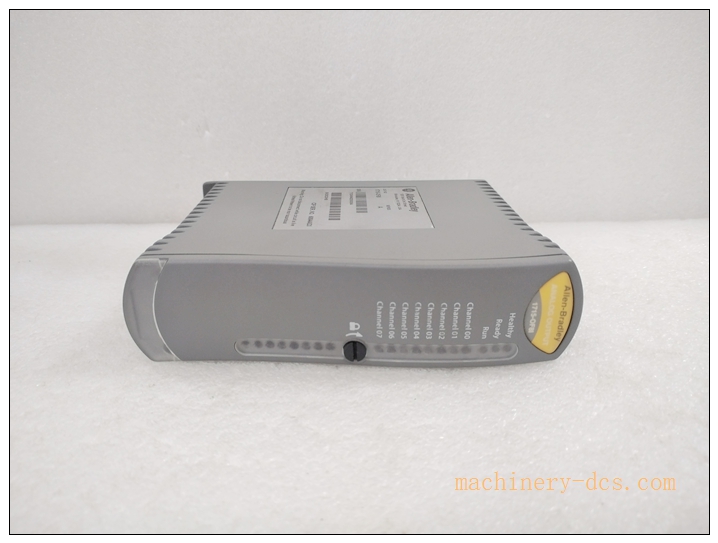
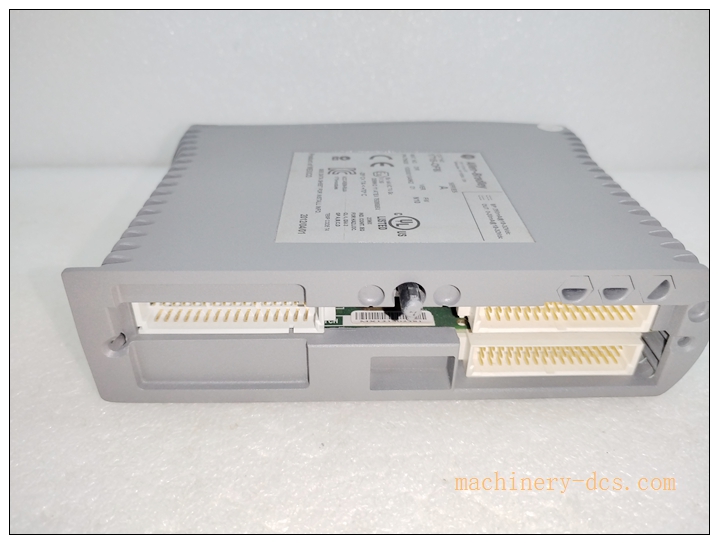
Product Profile: Allen-Bradley 1715-OF8I Redundant Analog Output Module
Title Description
Allen-Bradley 1715-OF8I Redundant Analog Output Module – A high-reliability, 8-point isolated analog output interface designed for critical control applications within the Allen-Bradley 1715 Redundant I/O System
Executive Summary
The 1715-OF8I is a specialized analog output module developed by Rockwell Automation for its 1715 Redundant I/O System. It provides eight individually isolated analog output channels, configurable for either voltage or current signals, to drive field devices in safety-critical and process-intensive industries. Its core value lies in its redundant architecture, which significantly enhances system availability and reliability by preventing a single point of failure from disrupting control processes. This makes it particularly suitable for applications where downtime is unacceptable, such as in process industries, critical manufacturing, and emergency shutdown systems.
1715-OF8I
Core Technical Specifications
| Specification | Details |
|---|---|
| Product Name | 1715-OF8I Redundant Analog Output Module |
| Manufacturer | Rockwell Automation (Allen-Bradley) |
| System Compatibility | Allen-Bradley 1715 Redundant I/O System |
| Output Channels | 8 individually isolated points |
| Output Types | Voltage: -10 to 10V DC, 0 to 10V DC, 0 to 5V DC Current: 0 to 20 mA, 4 to 20 mA (Note: 4-20mA is a subset of 0-20mA) |
| Resolution | 16-bit across all ranges |
| Data Format | IEEE 32-bit floating point |
| Conversion Method | R-Ladder DAC (monotonic, no missing codes) |
| Calibrated Accuracy | 0.05% @ 25°C (77°F) |
| Module Error | 0.1% over full temperature range |
| Isolation | Output-to-Backplane: 250V continuous (reinforced insulation) Output-to-Output: 250V continuous (basic insulation) |
| Open Circuit Detection | Yes (for current outputs) |
| Short Circuit Protection | Yes (for voltage outputs) |
| Overvoltage Protection | ±30V DC (voltage/current modes) |
| Drive Capability | Current Output: 0 to 1000 Ω Voltage Output: >1000 Ω |
| Module Scan Time | 1 ms minimum |
| Settling Time | <2 ms to 95% of final value with resistive loads |
| Power Dissipation | Voltage mode: ~5.4-6.3W Current mode (dependent on load): ~5.4-10.2W |
| Thermal Dissipation | Voltage mode: 18.4 BTU/hr Current mode (dependent on load): 18.4-22.9 BTU/hr |
| Current Draw | Backplane (5.1V DC): 200 mA External (24V DC): 220mA to 385mA (dependent on load and mode) |
| Operating Temperature | 0 to +60°C (+32 to +140°F) |
| Relative Humidity | 5 to 95% non-condensing |
| Connection Type | Removable terminal block (RTB) with screw or spring clamp options |
| Wire Size | 0.33 to 2.1 mm² (22 to 14 AWG) solid or stranded copper wire |
Key Features and Advantages
- Redundant System Architecture: As part of the 1715 Redundant I/O System, it offers built-in redundancy for critical control loops. If a primary module fails, a secondary module can take over seamlessly, maximizing system uptime and availability.
- Channel-to-Channel Isolation: Each of the 8 output channels is electrically isolated from the others and from the backplane. This prevents ground loops, reduces noise, and enhances safety by ensuring a fault on one channel does not affect others.
- Flexible Signal Configuration: Each channel can be individually configured for either voltage or current output, supporting a wide range of field devices without needing different module types.
- High Precision and Reliability: With 16-bit resolution and 0.05% calibrated accuracy, it delivers precise analog signals critical for maintaining stable process control. The R-Ladder DAC ensures monotonic performance without missing codes.
- Robust Diagnostics and Protection: The module features open circuit detection for current outputs and short circuit protection for voltage outputs. It also includes overvoltage protection (±30V DC) to safeguard the module from transient spikes. Comprehensive diagnostic information helps quickly identify faults.
- Fast Response and Update: A module scan time of 1 ms and fast settling time (<2 ms) ensure that control signals are updated and delivered to field devices with minimal latency, suitable for high-speed control applications.
- Design for Harsh Environments: It is built to withstand industrial environments with a wide operating temperature range and high immunity to electrical noise and vibration.
Application Scenarios
The 1715-OF8I is designed for critical industrial automation applications where reliability and safety are paramount:
- Process Control Systems: Used in continuous and batch processes (e.g., chemical, petrochemical, pharmaceutical, food & beverage) for precise control of valves, pumps, actuators, and other final control elements that require analog signals.
- Safety Instrumented Systems (SIS): Its redundant and isolated design makes it suitable for applications where safety is critical, such as emergency shutdown (ESD) systems, fire & gas systems, and other safety-related control functions.
- Critical Manufacturing: Employed in discrete manufacturing industries (e.g., automotive, aerospace) for controlling critical production equipment where downtime must be minimized.
- Power Generation & Distribution: Used for control and protection systems in power plants and substations, driving actuators and providing setpoints to governors, exciters, and other critical equipment.
- Water and Wastewater Management: Applied for controlling flow rates, pressures, and levels in treatment and distribution systems, ensuring reliable operation of essential infrastructure.
1715-OF8I
Recommended Related Models (Brand: Allen-Bradley / Rockwell Automation)
- 1756-OF8I: A very similar ControlLogix 8-Point Isolated Analog Output Module. It shares many technical specifications (8 isolated channels, voltage/current outputs, 16-bit resolution) but is designed for the ControlLogix platform rather than the 1715 Redundant I/O System. It is a good alternative for non-redundant ControlLogix applications.
- 1715-’s Complementary 1715 Modules:
- 1715-IF8I: The corresponding 8-Point Isolated Analog Input Module for the 1715 Redundant I/O System, providing a complete redundant I/O solution.
- 1715-IB16I / 1715-OB16I: Digital I/O modules for the 1715 system.
- 1715-PB or 1715-A series modules: Power supply and other necessary system modules.
- 1756-IF8I: The ControlLogix equivalent to the 1715-IF8I, an 8-point isolated analog input module.
Frequently Asked Questions (FAQ)
Q: What is the primary difference between the 1715- and the 1756-?
A: The main difference is the system they belong to. The is specifically designed for the 1715 Redundant I/O System, which offers inherent redundancy for high-availability applications. The is part of the ControlLogix platform, which does not have the same built-in hardware redundancy (though redundancy can be achieved through system design using multiple controllers and I/O). Functionally, they are very similar 8-point isolated analog output modules with comparable specifications.
Q: Can the 1715- be used in a standard ControlLogix chassis?
A: No. The 1715- is mechanically and electrically incompatible with ControlLogix chassis (1756 chassis) and requires a 1715 Redundant I/O chassis and associated redundant communication modules to function correctly. Attempting to install it in a ControlLogix rack will not work and may cause damage.
Q: What type of terminal block is required for the 1715-?
A: The module uses a Removable Terminal Block (RTB). The specific part number depends on the connector type and manufacturer, but compatible options typically include 1756-TBNH (High-density RTB with screw terminals) or 1756-TBSH (High-density RTB with spring-clamp terminals), which are also used for ControlLogix modules. Always verify compatibility with the 1715 system documentation.
Q: How is the redundancy implemented with the 1715-?
A: Redundancy is a system-level feature of the 1715 I/O system. It typically involves two identical 1715- modules installed in separate redundant I/O racks, each connected to a separate controller or communication path. The system manages the switchover between the primary and secondary modules in case of a fault, ensuring continuous operation. The modules themselves do not “redundantly” drive the same output simultaneously but rather work in a coordinated pair.
Q: What is the maximum cable length allowed for the analog output signals?
A: The maximum cable length is not explicitly specified in the search results for the 1715- module itself. However, for analog signals in general, the maximum length depends on the output mode, wire gauge, and acceptable signal degradation. As a practical guideline, for 4-20mA current loops, lengths up to 1000 meters (3000 feet) are possible with proper wire. For voltage signals (0-10V), lengths should typically be kept shorter (e.g., 10-50 meters) to minimize voltage drop and noise pickup. Always consult the specific field device requirements and system design guidelines.
Q: Is the module hot-swappable?
A: The 1715- is part of a redundant I/O system designed for high availability. While specific hot-swap capabilities depend on the overall 1715 system configuration and design, redundant I/O systems generally allow for the replacement of faulty modules without completely shutting down the process, as the redundant module can maintain control. However, the action of replacing a module should always be performed according to the manufacturer’s procedures and safety guidelines to ensure it is done correctly and safely.

 Start Chat


 Send an Email