
Description
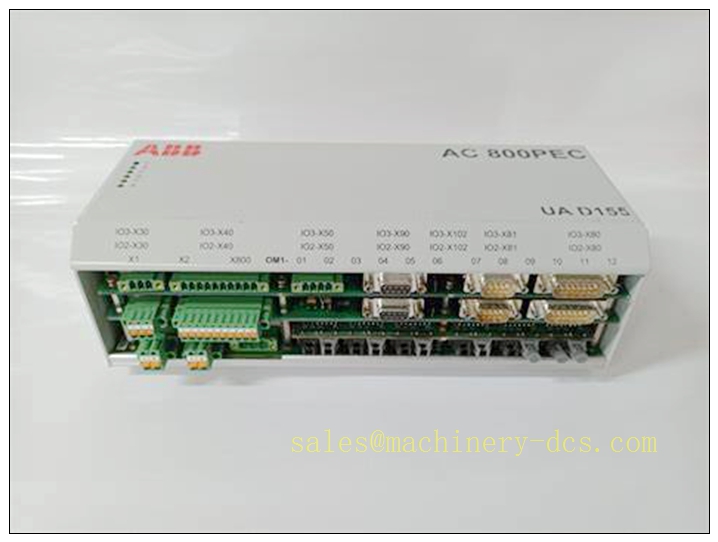
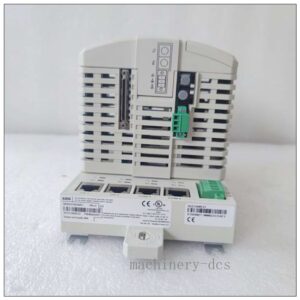
ABB UAD155A0111 Communication I/O Module for Industrial Control and Automation Systems
Product core overview
The UAD155A0111 is an ABB industrial communication input/output module used to manage signal exchange between controllers, field devices, and automation networks. It is typically applied in process control, drive supervision, motor management, and equipment monitoring where reliable real-time I/O handling and stable communication integration are required.
Publicly available product listings describe it mainly as a communication I/O module for industrial automation systems. Some online sources also associate the same code with drive or stepper-motor applications, but those descriptions conflict with the more consistent ABB industrial-module references. For engineering use, always confirm the exact function, firmware, and wiring from the official ABB datasheet or nameplate before installation.
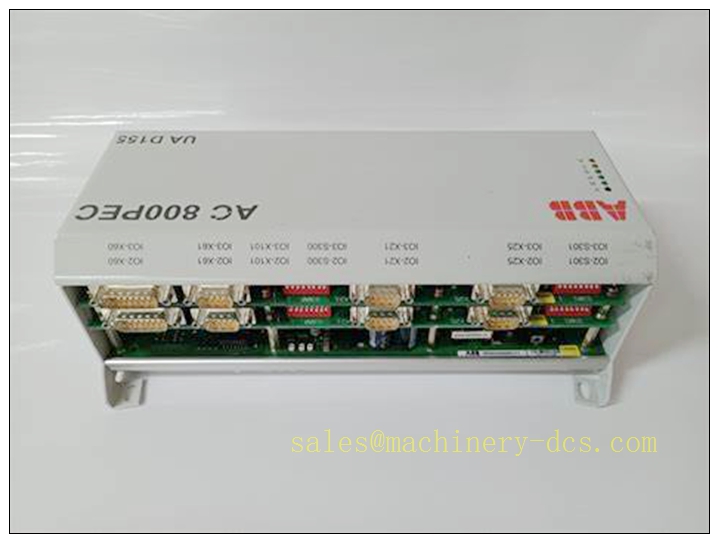
UAD155A0111
Key technical specifications
| Item | Typical information |
|---|---|
| Manufacturer | ABB |
| Model | UAD155A0111 |
| Part number | 3BHE029110R0111 |
| Product type | Communication I/O module |
| Typical function | Digital I/O handling, communication signal processing, controller integration |
| Supported interfaces | Ethernet, RS-232, RS-485 depending on configuration |
| Application systems | ABB industrial control platforms, including 800xA-related environments |
| Operating environment | Industrial-grade; vibration-resistant and interference-resistant design |
| Typical applications | Power, metallurgy, oil & gas, cement, mining, paper, water treatment |
Exact electrical ratings, terminal definitions, protocol support, firmware version, and environmental limits should be verified against the official ABB documentation for the specific hardware revision.
Recommended ABB same-family / related modules
These are representative ABB modules commonly used in similar industrial control and communication applications. They are not direct substitutes for UAD155A0111 unless confirmed by ABB engineering data.
- CI854K01 — Communication interface/baseplate module for AC800M systems.
- CI801 — Communication interface module for AC800M.
- CI810 — Communication interface module for AC800M.
- CI840A — Communication interface module for AC800M.
- DI810 — Digital input module for AC800M.
- DO810 — Digital output module for AC800M.
- AI810 — Analog input module for .
- AO810 — Analog output module for .
Professional quality control test SOP
- Incoming inspection
Verify model, part number, serial number, packaging condition, accessories, and certificate of conformity. Confirm the module matches the purchase order and approved drawing. - Visual and mechanical check
Inspect housing, connectors, terminals, mounting clips, labels, and PCB condition. Ensure there is no corrosion, deformation, loose terminals, or damaged pins. - Power-up test
Apply the specified supply voltage only after confirming wiring polarity and insulation. Check power LED status, startup sequence, and abnormal heating or noise. - Communication interface test
Verify Ethernet, RS-232, RS-485, or other configured interfaces. Confirm link status, baud rate, IP address, protocol handshake, and data exchange with the host controller. - I/O channel verification
Test each digital input and output channel. Validate signal levels, response time, status feedback, and correct mapping in the control system. - Functional integration test
Simulate normal operating conditions with the target controller or DCS/PLC platform. Confirm command execution, status reporting, alarm handling, and data consistency. - Protection and fault simulation
Test communication loss, power interruption, short-circuit protection, overcurrent behavior, and fault recovery. Record alarm codes and recovery time. - Environmental and reliability checks
Where required, perform temperature cycling, vibration, humidity, and long-duration aging tests according to project specifications. - Final documentation
Record test results, firmware version, configuration parameters, serial number, inspector ID, and pass/fail conclusion. Attach calibration certificates if applicable.
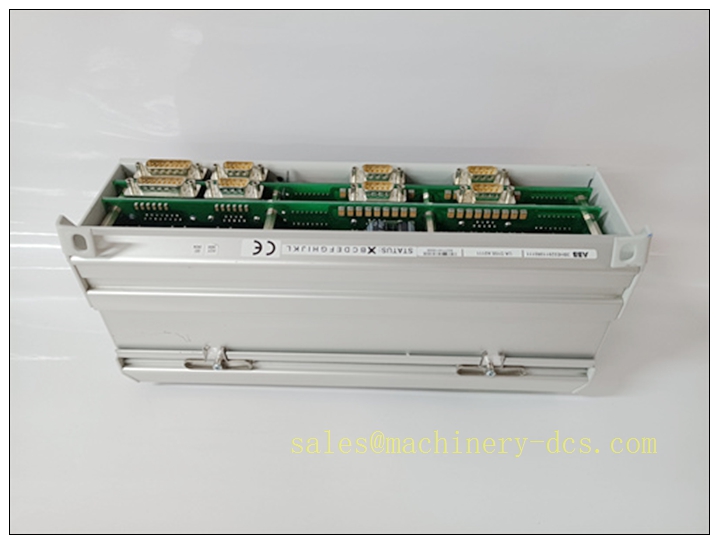
UAD155A0111
Application scenarios and features
- Power generation
Used for fan, pump, and auxiliary equipment monitoring in boiler and turbine systems. Helps improve operational visibility and control stability. - Metallurgy and steel
Supports rolling mill, continuous casting, and furnace auxiliary control systems where high reliability and fast signal response are required. - Oil, gas, and chemical processing
Suitable for compressor, pump, and pipeline equipment monitoring with remote configuration and diagnostic support. - Cement and building materials
Applied in kiln, crusher, and mill control auxiliaries to support continuous production and energy-efficient operation. - Mining and material handling
Used in conveyor, hoist, and ventilation systems requiring robust communication and real-time I/O performance. - Paper and chemical fiber
Supports tension control, synchronization, and drive supervision in continuous production lines. - Municipal and environmental protection
Applied in wastewater treatment plants for pump, blower, and mixer monitoring.
Key features
- Industrial-grade communication and I/O integration
- Supports multiple interface types depending on configuration
- Real-time signal processing for automation systems
- Remote monitoring, configuration, and diagnostics
- Strong anti-interference design for harsh environments
- Compatible with ABB control ecosystems such as 800xA
FAQ
What is the UAD155A0111?
It is an ABB communication I/O module used in industrial automation systems to process input/output signals and support communication between controllers and field devices.
Is UAD155A0111 a drive or an I/O module?
Most product references describe it as an ABB communication I/O module, while some online sources link it to drive or stepper-motor products. Because these descriptions conflict, always confirm the exact product type using the official ABB datasheet, nameplate, and part number 3BHE029110R0111.
Which protocols does it support?
Listings mention Ethernet, RS-232, and RS-485 support, but the actual supported protocols depend on hardware revision and firmware. Confirm protocol details before system integration.
Can it replace other ABB I/O modules directly?
Not automatically. Compatibility depends on controller platform, backplane type, firmware, terminal layout, and software configuration. ABB documentation or a qualified system integrator should verify substitution.
What industries commonly use it?
Typical applications include power generation, metallurgy, oil and gas, cement, mining, paper, and wastewater treatment.
How should it be tested before installation?
Perform incoming inspection, visual check, power-up test, communication verification, I/O channel test, fault simulation, and final documentation. Follow site-specific QA/QC standards and ABB installation guidelines.

 Start Chat


 Send an Email