
Description
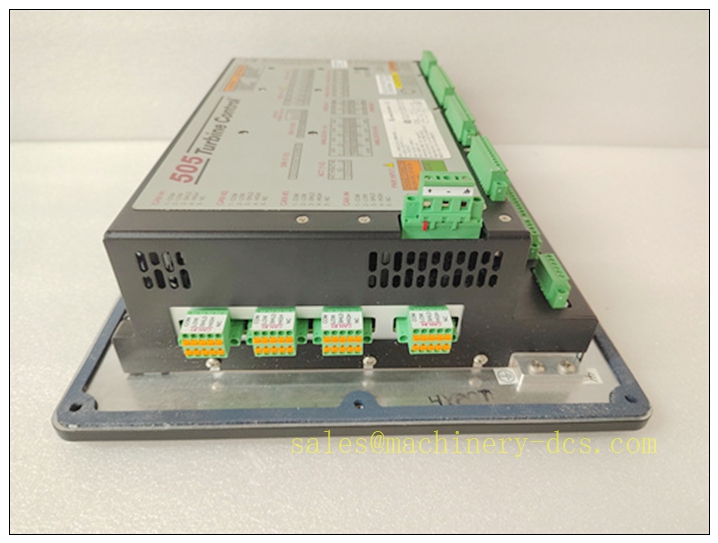
Woodward 8200-1300 / 505D LVDC Digital Steam Turbine Controller
Product core overview
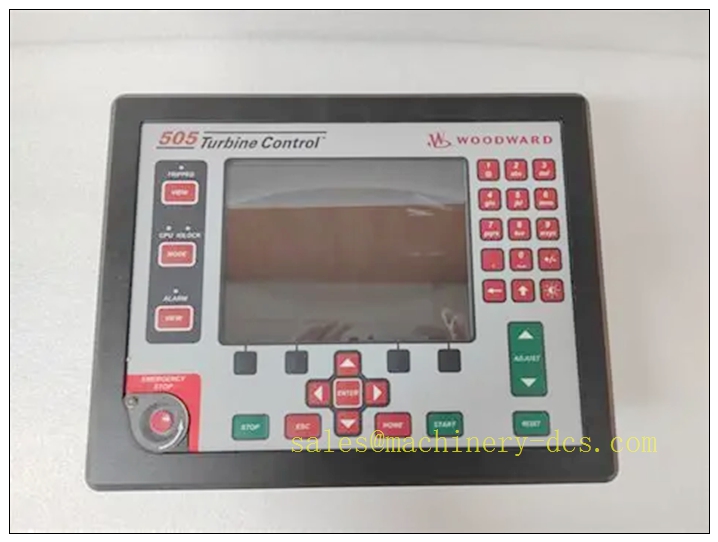
The 8200-1300 is a Woodward 505 series digital turbine controller, specifically the 505D variant with low-voltage DC power input. It is designed to control single-actuator or split-range dual-actuator steam turbines in power generation, cogeneration, and mechanical-drive applications. The controller provides speed/load regulation, PID-based closed-loop control, configurable I/O, and communication integration with plant DCS/SCADA systems.
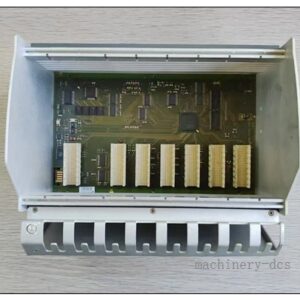
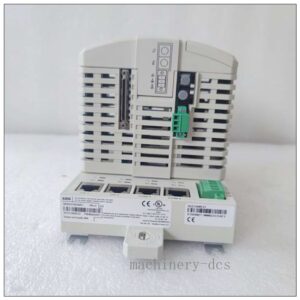
WOODWARD 8200-1300
Key technical specifications
| Item | Typical information |
|---|---|
| Brand | Woodward |
| Model | 8200-1300 |
| Product family | 505D Digital Turbine Controller |
| Power supply | LVDC 18–32 Vdc |
| Control application | Single or split-range dual-actuator steam turbines |
| Operator display | 2-line text display, 24 characters per line |
| Control capability | Up to five PID controllers, including speed/load, cascade, AUX1, AUX2 |
| Communication interfaces | Modbus, RS-232, Ethernet depending on configuration |
| Operating temperature | -10°C to 60°C |
| Protection rating | IP56 |
| Approximate size | 15.2 cm × 5.1 cm × 20.3 cm |
| Approximate weight | 0.7 kg |
| Origin | United States |
Exact I/O count, terminal assignment, firmware revision, hazardous-area approvals, and communication options must be confirmed from the official Woodward datasheet and nameplate before commissioning.
Recommended Woodward same-family / related models
These are representative Woodward 505-series controllers commonly used in similar turbine control applications. They are not direct drop-in replacements without configuration review.
- 8200-1301 — 505D controller with AC/DC power supply, 88–132 Vac or 90–150 Vdc.
- 8200-1302 — 505D LVDC controller with marine/ATEX compliance, 18–32 Vdc.
- 505XT — Extended turbine controller for extraction/induction steam turbine applications.
- 505E — Advanced digital turbine controller with expanded I/O and communication capability.
- 9907-162 — Legacy Woodward 505 controller, previously replaced by 505D versions.
- 9907-164 — Legacy Woodward 505 controller, superseded by newer 505/505D hardware.
- 9907-1200 — Woodward CPC II current-to-pressure converter, often paired with 505 controllers for actuator interface.
- 505 Panel / Operator Interface variants — Local operator panel options for 505-series configuration and monitoring.
Professional quality control test SOP
- Incoming inspection
Verify model 8200-1300, serial number, firmware/revision, power rating label, accessories, and certificate of conformity. Confirm LVDC 18–32 Vdc specification matches site power design. - Visual and mechanical inspection
Check enclosure, display window, terminal blocks, communication ports, mounting hardware, and nameplate. Ensure there is no moisture ingress, corrosion, cracked connectors, or damaged terminals. - Power supply verification
Apply 18–32 Vdc through a regulated DC source. Confirm correct polarity, inrush behavior, power LED indication, and display startup. - Display and keypad check
Verify display contrast, character readability, menu navigation, parameter entry, and fault message display. - I/O channel validation
Test analog inputs, speed inputs, relay outputs, and actuator drive signals according to the configured application. Confirm scaling, polarity, and alarm thresholds. - Speed sensing test
Simulate MPU/proximity speed signals and verify measured speed, overspeed detection, and trip response. - PID control loop test
Configure speed/load PID and test response to setpoint changes, load disturbances, and actuator feedback. - Communication interface test
Verify Modbus, RS-232, and Ethernet connectivity where applicable. Confirm address configuration, data mapping, read/write access, and DCS integration. - Protection and trip simulation
Simulate overspeed, loss of speed signal, power failure, actuator fault, and communication loss. Record trip times, relay actions, and alarm codes. - Final documentation
Record configuration parameters, firmware version, test results, serial number, and acceptance status. Archive the controller backup file if supported.
Application scenarios and features
- Industrial power generation
Controls steam turbine speed and load for generator sets, backup power, and captive power plants. - Cogeneration and CHP systems
Provides stable turbine control with integration to plant energy management and DCS platforms. - Mechanical drive applications
Used for compressors, pumps, fans, and process drives where precise speed regulation is required. - Marine and hazardous-area projects
Related 505D variants such as 8200-1302 support marine/ATEX compliance; 8200-1300 should be confirmed against site certification requirements. - Retrofit and upgrade projects
Replaces older Woodward 505 controllers such as 9907-162 and 9907-164 in many applications after configuration migration.
Key features
- Dedicated digital steam turbine control
- LVDC 18–32 Vdc power supply for industrial and mobile-compatible installations
- Menu-driven configuration for field commissioning
- Up to five PID controllers for flexible process integration
- Modbus, RS-232, and Ethernet communication support
- IP56 protection for harsh industrial environments
- Compatible with Woodward CPC II and typical turbine actuator systems
FAQ
What is the 8200-1300?
It is a Woodward 505D digital steam turbine controller with 18–32 Vdc low-voltage DC power input, used for single or split-range dual-actuator turbine control.
How is 8200-1300 different from 8200-1301 and 8200-1302?
8200-1300 uses 18–32 Vdc LVDC power. 8200-1301 supports AC/DC power. 8200-1302 is an LVDC version with marine/ATEX compliance. The control platform is similar, but power supply and certification differ.
Can 8200-1300 replace 9907-162 or 9907-164?
It can replace them in many cases, but configuration, I/O mapping, actuator compatibility, and protection settings must be verified by a qualified turbine control engineer.
Does it support DCS integration?
Yes. Depending on configuration, it supports Modbus, RS-232, and Ethernet communication for integration with plant control systems.
What is its operating temperature?
The typical operating temperature range is -10°C to 60°C.
Is 8200-1300 suitable for hazardous areas?
Not automatically. Hazardous-area suitability depends on the exact hardware revision, enclosure option, and certification. For ATEX/marine requirements, confirm whether 8200-1302 or another certified variant is required.

 Start Chat


 Send an Email