
Description
Product Profile: Foxboro FBM230 P0926GU Modbus Master Communication Module
Title Description
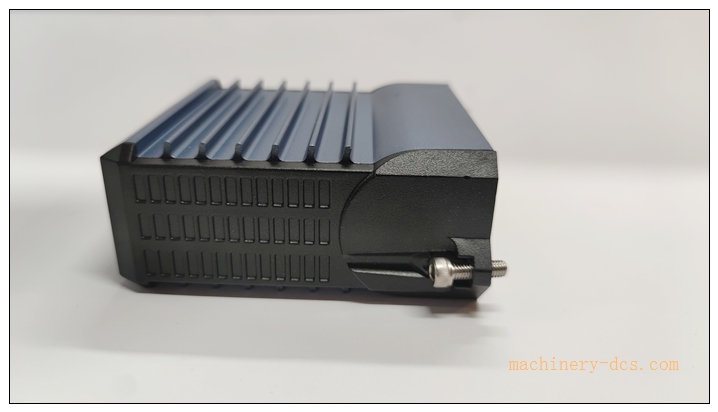
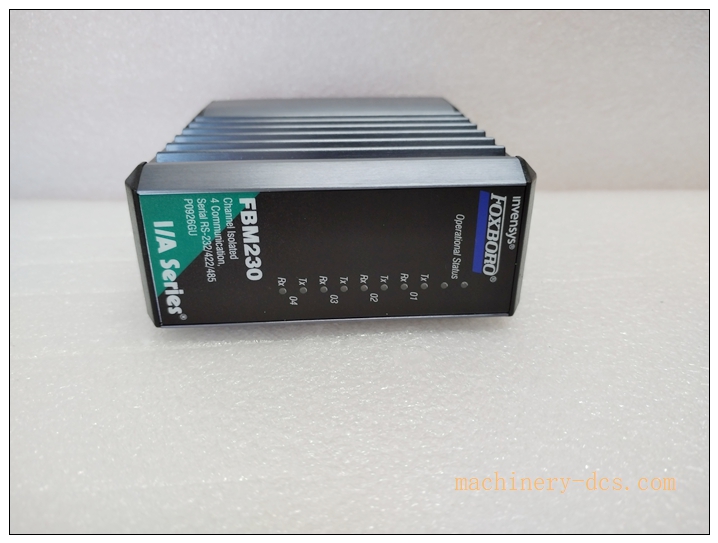
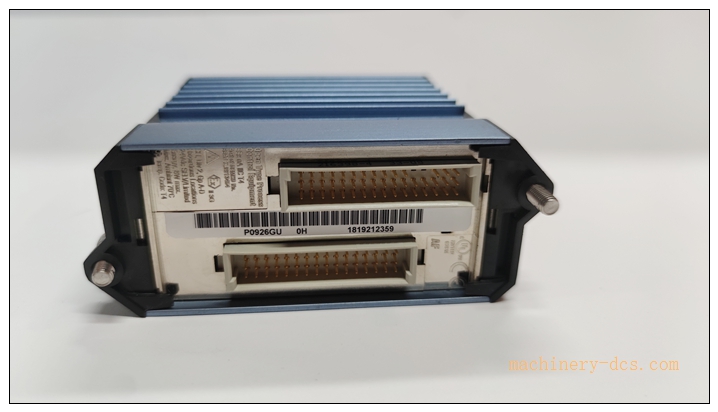
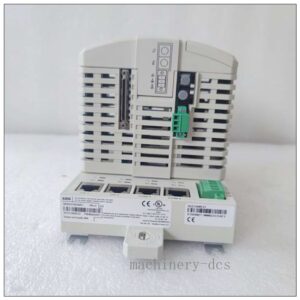
Foxboro FBM230 P0926GU Channel-Isolated 4-Port Communication Module – A high-performance Modbus Master (Serial and TCP/IP) interface designed for the Foxboro I/A Series® Distributed Control System (DCS), enabling seamless integration of third-party field devices and subsystems.
Executive Summary
The FBM230 (Order Code: P0926GU) is a specialized Field Device System Integrator (FDSI) module within the Foxboro I/A Series DCS ecosystem, now owned by Schneider Electric. Its primary function is to act as a Modbus Master, facilitating bidirectional data exchange between the Foxboro control system and a wide array of industrial field devices and subsystems that communicate via Modbus protocols. This module provides four communication ports with electrical isolation, offering flexible connectivity options through both serial (RS-232, RS-422, RS-485) and TCP/IP (Ethernet) interfaces. By serving as a communication gateway, the FBM230 significantly expands the I/A Series DCS’s interoperability, allowing users to cost-effectively integrate non-Foxboro devices into a unified control architecture without extensive custom engineering.
FBM230 P0926GU
Core Technical Specifications
| Parameter | Specification |
|---|---|
| Product Name | Foxboro FBM230 Field Device System Integrator |
| Order Number | P0926GU |
| Manufacturer | Foxboro (by Schneider Electric) |
| Product Type | Modbus Master Communication Interface Module |
| Protocols Supported | Modbus RTU (Serial) and Modbus TCP/IP (Ethernet) |
| Number of Ports | 4 Communication Ports |
| Port Isolation | Channel Isolated (each port is electrically isolated from others) |
| Serial Interfaces | RS-232, RS-422, RS-485 |
| Network Interface | TCP/IP (Ethernet) for Modbus TCP/IP communication |
| System Compatibility | Foxboro I/A Series® Distributed Control System (DCS) |
| Functionality | Modbus Master (initiates and controls communication) |
| Data Exchange | Bidirectional (reads from and writes to field devices) |
| Diagnostic Capabilities | Yes (as part of the I/A Series system diagnostics) |
| Operating Temperature | Industrial standard (typically 0-60°C) – *Confirm exact specs in manual* |
| Power Supply | Powered via the Foxboro I/A Series component bus or external power (as applicable) |
Key Features and Advantages
- Dual Protocol Support: The FBM230 supports both Modbus RTU (Serial) and Modbus TCP/IP (Ethernet) protocols simultaneously or independently on its ports. This provides exceptional flexibility to connect to a wide range of devices, from legacy serial equipment to modern networked instruments.
- Four Isolated Communication Ports: The module features four communication ports that are individually channel-isolated. This isolation prevents ground loops and protects the DCS from electrical noise and transients, enhancing overall system reliability and data integrity. It also allows connection to multiple independent networks or devices without interference.
- Robust Modbus Master Functionality: Acting as a dedicated Modbus Master, the initiates and manages all communication with connected slave devices. It handles polling, error checking, and data validation, ensuring predictable and deterministic data exchange, which is crucial for process control applications.
- Seamless I/A Series Integration: As a native component of the Foxboro I/A Series DCS, the is tightly integrated with the control system’s architecture. Data exchanged with Modbus devices is mapped directly into the DCS’s database, making it readily available for control strategies, operator displays, and historical logging without additional programming.
- Comprehensive Third-Party Device Integration: The module is a key enabler for integrating a vast ecosystem of third-party field devices—such as PLCs, power meters, drives, analyzers, and RTUs—into the Foxboro DCS. This reduces reliance on proprietary I/O cards and opens the system to best-of-breed solutions from various manufacturers.
- Simplified Configuration and Management: Configuration of the and its Modbus communication is typically handled through the I/A Series standard engineering tools (e.g., FoxCAE or the Integrated Configuration Environment), providing a familiar and consistent workflow for DCS engineers.
- High Reliability and Diagnostic Support: The module benefits from the I/A Series’ renowned reliability and comprehensive diagnostic capabilities. The system can monitor the health of the and its communication links, facilitating predictive maintenance and rapid troubleshooting.
Application Scenarios
The Foxboro is deployed in diverse industrial settings where seamless integration of Modbus devices into a DCS is required:
- Process Plants (Chemical, Petrochemical, Oil & Gas): Integrating field instruments like pressure transmitters, temperature sensors, flow meters, and analytical devices that communicate via Modbus into the main Foxboro DCS for centralized monitoring and control.
- Power Generation & Utilities: Connecting and acquiring data from protection relays, power quality meters, turbine control systems, and other substation automation devices using Modbus RTU or TCP/IP protocols.
- Water & Wastewater Treatment: Integrating remote terminal units (RTUs) controlling pumps, valves, and monitoring stations throughout a water distribution or collection network into the central DCS.
- Manufacturing & Material Handling: Incorporating PLC subsystems (e.g., from Siemens, Allen-Bradley) that control specific machines or production islands, as well as variable frequency drives (VFDs) and motor controllers, into the broader Foxboro DCS architecture.
- Pharmaceutical & Life Sciences: Connecting packaging machines, sterilizers, and other process equipment with Modbus interfaces to ensure comprehensive data recording and control compliance.
FBM230 P0926GU
Recommended Related Models (Brand: Foxboro / Schneider Electric)
The is part of a family of Field Device System Integrator (FDSI) modules. Related models often serve similar purposes but with variations in protocols or port configurations:
| Model | Description | Key Difference from |
|---|---|---|
| FBM231 | Modbus Slave Communication Module | Functions as a Modbus Slave instead of Master. Used when the Foxboro DCS needs to emulate a slave device on a network controlled by an external master. |
| FBM232 | Fieldbus Foundation H1 Communication Module | Supports the Foundation Fieldbus H1 protocol instead of Modbus, for integrating process fieldbus devices. |
| FBM233 | Profibus DP Master Communication Module | Supports the Profibus DP protocol instead of Modbus, for integrating Profibus DP slave devices. |
| FBM201 | General-Purpose Analog Input Module | A standard analog input module for the I/A Series, not a communication module. Included here to contrast the ’s specific role. |
| FBM202 | General-Purpose Analog Output Module | A standard analog output module for the I/A Series. |
Frequently Asked Questions (FAQ)
Q: What is the main difference between the and the FBM231?
A: The fundamental difference lies in their role in Modbus communication:
- : Acts as the Modbus Master. It actively polls and controls data exchange with slave devices (e.g., RTUs, PLCs, instruments). It is the initiator.
- FBM231: Acts as the Modbus Slave. It responds to requests from an external Modbus Master. The Foxboro DCS, via the FBM231, behaves as a device on the network that can be read from or written to by an external controller (e.g., another PLC or SCADA system).
Q: Can the communicate with devices that use Modbus ASCII?
A: The search results primarily confirm support for Modbus RTU (Serial) and Modbus TCP/IP. While Modbus ASCII is another common serial variant, its specific support is not explicitly detailed in the provided information. It is strongly recommended to consult the official product manual or verify with Schneider Electric/Foxboro to confirm ASCII support, as RTU is more common in industrial applications.
Q: What is the maximum number of Modbus devices that can be connected to a single ?
A: The has four communication ports. The theoretical maximum number of devices is limited by:
- Physical Connections: The number of devices you can physically daisy-chain or star-connect to each RS-485 port (typically up to 32 devices per segment without repeaters).
- Network Capacity: The combined data polling rate and the processing power of the module to handle all requests within the required scan time.
- System Design: The total number of Modbus devices across all ports that the DCS application can effectively manage. The exact number is application-dependent and should be validated during the design phase.
Q: Is the hot-swappable?
A: The Foxboro I/A Series components, including FBM modules, are generally designed for high availability. Whether the is specifically hot-swappable depends on the I/O chassis or component carrier it is installed in. Many modern DCS I/O modules support hot-swapping to allow replacement without shutting down the entire process or system. Always consult the specific hardware documentation for your I/A Series system to confirm hot-swap capabilities and follow proper procedures.
Q: How is the configured in the I/A Series system?
A: Configuration is typically performed using the Foxboro I/A Series engineering software (e.g., FoxCAE or the Integrated Configuration Environment). The engineer would:
- Define the module within the system’s hardware configuration.
- Configure each of its four ports (protocol, baud rate, parity, stop bits for serial; IP settings for TCP/IP).
- Define the Modbus device maps (slave ID, register addresses, data types, scaling) for each connected field device.
- Map the data points from these Modbus devices into the Foxboro DCS’s tag database for use in control logic and operator displays.
Q: What are the common indicators for diagnosing communication issues?
A: Common diagnostic indicators include:
- LED Status Indicators: The module itself may have LEDs for power, port activity, and error status.
- System Alarms: The I/A Series DCS will generate alarms if the module detects communication failures, timeouts, or device errors.
- Diagnostics Software: The I/A Series provides powerful diagnostic tools to monitor the status of the , view communication statistics (successful polls, errors), and even capture raw Modbus traffic for in-depth troubleshooting.
- Port-Level Diagnostics: The ability to individually check the health and status of each of the four communication ports.

 Start Chat


 Send an Email