
Description
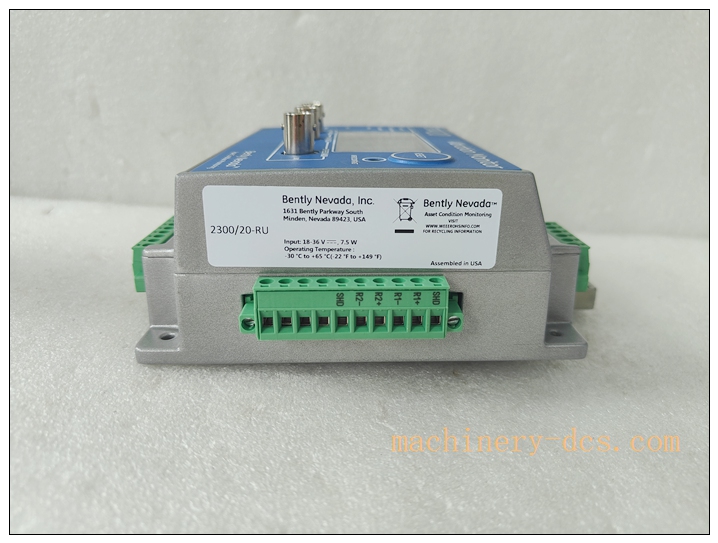
Bently Nevada 2300/20-00-01 is a compact 2-channel vibration & speed monitor
Product Title & Description
Model: 2300/20-00-01 The Bently Nevada 2300/20-00-01 is a compact 2-channel vibration & speed monitor for balance-of-plant rotating machinery protection. It is an economical standalone machinery protection unit designed for continuous vibration measurement, alarm and trip protection for pumps, fans, motors and small compressors. Equipped with built-in LCD display, relay alarm outputs, 4–20mA analog outputs and Modbus TCP Ethernet, it is widely used in power, oil & gas, water treatment and pulp & paper industries for predictive condition monitoring and machinery protection.
Core Product Overview
2300/20 series monitors are cost-effective standalone protection instruments from Bently Nevada, used for non-critical auxiliary rotating equipment (BOP equipment). This unit has 2 vibration measurement channels plus 1 speed/keyphasor channel. It accepts inputs from proximity probes or seismic accelerometers to measure vibration, velocity, displacement, and also track shaft RPM. The integrated LCD screen shows real-time measured values, alarm status and fault information locally. Two configurable relays provide alert and danger trip outputs for interlock protection. Dual 4–20mA analog outputs send vibration data to DCS/PLC, while Modbus TCP enables remote data access for asset condition monitoring software. It supports envelop demodulation for early bearing and gear fault detection. It can be used as a replacement for older Bently 1900/27 monitors.
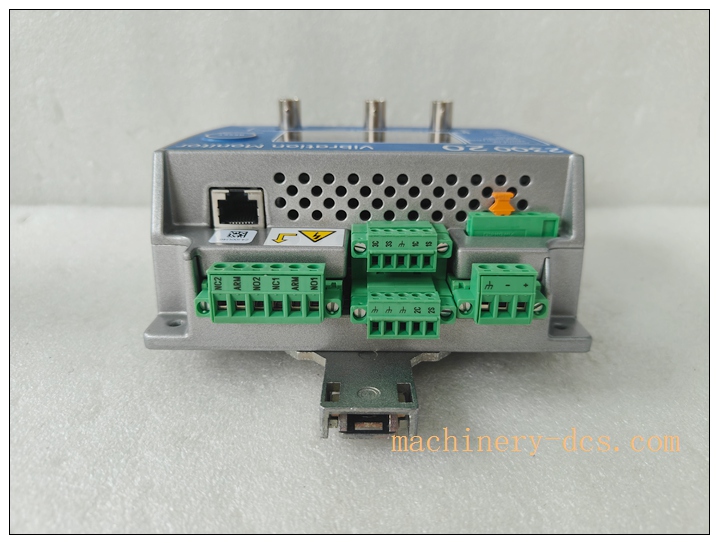
2300/20-00-01
Main Technical Specifications
- Manufacturer: Bently Nevada (Baker Hughes)
- Part Number: 2300/20-00-01
- Product Type: 2-Channel Vibration & Speed Standalone Monitor
- Input Channels:
- 2 × Vibration channels (support proximity probe / seismic accelerometer)
- 1 × Speed / Keyphasor channel
- Measurement Types: Displacement, velocity (RMS/peak), acceleration, bearing demodulation
- Analog Output: 2 × configurable 4–20mA
- Communication: Modbus TCP over Ethernet
- Relay Outputs: 2 programmable relay contacts for Alert / Danger / Fault
- Local Display: Integrated LCD + LED status indicators
- Power Supply: 24 VDC
- Mounting: DIN rail mount
- Enclosure: IP20
- Operating Temperature: -30°C ~ +65°C
- Storage Temperature: -40°C ~ +85°C
- Relative Humidity: 5% ~95%, non-condensing
- Vibration tolerance: 3g
- Certifications: CE, UL, CSA
- Weight: ~1.03 kg
- Dimension: 127 × 127 × 76.2 mm
Quality Control Procedures
Bently Nevada machinery monitors comply with ISO9001 and IEC machinery protection standards.
- Incoming Material Inspection: PCBs, signal processing chips, LCD, relays and terminal blocks are sourced from approved vendors and fully screened.
- Automated Assembly & Serial Traceability: SMT automated assembly. Unique serial number enables full lifecycle traceability.
- Full Functional Calibration & Test: Every unit undergoes sensor input simulation, 4–20mA calibration, relay trip test, Modbus TCP communication verification.
- Environmental Stress Screening: Batch samples perform temperature cycling, vibration, surge and EMC testing for industrial cabinet environments.
- Final Inspection & Packing: Visual inspection, labeled, anti-static packaging, factory test records included before shipment.
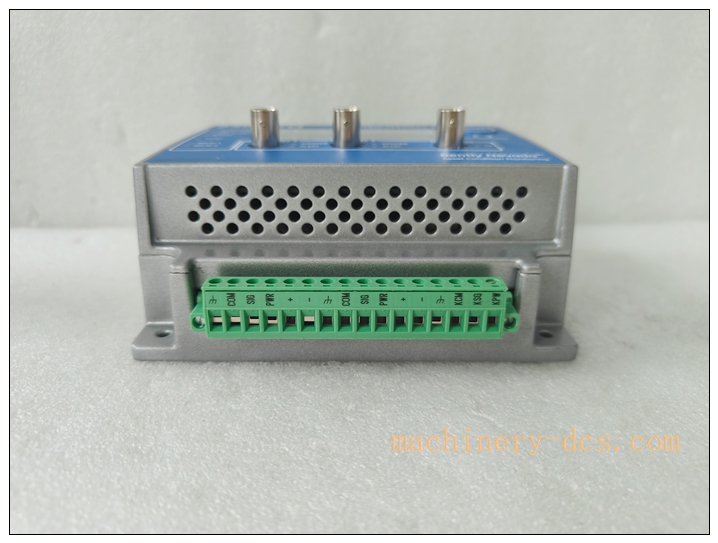
2300/20-00-01
Brand Related Model Recommendations
- 2300/20-02-01: 2300/20 variant with different firmware/configuration option.
- 2300/25-00-01: Supports Trendmaster SPA interface for System 1 condition monitoring network.
- 1900/27: Legacy older generation monitor, commonly replaced by 2300/20 series.
- 3500 series: Rack-based high-end machinery protection system for large turbines and critical compressors.
Frequently Asked Questions (FAQ)
Q1: What equipment is 2300/20-00-01 used for? A1: It is for balance-of-plant rotating equipment: pumps, fans, motors, small compressors, not for large steam/gas turbines.
Q2: What sensors can connect to this monitor? A2: It works with Bently proximity probes (eddy current) or seismic accelerometers for vibration measurement; magnetic pickup or keyphasor for speed measurement.
Q3: Can it send data to DCS? A3: Yes, via 4–20mA analog outputs or Modbus TCP Ethernet communication.
Q4: Does it have local display? A4: Yes, built-in LCD screen for on-site reading of vibration values, speed and alarm status.
Q5: What is the warranty for original Bently Nevada 2300/20-00-01? A5: Original unit carries standard 12-month factory warranty against manufacturing defects under proper installation and operating conditions.
Installation & Configuration Guide
7.1 Pre-installation Preparation
Verify model 2300/20-00-01, inspect housing, terminals and LCD for damage. Prepare 24VDC power supply, shielded sensor cables, proximity probes / accelerometers, shielded Ethernet cable and Bently 2300 configuration software. Cut power before installation, wear ESD protection. Confirm sensor type and measuring range.
7.2 Installation Steps
Mount the monitor on standard DIN rail inside control cabinet. Wire 24VDC power supply to power terminals. Route shielded sensor cables from vibration and speed transducers to monitor input terminals, single-point shield grounding at cabinet side. Wire relay output terminals to plant interlock circuit. Connect Ethernet cable for Modbus TCP communication. Tighten all terminals, keep adequate ventilation space around unit.
7.3 System Configuration & Commissioning
Launch Bently 2300 configuration software, connect to monitor via Ethernet. Set each channel sensor type, measurement unit, alarm and trip threshold values. Configure 4–20mA mapping and relay action. Download configuration to monitor. Power up, verify LCD reading and LED status. Inject simulated vibration/speed signal to test alarm and relay trip function. Test Modbus TCP data reading from DCS or monitoring system. Record commissioning parameters and alarm setpoints.
7.4 Maintenance & Precautions
During planned outages, inspect cable tightness, shield integrity and cabinet temperature. Check probe cable insulation and connector condition. Do not exceed rated 24VDC supply. Do not open the enclosure. If wrong readings or false alarms occur, check sensor, cable and probe gap before replacing the monitor.

 Start Chat


 Send an Email