
Description
Product Profile: ABB 3BHB006621R0103 UAC375AE103 Control Interface PC Board
Title Description
ABB 3BHB006621R0103 UAC375AE103 – High-Performance Control Interface PC Board for Excitation and Drive Control Systems
Executive Summary
The UAC375AE103 (Order Number: 3BHB006621R0103) is a high-performance printed circuit board (PCB) designed by ABB for specialized power electronics and excitation control systems. It serves as a critical control interface component within ABB’s industrial automation ecosystem, particularly in drive control modules, inverter systems, and voltage regulation applications. This board is engineered to ensure precise control, signal processing, and system reliability in demanding industrial environments, such as power generation, metal processing, and large-scale drive systems. Its robust design supports hot-swappable functionality, enhancing system maintainability and minimizing downtime during maintenance operations.
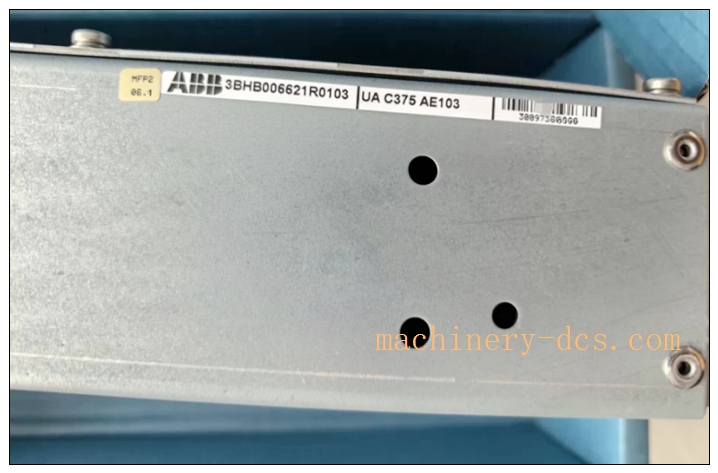
3BHB006621R0103 UAC375AE103
Core Technical Specifications
| Parameter | Specification | Details |
|---|---|---|
| Product Name | UAC375AE103 Control Interface PC Board | |
| Order Number | 3BHB006621R0103 | |
| Manufacturer | ABB (Asea Brown Boveri) | |
| Board Type | Control Interface / Anti-Saturation Card | Also referenced as a voltage regulation control module |
| Operating Voltage | 24 V DC | Nominal input voltage range: 18-32 V DC (with built-in regulation) |
| Current Draw | 5 A (typical) | Maximum current rating for operational reliability |
| Power Consumption | < 8 W | Typical power consumption under normal operating conditions |
| Physical Dimensions | 25 × 13 × 5 cm | Compact form factor for efficient cabinet integration |
| Net Weight | 1.6 kg | Approximate shipping weight |
| Operating Temperature | 0°C to +60°C | Industrial standard temperature range (verify specific limits in manual) |
| Mounting | Standard 19-inch rack or panel mount | Designed for industrial enclosures |
| Protection Features | Reverse polarity protection, Hot-plug implementation | Enhances safety and allows for module replacement without system shutdown |
Key Features and Advantages
High-Precision Control Capabilities
- Specialized Signal Processing: The UAC375AE103 is engineered for precise angle control, distance control, and position control tasks, making it highly suitable for applications involving stepper motors and servo motors.
- Anti-Saturation Functionality: Designed as an anti-saturation card, it prevents signal clipping and ensures linear operation of control loops, critical for maintaining system stability and accuracy in fast-response drive systems.
Robust and Reliable Design
- Industrial-Grade Durability: Built to withstand harsh industrial environments, including electrical noise, vibration, and temperature variations, ensuring long-term reliability.
- Hot-Swappable Support: The module supports hot-plug implementation, allowing for replacement or maintenance without shutting down the entire system, which significantly reduces operational downtime.
- Integrated Protection: Features built-in reverse polarity protection to safeguard against incorrect wiring, and voltage regulation to maintain stable operation within fluctuating input conditions.
Flexible Integration and Application
- Versatile Application Support: Primarily used in drive control modules within inverter systems and voltage regulation control applications. It plays a vital role in excitation systems for synchronous generators.
- Redundancy Compatibility: Supports processor unit redundancy configurations when used with compatible ABB controllers, enhancing system reliability for critical processes.
- Seamless ABB Ecosystem Integration: Designed to work in harmony with other ABB control system components, ensuring optimal performance and ease of integration into larger automation architectures.
Detailed Applications:
- Power Generation Plants: Critical component in excitation control systems for synchronous generators, regulating generator output voltage and reactive power to maintain grid stability.
- Metal Processing & Rolling Mills: Used in drive systems for controlling the precise speed and position of large DC or AC motors in steel and aluminum rolling mills, ensuring product quality and process efficiency.
- Large-Scale Drive Systems: Integrated into ABB’s ACS series drives and other inverter systems for controlling high-power motors in applications such as mining conveyors, crushers, and wind turbines.
- Test Stands & Specialized Machinery: Employed in test rigs for engines, turbines, or other large machinery where precise motion control and data acquisition synchronization are required.
Brand-Related Model Recommendations
The is part of ABB’s extensive portfolio of industrial automation and control boards. Below are related models within the ABB ecosystem:
| Model Number | Description | |
|---|---|---|
| UFC789AE101 | ABB Control Board | Often used in conjunction with in larger control systems, handling auxiliary functions or specific I/O tasks. |
| PPC902AE101 | Processor Board | A high-performance processor module that may work alongside the , providing computational power for complex control algorithms. |
| AMC-33 BOARD | Application Module | A companion module that may provide additional application-specific functions or interface capabilities when used with the . |
| UAC389AE02 | Control Interface Board | A similar control interface board from the same ABB family, potentially an alternative or supplementary component in certain system configurations. |
| 3BHE014023R0101 | ABB Control Board | Another related control board used in ABB’s distributed control systems (DCS) and drive applications. |
Frequently Asked Questions (FAQ)
1. What is the primary function of the board?
The is a control interface PC board designed for precise signal processing and control tasks within ABB’s power electronics and drive systems. Its key functions include:
- Anti-Saturation Control: Preventing signal saturation in control loops to maintain linear operation.
- Motor Control: Assisting in the precise angle, distance, and position control of stepper and servo motors.
- Voltage Regulation: Serving as a module within excitation control systems to regulate generator output voltage in power plants.
2. Can the be used in a redundant configuration?
Yes, the is designed to support processor unit redundancy when used with compatible ABB controllers. In such configurations, two redundant modules operate in parallel, with one as the primary and the other as a hot standby. If the primary fails, the standby takes over seamlessly, significantly enhancing system reliability for critical processes. The specific implementation depends on the overall control system architecture (e.g., ABB’s Symphony Plus or Advant Controller 400).
3. What are the power requirements and consumption for this module?
The operates on a nominal 24 V DC power supply, with a wide input range of 18-32 V DC (which it regulates internally). Its typical power consumption is under 8 W, making it an energy-efficient component within a larger system. The module draws a maximum current of 5 A under full operational load.
4. Is the module hot-swappable?
Yes, the supports hot-plug implementation. This feature allows for the module to be removed or inserted while the system is powered up and running, without requiring a complete system shutdown. Hot-swappability is crucial for reducing downtime during maintenance and repairs, as it enables technicians to replace a faulty module quickly while the rest of the system continues to operate normally.
5. How do I identify a genuine board?
To ensure authenticity and avoid counterfeit products, consider the following:
- Source Verification: Purchase only from authorized ABB distributors or reputable industrial automation suppliers with a proven track record.
- Physical Inspection: Genuine boards typically feature high-quality components, precise soldering, and clear ABB branding and part number markings. Check for consistent typography and quality of silkscreen.
- Documentation: Genuine boards often come with specific ABB packaging and may include a certificate of origin or calibration.
- Functional Verification: After installation, verify the module’s functionality using ABB’s diagnostic tools and software. A counterfeit or non-genuine board may fail to communicate properly or exhibit erratic behavior.
For critical applications, always prioritize purchasing from sources that can guarantee the authenticity of their products, such as those offering a 100% Original New warranty

 Start Chat


 Send an Email