
Description
GE Vernova IS220PDIOH1A – Discrete Input/Output (PDIO) Pack for Mark VIe Distributed Control Systems
Executive Summary
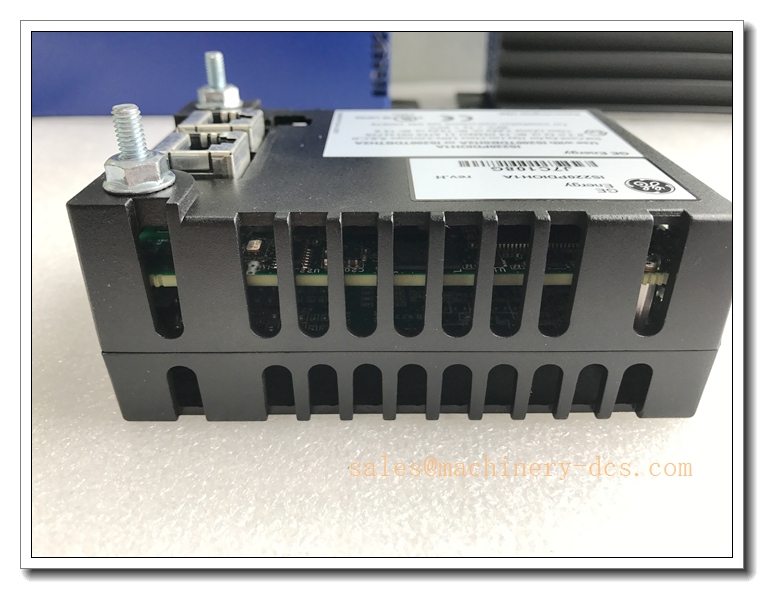
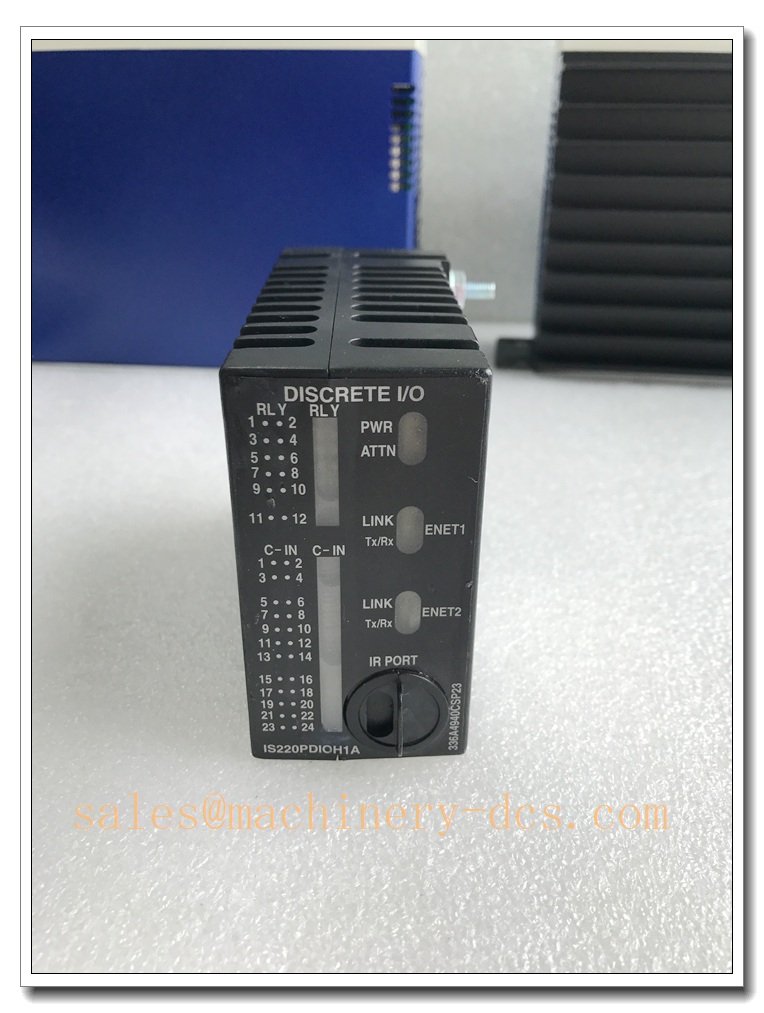
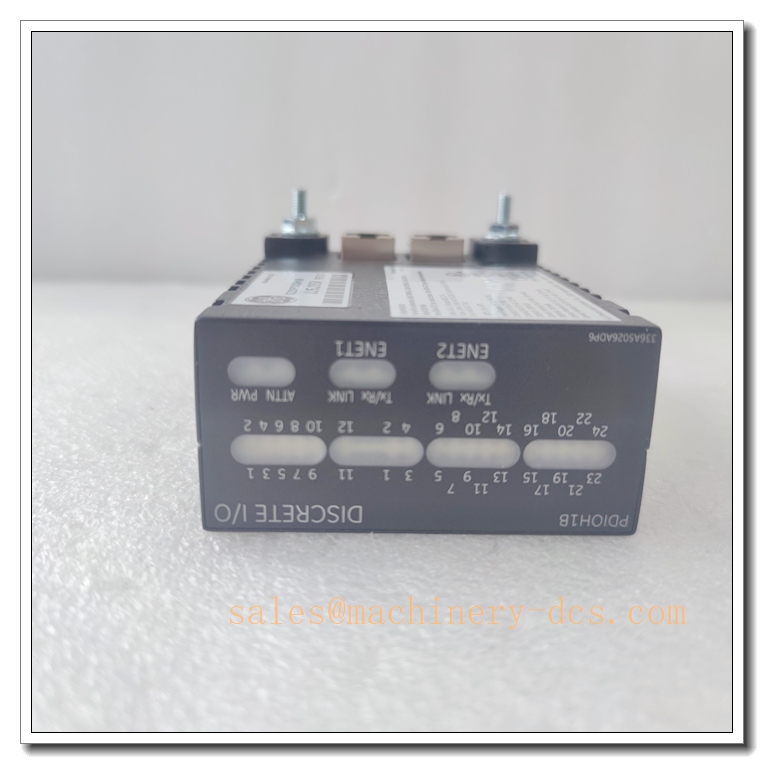
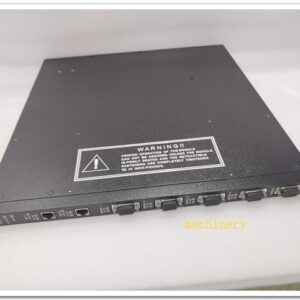
The GE Vernova IS220PDIOH1A is a high-reliability Discrete Input/Output (PDIO) Pack designed for the Mark VIe series Distributed Control System (DCS). Functionally equivalent to integrating a discrete input (PDIA) and discrete output (PDOA) pack into a single unit, it serves as a critical interface between the Mark VIe controller and field devices. The module manages up to 24 discrete contact inputs, controls up to 12 relay outputs, and processes specific terminal board feedback signals. With dual Ethernet ports, soft-start power protection, and robust self-diagnostics, the IS220PDIOH1A ensures seamless integration and reliable operation in demanding industrial environments such as power generation, oil & gas, and heavy manufacturing.
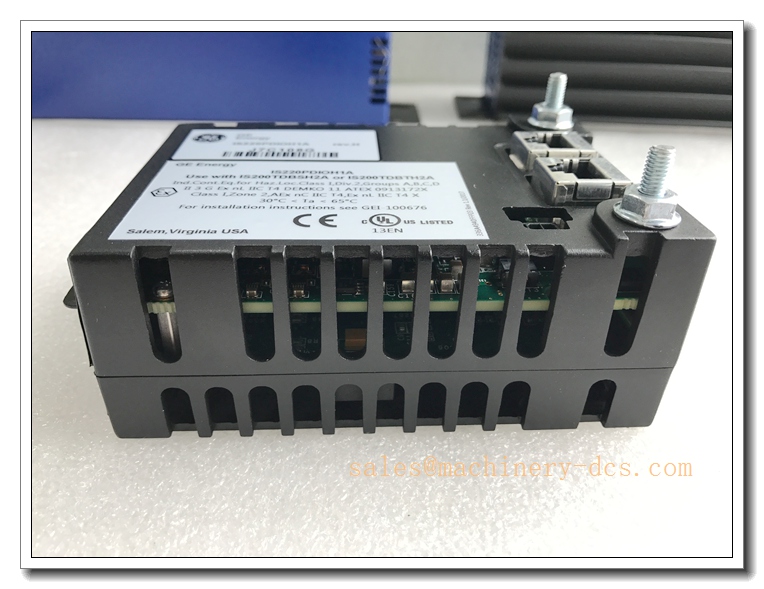
IS220PDIOH1A
Core Technical Specifications
- Manufacturer: GE Vernova (formerly GE Energy / GE Grid Solutions)
- Product Series: Mark VIe Distributed Control System (DCS)
- Module Type: Discrete Input/Output Pack (PDIO)
- Input Capacity: Accepts up to 24 discrete contact inputs (voltage capabilities determined by the connected terminal board)
- Output Capacity: Manages up to 12 relay outputs
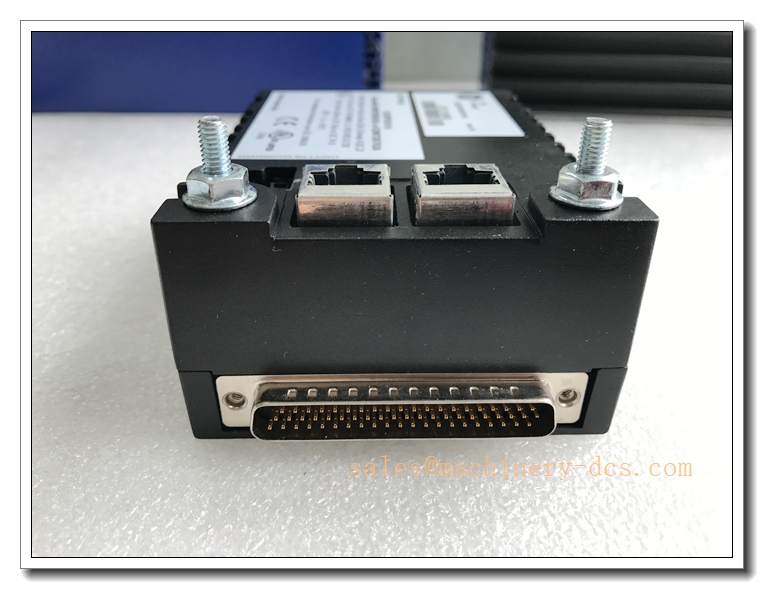
- Communication Interfaces: Dual independent 10/100 Mbps RJ45 Ethernet ports (IONet)
- Internal Connectivity: DC-62 connector for direct interface with the corresponding terminal board
- Power Supply: 3-pin power input connector with inherent soft-start functionality to regulate current surges
- Processor Architecture: Shared Mark VIe processor board featuring a fast CPU with Flash and RAM, hardware reset circuit, and watchdog timer
- Diagnostics: Onboard internal temperature sensor, LED status indicators for visual diagnostics, and electronic ID reading capabilities
- Configuration Software: GE ToolboxST
Key Features and Advantages
- Integrated I/O Functionality: Combines discrete input acquisition and relay output management into a single, space-efficient package, reducing hardware footprint and simplifying system architecture.
- Flexible Redundancy & Control Modes: Supports Simplex (single pack), Dual (two packs), and TMR (Triple Modular Redundant – three packs) configurations, allowing engineers to tailor system reliability to critical process requirements.
- Robust Ethernet Connectivity: Features two fully independent 10/100 Mbps Ethernet ports, enabling redundant network topologies (IONet) for uninterrupted communication with the Mark VIe controller.
- Advanced Power Protection: Equipped with a current limiter and soft-start functionality on the power input connector, which regulates current surges during power application, eliminating the need to power down the system before inserting the power cable.
- Comprehensive Self-Diagnostics: Continuous monitoring via an internal temperature sensor, watchdog timer, and LED indicators ensures immediate detection of hardware faults, thermal issues, or communication failures.
- Seamless Terminal Board Integration: Directly mates with compatible Mark VIe terminal boards via a DC-62 connector, establishing a secure electrical chain for discrete signals and relay outputs.
- Hot-Swap Capability: Designed for online replacement and maintenance, minimizing system downtime during troubleshooting or hardware upgrades.
Application Scenarios
- Power Generation Plants: Managing discrete status signals (e.g., breaker positions, valve limits) and controlling auxiliary relays in gas and steam turbine control systems governed by the Mark VIe platform.
- Oil & Gas Processing Facilities: Providing SIL3-certified discrete I/O for critical process protection systems and emergency shutdown (ESD) applications.
- Industrial Manufacturing: Interfacing with field sensors and actuators in heavy industrial DCS environments requiring high-reliability discrete signal processing.
- Redundant Control Architectures: Deploying in TMR or Dual redundant configurations for mission-critical processes where zero-downtime and fault tolerance are paramount.
Compatible Terminal Boards
The IS220PDIOH1A is designed to mate directly with specific Mark VIe terminal boards:
- TDBS: Discrete Contact Input/Output Terminal Board for Simplex PDIO applications (a hybrid of SRLY relay and STCI contact input boards).
- TDBT: Discrete Contact Input/Output Terminal Board for TMR PDIO applications. When combined with the WROB option, it provides functionality equivalent to the TBCI contact input terminal board.
Related Product Recommendations
For comprehensive Mark VIe system integration, consider the following compatible GE Vernova products:
- IS220PDIAH1A: Standalone Discrete Input Pack for applications requiring only input signal acquisition.
- IS220PDOAH1A: Standalone Discrete Output Pack for applications requiring only relay output control.
- TDBS / TDBT Terminal Boards: Essential companion boards required for field wiring and signal termination with the IS220PDIOH1A.
- GE ToolboxST Software: The standard engineering tool used for configuring, monitoring, and troubleshooting Mark VIe I/O packs and controllers.
- Mark VIe Controllers (e.g., UCSC, UCCS): The central processing units that communicate with the IS220PDIOH1A over the IONet Ethernet network.
Frequently Asked Questions (FAQ)
- Q: What is the difference between the , IS220PDIAH1A, and IS220PDOAH1A?
A: The is a combination pack that handles both discrete inputs and outputs. The IS220PDIAH1A (PDIA) is strictly a discrete input pack, while the IS220PDOAH1A (PDOA) is strictly a discrete output (relay) pack. The PDIO is ideal for applications requiring both functions in a single slot. - Q: How many inputs and outputs does the support?
A: The module can accept up to 24 discrete contact inputs and manage up to 12 relay outputs. The exact voltage ratings and signal types are determined by the specific terminal board (TDBS or TDBT) it is connected to. - Q: Does the support redundant networking?
A: Yes. It features two independent 10/100 Mbps RJ45 Ethernet ports, allowing it to be connected to redundant IONet networks for high-availability applications. - Q: Can the be used in TMR (Triple Modular Redundant) applications?
A: Yes. Three packs can be installed on a TDBT terminal board to establish a TMR configuration, providing the highest level of fault tolerance for critical control loops. - Q: What software is used to configure the ?
A: The module is configured using GE’s ToolboxST software, which allows engineers to set I/O parameters, monitor diagnostics, and manage the Mark VIe control system. - Q: Does the module have built-in power surge protection?
A: Yes. The includes an inherent soft-start function and current limiter on its power input connector, which regulates current surges when power is applied, protecting the internal electronics.

 Start Chat


 Send an Email