
Description
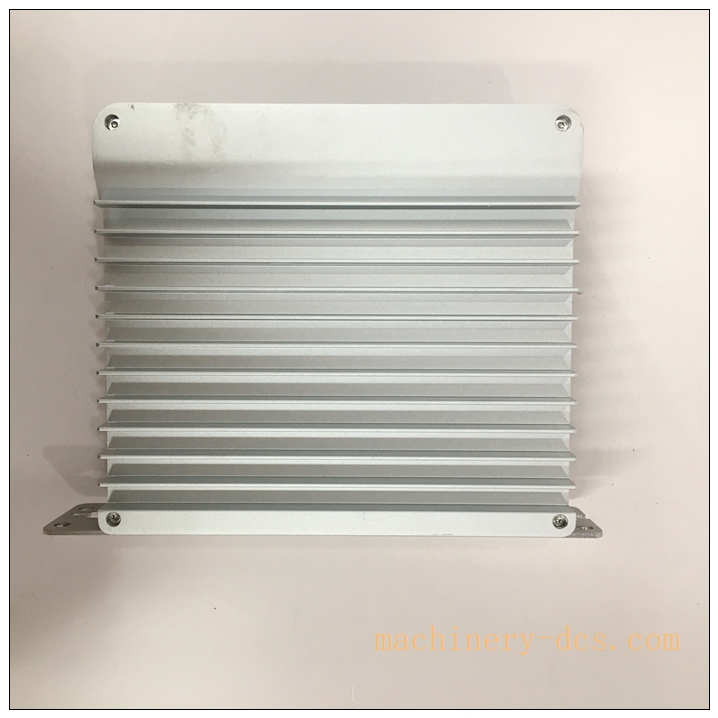
GE IS420UCSCH1A‑C high‑performance PACSystems RX3i CPU module
Product Overview
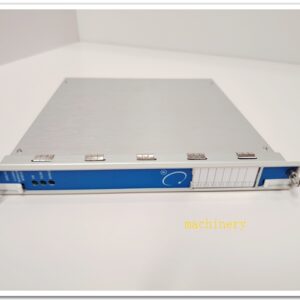
IS420UCSCH1A‑C is a UCSC (Universal Control Station Controller) compact standalone controller for GE Speedtronic Mark VIe turbine control system. The suffix‑C denotes special configuration variant of base model IS420UCSCH1A. It executes real‑time turbine sequence control, protection logic, closed‑loop regulation and plant balance‑of‑plant control, running QNX Neutrino real‑time operating system. It supports simplex, dual hot‑standby and TMR triple‑modular‑redundant architectures, connects distributed I/O packs over IONet. Mainly supplied as spare‑part for existing power‑generation sites.
Core Technical Specifications
| Item | Parameter |
|---|---|
| Part Number | IS420UCSCH1A‑C |
| Platform | GE Speedtronic Mark VIe |
| Processor | Quad‑Core AMD GX‑412HC, 1.2 GHz |
| Operating System | QNX Neutrino RTOS |
| Memory | 4 GB DDR3 SDRAM |
| Storage | 40 GB pSLC SSD (16 GB allocated for control application) |
| Communication Ports | 6 × 10/100BASE‑TX Ethernet, USB 3.0, Serial console port |
| Industrial Protocols | IONet, Modbus‑TCP, SNMP, Mark VIe internal peer‑to‑peer protocol |
| Redundancy Modes | Simplex / Dual hot‑standby / TMR triple modular redundancy |
| Power Supply | 18‑30 VDC, nominal 24 VDC, redundant power input supported |
| Power Consumption | Typical 15.6 W, peak 26.7 W |
| Operating Temperature | −40 °C ~ +70 °C (cabinet convection cooling) |
| Storage Temperature | −40 °C ~ +85 °C |
| Humidity | 5‑95 % RH non‑condensing |
| Cooling | Fan‑less natural convection |
| Weight | Approx. 1.33 kg |
| Mounting | Panel / DIN‑rail mounting inside control cabinet |
| Software Tool | ControlST software suite for configuration, programming and diagnostics |
| Certifications | CE, UL for power‑generation industry |
Main Features & Advantages
- High‑determinism real‑time performance: Quad‑core industrial processor with QNX real‑time OS, guarantees stable cycle execution for turbine protection and closed‑loop control logic.
- Multiple redundancy options: Supports simplex, dual hot‑standby and TMR triple‑modular redundancy, meets different safety‑availability requirements for critical turbine units.
- Rich multi‑port Ethernet architecture: Six independent Ethernet ports for IONet field I/O network, HMI communication, remote monitoring and third‑party system interconnection.
- Built‑in cybersecurity functions: Supports user‑access management, 802.1X authentication, MAC binding and DOS‑attack protection for power‑plant cyber‑security compliance.
- Distributed I/O support: Communicates with Mark VIe series remote I/O packs via IONet; flexible distributed deployment without large central backplane racks.
- Comprehensive diagnostic capability: Built‑in status LED indicators, fault event logging, diagnostic data viewable inside ControlST, accelerates on‑site troubleshooting.
- Fan‑less rugged hardware: Convection‑cooled design, no moving fan components, improves MTBF for long‑term continuous power‑plant operation.
- Complete software ecosystem: Supports logic programming, firmware upgrade, parameter download and historical‑trend recording via ControlST platform.
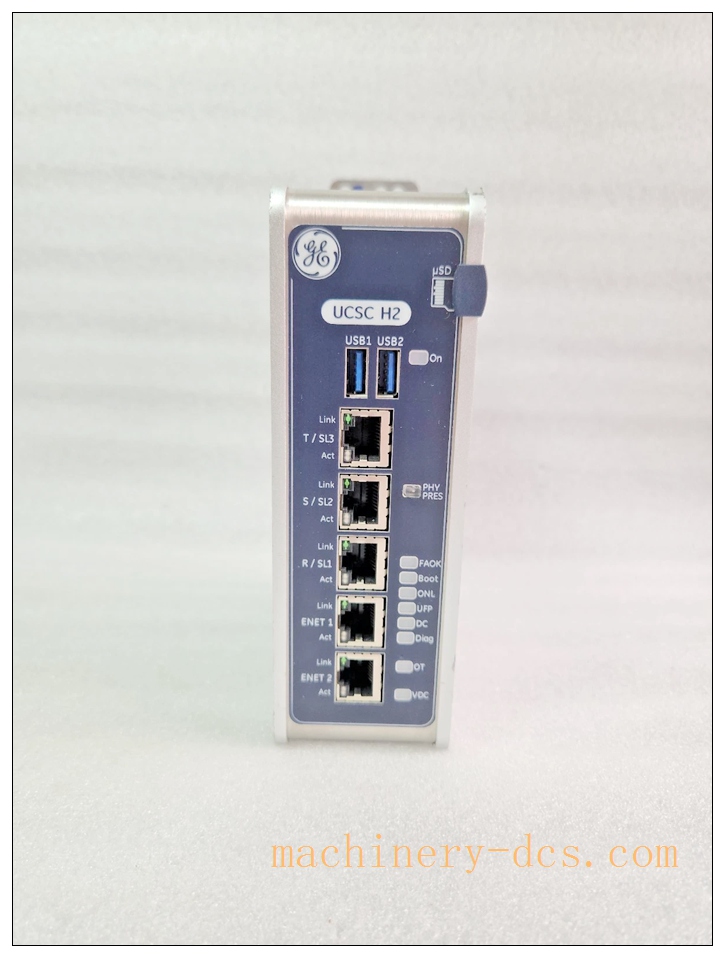
IS420UCSCH1A-C
Application Scenarios
‑ Gas‑turbine & steam‑turbine control for thermal power plants, including speed control, load regulation, sequence start‑stop and turbine protection functions. ‑ Combined‑cycle power‑plant balance‑of‑plant (BoP) auxiliary control. ‑ Hydro‑turbine control and generator excitation control for EX2100e / LS2100e systems. ‑ Oil & gas industry compressor‑turbine skid control. ‑ Retrofit, overhaul and spare‑part replacement for existing Mark VIe installed base. ‑ Independent power‑plant units requiring high‑reliability redundant control architecture.
Related Recommended Models (8+ items)
- IS420UCSCH2A‑C: Higher‑generation UCSC controller, hardware upgrade successor of IS420UCSCH1A‑C for Mark VIe projects.
- IS420UCSBH1A: UCSB compact controller, smaller‑size low‑power variant for light‑load control applications.
- IS420TPAOH1A: Analog output I/O pack for turbine control signal output.
- IS420TBCIL1A: Contact input I/O pack for turbine discrete signal acquisition.
- IS420PSAH1A: Mark VIe system power‑supply module for controller & I/O packs.
- IS420UCSVEH1A: UCSE high‑end controller for large‑scale TMR turbine control configuration.
- IS420YDIAS1A: Mixed analog‑discrete I/O module for distributed field‑signal collection.
- IS420SDIIH1A: Safety discrete input pack for turbine protection interlock signals.
- IS420ETH5A: IONet network switch module for Mark VIe distributed‑I/O network construction.
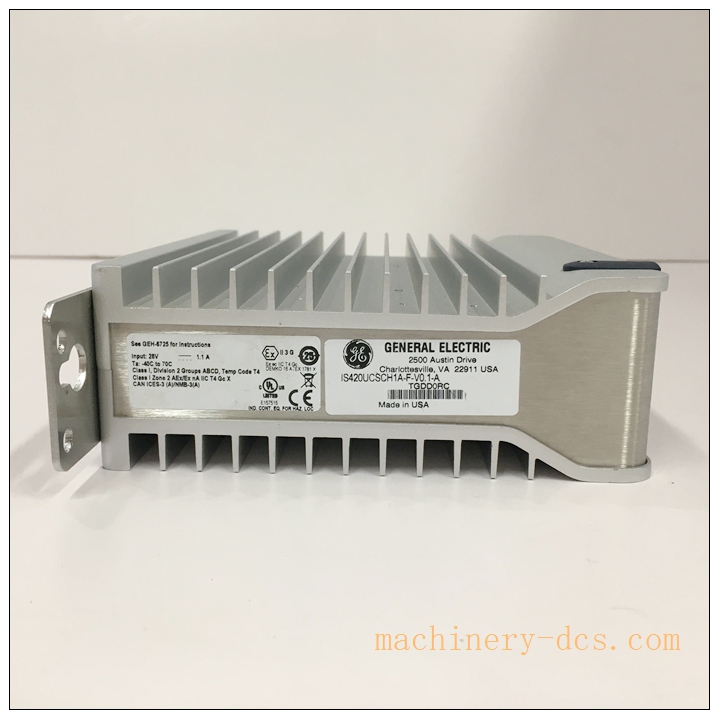
IS420UCSCH1A-C
FAQ – Frequently Asked Questions
Q1: What does suffix‑C mean for IS420UCSCH1A‑C?
A:‑C indicates special‑configured variant of base hardware, with specific factory preset firmware/parameter settings for designated site requirements; physical hardware form is identical to standard unit.
Q2: Can ‑C be used for brand‑new green‑field turbine projects?
A: It is mainly designated for spare‑part replacement and retrofit of existing Mark VIe installations. For new‑build projects, IS420UCSCH2A‑C is the preferred updated hardware.
Q3: What software is required to configure this controller?
A: GE ControlST software suite is mandatory, including logic programming, firmware download, fault diagnosis and HMI configuration functions. Match software version with controller firmware revision.
Q4: Does ‑C support hot‑swap?
A: Physical hot‑swap is supported. In simplex configuration, controller removal will terminate all turbine control. Under dual‑redundant or TMR architecture, online replacement can be achieved without turbine trip.
Q5: What network is used to connect Mark VIe distributed I/O packs?
A: IONet is the dedicated real‑time field network for communication between UCSC controller and remote I/O packs, based on Ethernet physical layer with dedicated real‑time protocol.
Q6: What are common causes for controller RUN LED off and FAULT LED red?
A: Common causes: improper 24 VDC power supply, corrupted control application firmware, IONet network breakdown, incompatible ControlST project configuration, internal hardware failure. Reload valid project or swap spare unit for verification.
Q7: Can ‑C work with Mark VI original‑series hardware?
A: No. ‑C belongs to Mark VIe distributed architecture, not backward‑compatible with old Mark VI rack‑based hardware.
Q8: What redundancy hardware is needed for TMR configuration?
A: Three pieces of ‑C controllers, matched triple‑group I/O packs, redundant power supply and proper IONet network layout; complete TMR logic configuration finished inside ControlST.

 Start Chat


 Send an Email