
Description
GE IS220PDIOH1A Mark VIe Discrete Input/Output Pack Module Product Introduction
Product Overview
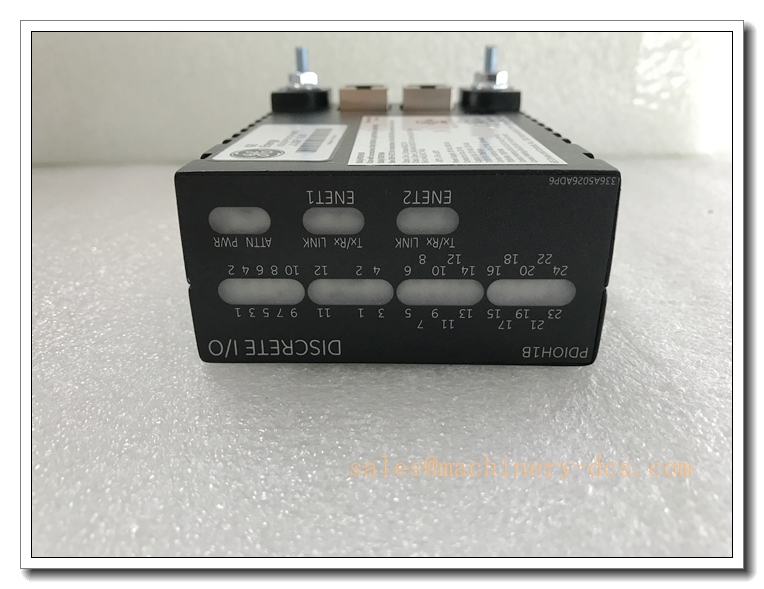
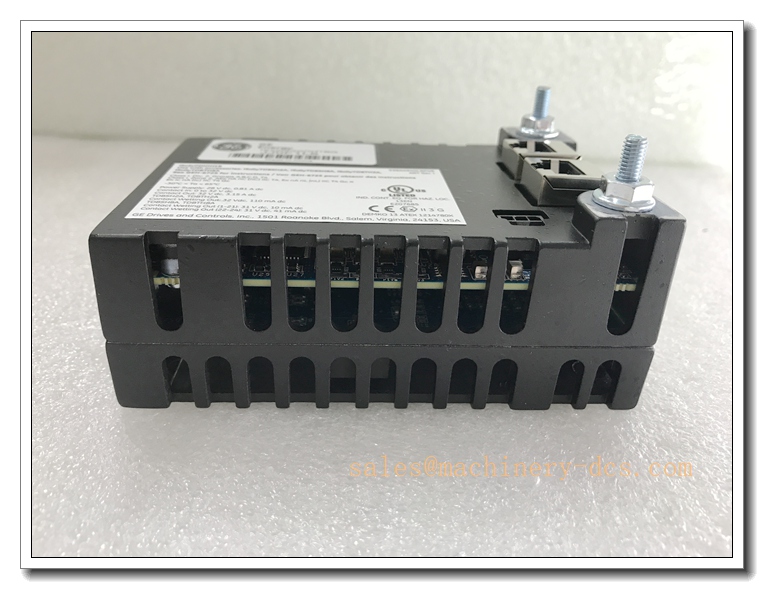
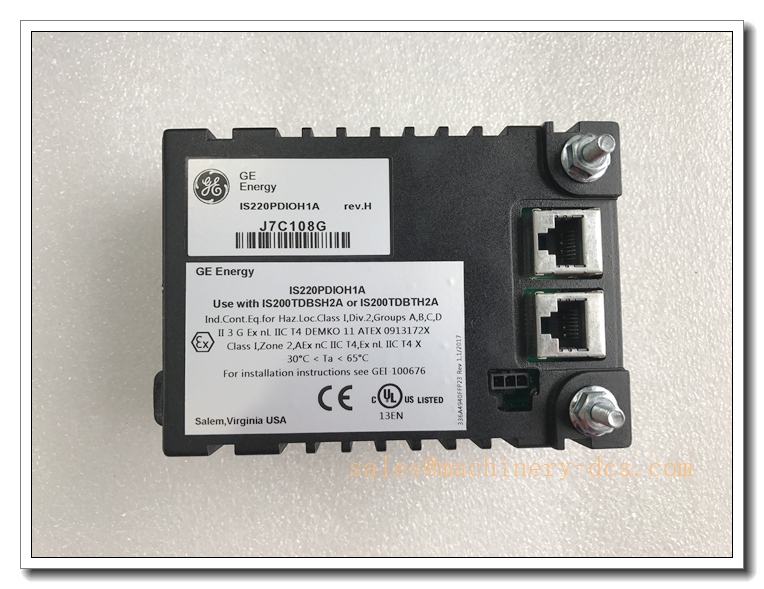
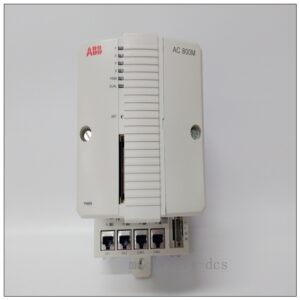
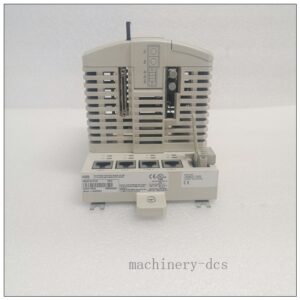
The GE IS220PDIOH1A is an Ethernet-based distributed combined discrete input/output (PDIO) pack module for the GE Mark VIe Speedtronic turbine control system. As the central digital I/O hub for turbine and auxiliary interlock systems, it merges the functions of separate discrete input (PDIA) and discrete output (PDOA) packs into a single compact housing, acting as the physical interface between the Mark VIe core controller and all field discrete devices including limit switches, pressure interlocks, local pushbuttons, indicator lamps, and solenoid valves. It features dual redundant 10/100 Mbps Ethernet communication ports and an integrated local processor for efficient on-board data handling, drastically reducing control cabinet footprint and system wiring complexity compared to traditional separate I/O pack architectures .
This module is fully certified for hazardous area (HazLoc) industrial deployment, making it the industry-standard consolidated discrete I/O solution for critical rotating assets in heavy industrial facilities. It is fully compatible with both simplex IS200TDBSH2A and TMR (Triple Modular Redundant) IS200TDBTH2A terminal board configurations, supporting all standard Mark VIe system redundancy architectures.
IS220PDIOH1A
Core Technical Specifications
| Parameter | Specification |
|---|---|
| Manufacturer | General Electric (GE Vernova) |
| Part Number | IS220PDIOH1A |
| Product Type | Mark VIe Distributed Combined Discrete Input/Output (PDIO) Pack |
| Total Discrete Input Channels | 24 optically isolated discrete input channels |
| Discrete Input Voltage Range | 5–125 V DC wide industrial range |
| Total Discrete Output Channels | 12 Form-C relay driver discrete output channels |
| Communication Interfaces | Dual 10/100 Mbps redundant Ethernet ports |
| Power Supply Input | 28 V DC nominal industrial power input |
| Local Processing | Integrated on-board dedicated processor for local data handling |
| Redundancy Support | Compatible with simplex and TMR (Triple Modular Redundant) terminal boards |
| Hazardous Area Certification | HazLoc certified for Class 1 Division 2 / Zone 2 deployment |
| Operating Temperature Range | -30°C to +65°C (-22°F to +149°F) |
| Installation Method | Standard Mark VIe I/O cabinet rack mounting |
| Cooling Method | Natural convection cooling, no built-in fan required |
| Standard Warranty | 2 years factory warranty |
Key Features
- High-Density Consolidated I/O Design: The module integrates 24 optically isolated discrete input channels and 12 Form-C relay driver output channels into a single compact housing, completely eliminating the need for separate PDIA discrete input packs and PDOA discrete output packs. This drastically reduces control cabinet footprint and cuts down on redundant backplane wiring, reducing system integration complexity by more than 40% compared to traditional separate I/O architectures .
- Wide-Range Optically Isolated Inputs: All 24 discrete input channels support a 5–125 V DC ultra-wide industrial voltage range, with full optical electrical isolation between field signals and the internal module logic circuit. This effectively suppresses common-mode electrical interference from the industrial field, preventing false signal triggering caused by electrical noise and ensuring 100% accurate discrete status acquisition even in harsh electrical environments.
- Dual Redundant Ethernet Communication: The module is equipped with two independent 10/100 Mbps Ethernet communication ports, supporting fully redundant network connection to the Mark VIe core controller. If one Ethernet link fails, the system automatically and seamlessly switches to the backup link without any data loss or control interruption, completely eliminating the single-point failure risk of the I/O communication path.
- Integrated Local On-Board Processing: The built-in dedicated local processor performs real-time pre-processing of all discrete input and output signals locally on the I/O pack, reducing the data processing load on the Mark VIe core controller and drastically improving the system’s discrete signal response speed, ensuring that critical turbine interlock signals can be transmitted to the core control logic within milliseconds.
- Full Redundancy Architecture Compatibility: The module is fully factory-validated for seamless compatibility with both simplex IS200TDBSH2A single terminal board configurations and TMR IS200TDBTH2A triple modular redundant terminal board configurations. It can be directly deployed in both standard simplex control systems and high-reliability TMR turbine protection systems without requiring any hardware modification.
Installation & Compatibility Notes
- This module is a dedicated distributed discrete I/O unit exclusively designed for the GE Mark VIe Speedtronic turbine control system. It must be installed in the designated dedicated I/O rack position inside the Mark VIe control cabinet, and cannot be used as a general-purpose standalone discrete I/O module for other non-GE industrial control platforms without official GE configuration software support.
- Before performing any installation or replacement work, you must completely disconnect all 28 V DC power supplies to the I/O pack, and confirm that all internal power supply circuits have been fully discharged to zero voltage. The module is a static-sensitive assembly, technicians must use a grounded anti-static wrist strap during installation and maintenance.
- All field discrete signal wiring must strictly follow the official GE Mark VIe PDIO module wiring diagram, using the specified wire gauge and signal shielding requirements. Field discrete signal cables must be routed separately from high-power motor power cables to avoid electrical interference that causes false signal triggering.
Typical Applications
This high-density consolidated discrete I/O pack module is widely deployed on GE heavy-duty gas turbines, large steam turbines, critical centrifugal compressors, and combined cycle power generation units across power generation, oil & gas, petrochemical, and heavy industrial facilities. It acts as the central discrete signal interface for the entire turbine control system, handling all critical turbine interlock signals including emergency stop pushbuttons, lube oil pressure low interlocks, vibration high trip interlocks, solenoid valve drive outputs, and local status indicator lamp control, ensuring that all critical discrete safety signals can be reliably transmitted and executed, effectively preventing unplanned turbine trips and catastrophic equipment damage.

 Send an Email