
Description
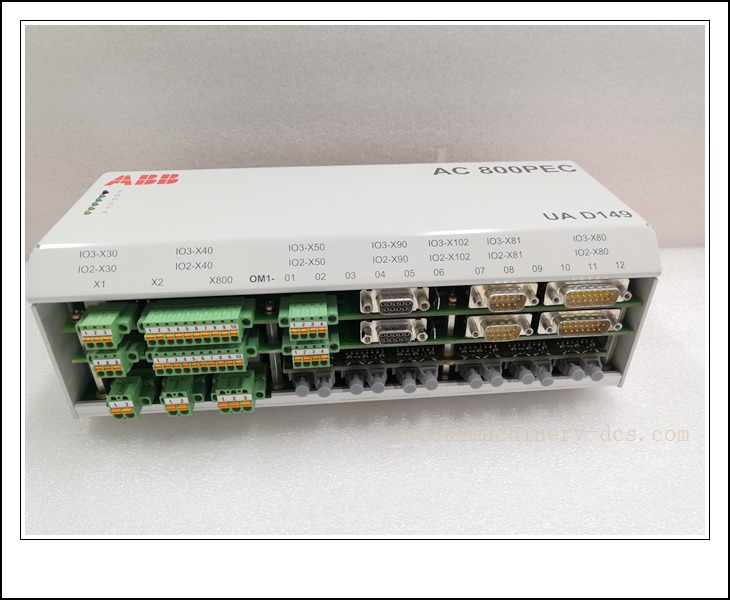
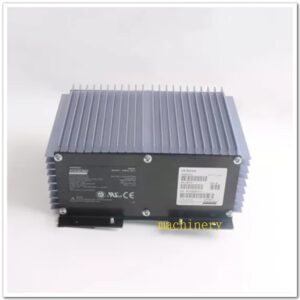
ABB UAD149A0011 (3BHE014135R0011) Combi I/O Interface Module, AC 800PEC Power Electronic Controller Platform, High‑Speed Mixed Signal Board for Excitation & Medium-Voltage Drives
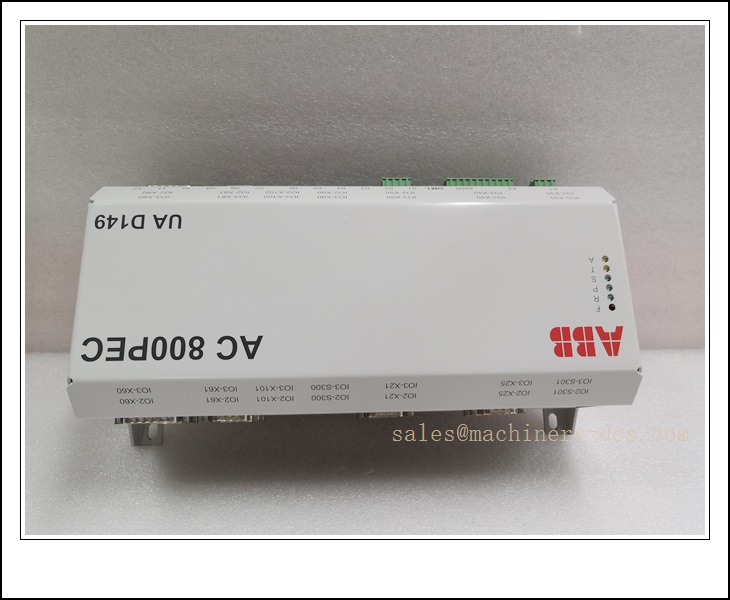
UAD149A0011 3BHE014135R0011
Technical Specifications
- Catalog Number: UAD149A0011, Order Code: 3BHE014135R0011
- Brand: ABB (Hitachi Energy)
- Product Type: Rack‑mounted Combi mixed I/O module for AC 800PEC
- Analog Inputs: 4 channels, 4–20 mA / 0–10 VDC, 16‑bit resolution
- Analog Outputs: 2 channels, 4–20 mA
- Digital Inputs: 8 channels, 24 VDC (contact sensing, trip & status feedback)
- Digital Outputs: 6 channels, 24 VDC transistor drive for interlock and fault signalling
- Pulse / Frequency Input: 2 channels for tachometer, encoder speed acquisition
- Temperature Input: PT100 RTD interface for bearing and winding temperature monitoring
- Backplane Interface: AC 800PEC internal high‑speed parallel backplane, microsecond-level sampling synchronization
- External Communication: Dual RJ45 Ethernet (Modbus TCP, PPA excitation bus), RS‑485 Modbus RTU, RS‑232 service port
- Supply Voltage: 24 VDC, operating range 18–30 VDC
- Power Consumption: Approx. 15 W
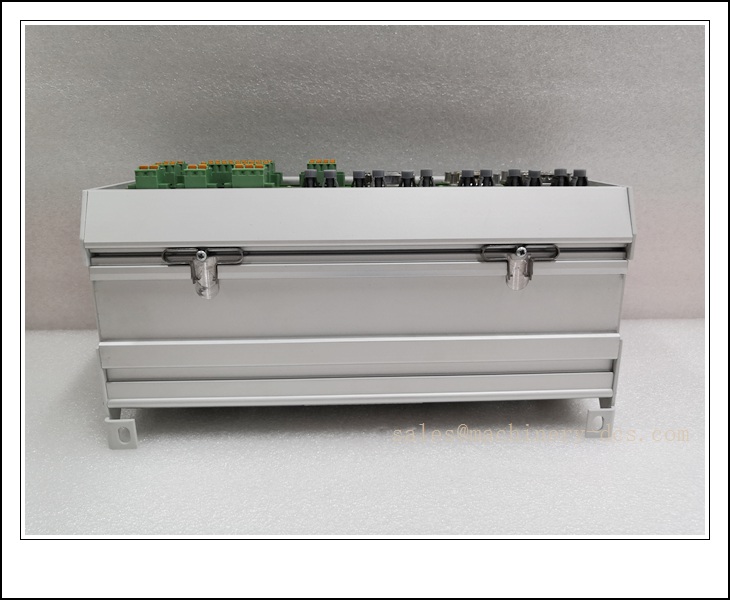
- Mounting: Plug-in slot inside AC 800PEC controller rack
- Operating Temperature: -20 °C ~ +60 °C (-4 °F ~ +140 °F)
- Humidity: 5%–95% RH, non‑condensing
- Enclosure Protection: IP20 (cabinet installation only)
- Lifecycle Status: Discontinued, spare and repair supply only
- Certifications: CE, IEC industrial EMC, marine type approval for selected power generation packages
- Weight: ~1.8 kg
Key Features & Advantages
- Dedicated high-speed Combi I/O for AC 800PEC: Designed for power electronic closed-loop control, far faster response than standard S800 I/O used in AC800M DCS.
- Multi-signal integration on one board: Consolidates analog, digital, pulse and RTD temperature channels to reduce rack slot count and wiring complexity in excitation and drive cabinets.
- Synchronized sampling with PEC CPU: Tightly time-aligned measurements for generator excitation, active front-end and STATCOM control algorithms.
- Dual Ethernet segmentation: Separates real-time PPA excitation bus and supervisory Modbus TCP network for security and noise isolation.
- Built-in tacho and PT100 acquisition: Direct connection to machine speed sensors and thermal sensors without external signal conditioners.
- Internal module diagnostics: Channel-level fault detection for open loop, short circuit, supply loss and backplane communication failure.
- Robust 24 V discrete I/O for safety chain: Suitable for breaker status, emergency trip and interlock logic in power conversion systems.
- Drop-in spare for legacy ABB excitation and medium voltage drive racks: Widely deployed in turbine, hydro and rolling mill drive retrofits.
Application Fields
- Synchronous generator excitation control systems (hydro, steam, gas turbine)
- Medium voltage AC drives and rolling mill main drive control
- Static Var Compensator (SVC) and STATCOM reactive power compensation
- HVDC light and power quality converter control racks
- Active Front End (AFE) and regenerative converter control
- Marine and offshore power generation excitation cabinets
- Industrial high-power test benches with fast closed-loop power control
- Retrofit and replacement projects for existing AC 800PEC installations
Related Product Recommendations
- PPD113 / PCD235: AC 800PEC main CPU controller modules
- UAD141A02: AC 800PEC analog interface module
- UAD169A101: Higher density AC 800PEC I/O variant
- 3BHE012095R0002: Complementary pulse measurement board
- S800 I/O series: Standard ABB DCS remote I/O (process-level alternative)
- AC 800PEC configuration software (PEC Tool)
- PT100 shielded twisted-pair sensor cables
- 4–20 mA galvanic isolators for CT/PT secondary signal isolation
- ABB PEC optical communication adapter
- Latest Hitachi Energy PEC next-generation controller platform for new projects
Installation & Maintenance
Installation
- Power down the AC 800PEC rack fully before insertion; wait for DC bus capacitors to discharge.
- Align the module with the dedicated backplane slot and seat firmly, secure front retaining screw.
- Separate low-level analog, RTD and pulse wiring from high-power cables and thyristor firing wiring to suppress EMI.
- Use shielded twisted pair for all analog and temperature signals; terminate shield at cabinet instrument earth at one end only.
- Match terminal assignment for DI/DO interlock circuits to trip logic drawings; verify 24 VDC polarity.
- Configure channel type, scaling, alarm thresholds and PEC bus mapping via PEC Tool software after hardware installation.
- Assign Ethernet IP addresses and isolate PPA excitation bus from office or plant supervisory LAN.
- Verify backplane communication status before enabling excitation or converter operation.
Maintenance
- Inspect front connectors, terminal blocks and PCB for dust, corrosion and loose terminals during planned outage.
- Use PEC diagnostic tools to check individual channel health, signal quality and backplane sync status.
- Backup the complete PEC application configuration including UAD149 channel mapping regularly.
- This model is discontinued; maintain tested spare modules for critical generator and drive assets.
- If communication loss or channel dropout occurs, check backplane connector integrity first; vibration can cause intermittent contact.
- Do not disassemble the module PCB; internal calibration and component repair require ABB/Hitachi Energy authorized service.
- After replacement, re-download the application, validate all analog scaling, speed feedback and thermal alarm points before returning equipment online.
- Record module serial number, calibration date and fault history for asset and outage management records.

 Send an Email