
Description
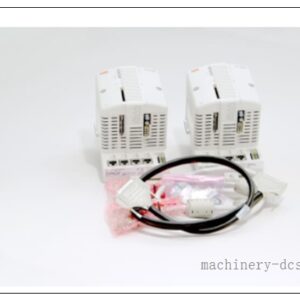
ABB PFEA113-65 Tension Control Electronics Unit: Full Technical Introduction
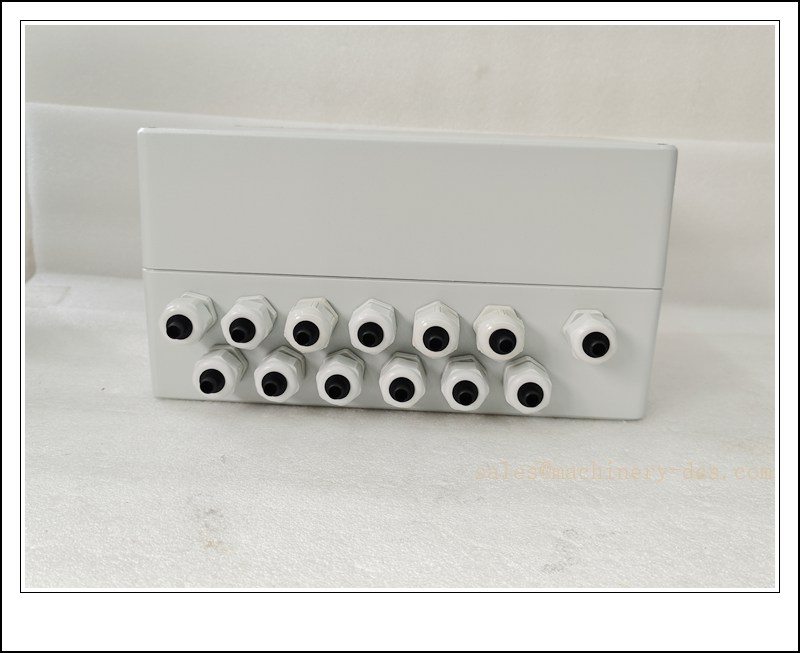
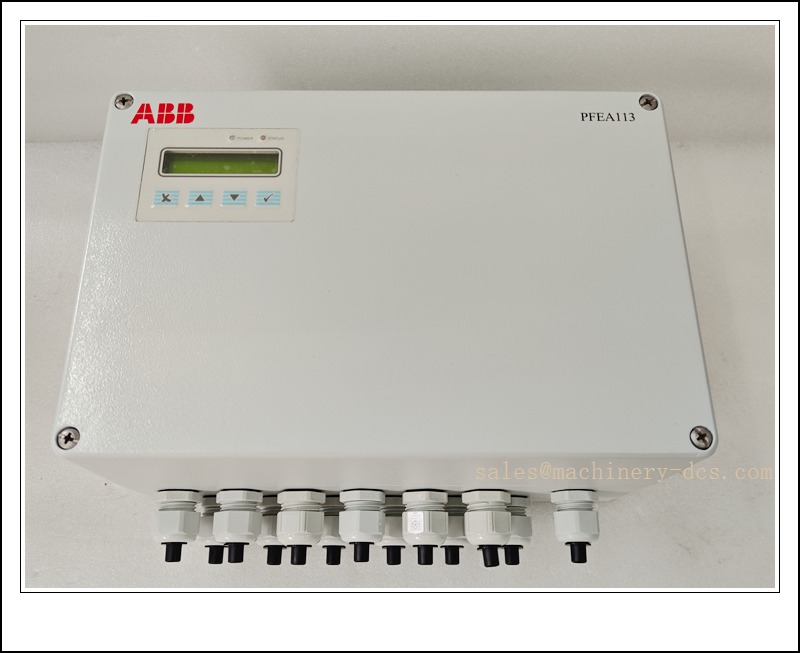
The PFEA113-65 (official catalog number 3BSE050092R65) is a high-precision industrial tension control electronic unit purpose-built by ABB for closed-loop tension measurement and regulation in continuous web processing lines. As the core signal processing hub of the ABB PFEA tension control system, it converts faint millivolt-level signals from load-cell tension sensors into calibrated, noise-free tension values, enabling zero-wrinkle, zero-break web handling for high-speed production environments.
PFEA113-65 3BSE050092R65
Core Product Information
| Parameter | Detailed Specification |
|---|---|
| Official Part Number | PFEA113-65 (3BSE050092R65) |
| Manufacturer | ABB (Sweden) |
| Product Series | PFEA Industrial Tension Control Platform |
| Device Type | High-Precision Tension Signal Processing & Control Unit |
| Compatible Sensors | Full ABB PFTL series load-cell tension sensors |
| Mounting Options | Standard DIN rail, plug-in rack mount with dedicated base unit |
| Safety & Compliance | CE marked, RoHS 2011/65/EU compliant, global industrial certification |
| Warranty | 1-year original factory standard warranty |
| Typical Use Cases | Paper making, plastic film extrusion, metal foil rolling, textile processing, wire & cable drawing, printing converting lines |
Key Technical Specifications
Signal Acquisition & Processing Performance
- Input Signal: Supports mV/V millivolt-level differential signals from 4-wire strain-gauge tension load cells
- Measurement Channels: Configurable single-channel or dual-channel differential input for paired sensor setups
- Measurement Accuracy: ±0.1% of full scale, with resolution reaching 1/10000 of full scale for ultra-fine tension detection
- Response Time: <5ms, with fully adjustable digital filter time constants to match different line speeds and process dynamics
- Output Signals: Standard 0-20mA / 4-20mA analog tension output, plus dedicated relay alarm output for fault signaling
- Zero Drift Compensation: Built-in automatic temperature drift correction, eliminating measurement deviation caused by ambient temperature swings in unconditioned production floors
Electrical & Power Characteristics
- Power Supply: 18-36V DC wide-range industrial power input, with standard 24V DC nominal operation
- Max Power Consumption: 2W low-power design, minimizing heat generation in dense control cabinet deployments
- Signal Isolation: Full galvanic isolation between sensor input, analog output, and power supply, breaking ground loops and blocking common-mode electrical noise
- Fieldbus Expansion: Optional add-on communication adapters support Profibus-DP, DeviceNet, and other industrial protocols for direct integration with PLC/DCS systems
- Profibus-DP Performance: 9.6 kbps to 12 Mbps auto-baud rate detection, with DB9 standard industrial connector for fieldbus wiring
Physical & Environmental Ratings
- Module Body Protection Class: IP20 for standard DIN rail mounted units; sealed IP65 variants available for direct field installation in dusty, wet production zones
- Operating Temperature Range: -10°C to +55°C for continuous full-load operation
- Storage Temperature Range: -25°C to +70°C for long-term spare part storage
- Humidity Tolerance: 5% to 95% non-condensing, compliant with ISA-S71.04 industrial environmental standards
- Vibration Resistance: Meets IEC 60068-2-6 industrial vibration specifications, suitable for installation on machinery with high mechanical motion
Core Functional Advantages
- Ultra-High Precision Noise Immunity: The 24-bit high-resolution ADC and low-drift preamplifier capture the faintest sensor output signals, while multi-stage digital filtering eliminates interference from machine vibration, motor harmonics, and grid voltage fluctuations, delivering stable tension readings even at zero line speed .
- Flexible Configuration Workflow: Users can complete full setup via local front-panel keys or upper configuration software, including full-scale calibration, zero-point adjustment, filter tuning, and alarm threshold definition, adapting seamlessly to diverse web materials and line speeds.
- Intelligent Auto-Diagnostic System: Real-time monitoring detects sensor open-circuit, short-circuit, signal overload, and internal hardware faults instantly, triggering LED status alerts and relay alarm outputs to cut mean time to repair (MTTR) by over 60% during unplanned stops .
- Automatic Zero Tracking: Built-in drift compensation algorithm continuously corrects for long-term sensor aging and temperature-induced zero offset, drastically reducing the frequency of manual recalibration required for production lines.
- Native ABB Drive Compatibility: Seamless integration with ABB ACS800 and ACS880 series variable frequency drives enables direct closed-loop tension control without intermediate PLC signal conversion, simplifying system architecture and reducing control lag .
- Harsh Environment Adaptability: The optional IP65 sealed variant eliminates the need for a local control cabinet, allowing direct installation on the production line floor in high-dust, high-moisture environments such as paper mills and textile processing workshops .
Recommended Compatible ABB Models
- PFTL101A Series Load-Cell Tension Sensors
- PFTL201C High-Capacity Tension Sensors
- ACS880 Industrial Variable Frequency Drives
- ACS800 Legacy Series Drives
- Profibus-DP Fieldbus Communication Adapter
- TU-series DIN Rail Termination Base Units
- ABB 800xA DCS Control System
- AC 800M Motion Controller
Compatibility Notes & Installation Pitfalls
- Sensor Wiring Mandate: Always use shielded 4-wire strain-gauge cables for sensor connections, never run them parallel to high-voltage motor power cables, to avoid introducing electromagnetic noise that degrades measurement accuracy.
- Active/Passive Output Configuration: For Ex Zone 1 hazardous area deployments, the 4-20mA output mode (active/passive) must be specified at the time of ordering; it cannot be reconfigured on-site after delivery .
- Profibus Address Default: Factory default Profibus-DP station address is set to 126; you must reassign it to a valid unique address (0-125) on your network before commissioning to avoid communication conflicts .
- Calibration Requirement: After hardware installation, perform a full static tension calibration using certified reference weights to ensure measurement traceability and eliminate systematic error from sensor mounting.
- IP65 Variant Installation: The sealed IP65 field version must be mounted vertically with cable glands facing downward, to prevent water and dust ingress through the connector ports.
Standard Operating Procedure (SOP) for Deployment
- Mount the PFEA113-65 unit on the DIN rail inside the control cabinet (or on the production line for the IP65 variant), ensuring minimum 20mm clearance around the unit for natural air convection cooling.
- Wire the PFTL tension load cell to the module’s differential input terminals using shielded 4-wire cable, terminate the cable shield at a single system ground point to eliminate ground loop interference.
- Connect the 24V DC power supply, 4-20mA analog output to your PLC/DCS analog input channel, and wire the relay alarm output to the machine safety interlock circuit.
- Power on the unit, access the local configuration menu, complete zero-point calibration with no web tension applied, then perform full-scale calibration using certified reference weights mounted on the tension roll.
- Adjust the digital filter time constant to match your production line speed, set high/low tension alarm thresholds, and enable the automatic zero-tracking function for long-term operation.
- Start the production line at low speed, verify the real-time tension reading matches your reference measurement, confirm the closed-loop tension regulation maintains stable setpoint performance across full line speed acceleration and deceleration cycles.
Typical Industrial Application Scenarios
The PFEA113-65 is the global industry standard for precision web tension control across high-value processing segments, including high-speed paper making lines that prevent web breaks, thin plastic film extrusion lines that eliminate wrinkling, metal foil rolling mills that guarantee uniform material thickness, textile spinning and weaving lines, and high-precision printing converting lines that maintain consistent registration accuracy.

 Send an Email