
Description
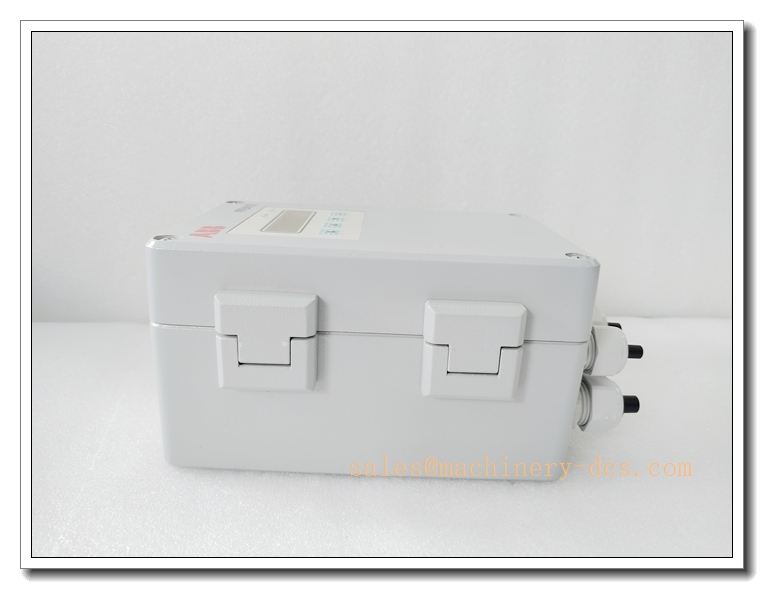
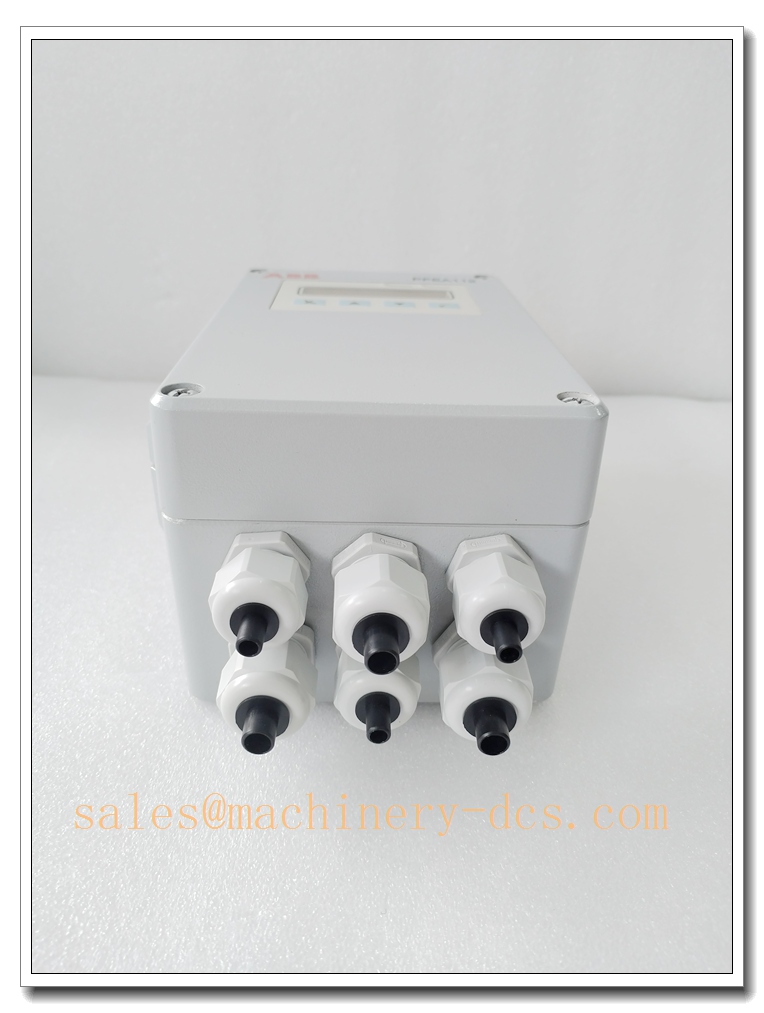
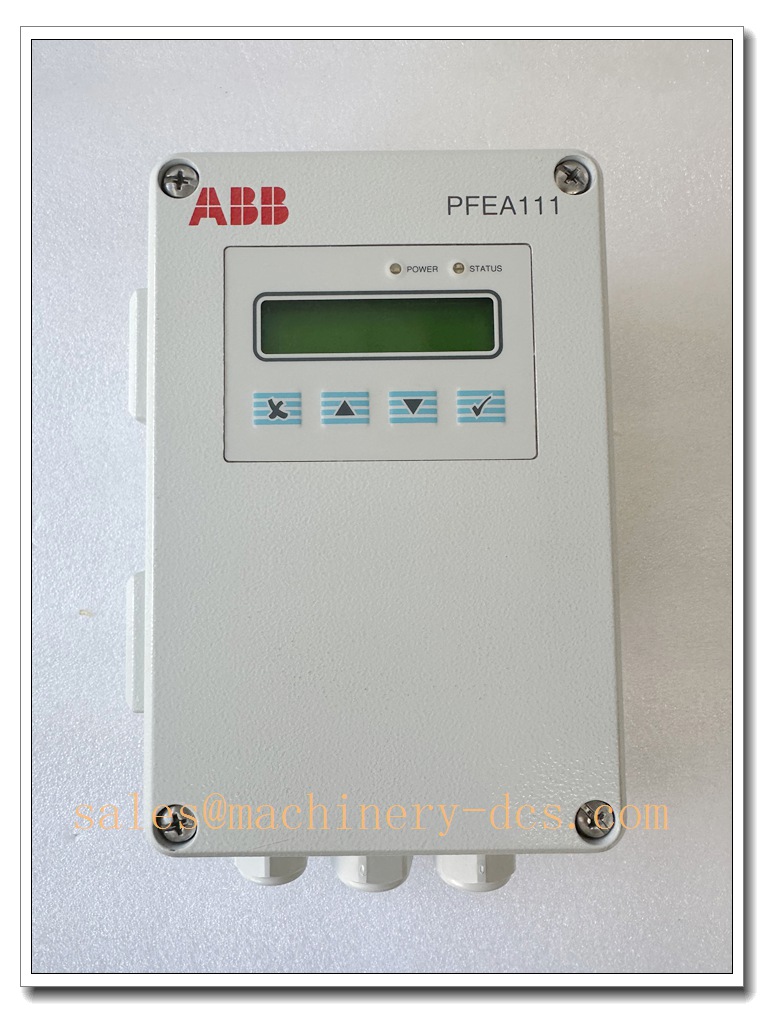
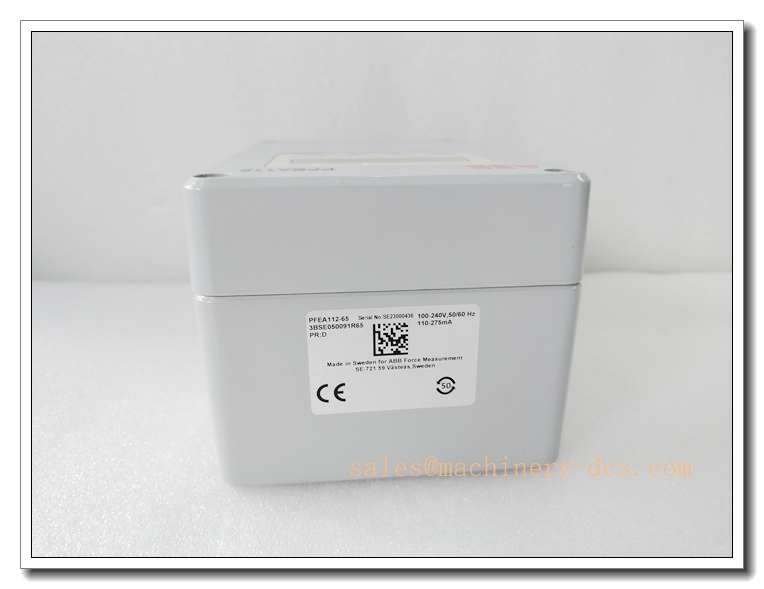
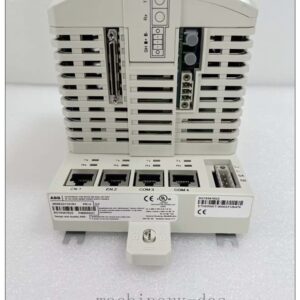
ABB PFEA111-65 Tension Electronics Unit, 3BSE050090R65
Product Description
The PFEA111-65 is ABB’s compact web tension measuring and amplifying module built on Pressductor® technology. It receives raw force signals from up to two tension load cells, performs high-precision signal conditioning, and outputs standardized analog signals for closed-loop tension control. Equipped with a 2×16 character multi-language LCD display and front keypad, it supports on-site parameter setup, real-time tension reading, sum/difference monitoring and system diagnostics. Available in IP20 DIN rail mount or IP65 enclosed variant, this unit delivers stable tension feedback for continuous web processing lines. It converts load cell microvolt signals into 4–20 mA or 0–10 V control outputs, and supports serial communication to host PLC systems. Widely used to prevent web breakage, wrinkling and inconsistent material thickness in roll-to-roll production.
PFEA111-65 3BSE050090R65
Technical Specifications
- Model: PFEA111-65 (3BSE050090R65)
- Brand: ABB
- Product Type: Tension Electronics / Tension Amplifier
- Supported Load Cells: Max 2 pcs Pressductor load cells
- Load Cell Excitation: 0.5 A rms, 330 Hz AC excitation
- Power Supply:
- IP20 version: 24 V DC (18–36 V DC), power consumption 7.5 W
- IP65 version: 100–240 V AC 47–63 Hz or 24 V DC
- Analog Output: 4–20 mA / 0–10 V selectable
- Communication: RS485 Modbus RTU
- Display: 2×16 character LCD, multi-language menu
- Accuracy: ±0.5% full scale
- Operating Temperature: 0 °C to +60 °C
- Storage Temperature: -40 °C to +85 °C
- Humidity: 5–95% non-condensing
- Protection Class: IP20 (DIN rail) / IP65 (enclosed housing)
- Mounting: 35 mm DIN rail or wall mount for IP65
- Calibration: Local keypad calibration without extra tools
- Diagnostic: Cable break detection, load cell fault monitoring
Compatibility & Installation Pitfalls
Compatibility
- Load Cells: ABB Pressductor series PFCL301E, PFTL301E, PFRL101 tension load cells
- Control Host: ABB AC800M, third-party PLC, drive controllers accepting 4–20mA / 0–10V analog input
- Auxiliary: PFXC141 junction box, PXUB201 isolation amplifier
- Cable: Must use shielded twisted pair cable dedicated for Pressductor load cells
Installation Pitfalls
- Cable Interference: Load cell signal cable must be separated from high-power motor and inverter cables; parallel routing will induce noise and unstable tension readings.
- Wrong Excitation Type: Do not connect standard DC strain gauge load cells. PFEA111 uses 330 Hz AC excitation, DC load cells cannot work.
- Grounding Loop: Improper earthing creates ground potential difference, drifting tension value. Single-point grounding is mandatory.
- Cable Resistance: Long load cell cables add resistance; always compensate cable resistance during calibration, otherwise measurement offset occurs.
- Mechanical Mount Stress: Load cell mounting brackets must be rigid. Mechanical vibration or side force on load cell causes permanent measurement drift.
- IP65 Seal Integrity: After field wiring, recheck cable gland seals; dust and moisture ingress will damage internal circuit board.
- Calibration after Replacement: Module replacement requires redoing load cell calibration; old saved parameters cannot be directly reused.
PFEA111-65 3BSE050090R65
Standard Operating Procedure (SOP)
Pre-Installation
- Verify part number, hardware revision and check physical condition, display and connector integrity.
- Confirm load cell type, cable length and material tension range match PFEA111 configuration.
- Prepare shielded twisted pair cables, ESD tools, wiring diagram and system backup of control parameters.
- Isolate power of the tension control loop before wiring.
Wiring & Commissioning
- Wear ESD protection when handling the unit PCB.
- Mount the unit on DIN rail or wall, leave clearance for ventilation.
- Wire load cells to junction box then connect to PFEA111; separate signal cable from power cable.
- Connect power supply, analog output and Modbus communication wiring.
- Power on, enter menu to set load cell type, rated force, cable compensation.
- Perform zero calibration and span calibration following manual procedure.
- Check live tension reading on LCD; test 4–20mA output signal at PLC side.
Post-Installation Verification
- Apply known tension weight to load cell to validate reading accuracy.
- Run machine at low speed and monitor for signal fluctuation.
- Trigger cable break and load cell fault test to confirm alarm function.
- Save calibrated parameters to local backup.
- Record serial number, calibration date in equipment log.
Application Scenarios
- Paper, film, foil, textile roll-to-roll web tension control
- Printing, coating, laminating, slitting machines
- Metal strip processing and wire drawing lines
- Battery electrode & flexible material production
- Retrofit upgrade of existing ABB Pressductor tension systems
- Continuous converting lines requiring precise tension feedback
Supporting / Matching Components
- PFCL301E / PFTL301E / PFRL101 Pressductor tension load cells
- PFXC141 load cell junction box
- PXUB201 isolation amplifier
- Shielded twisted pair load cell cable
- ABB AC800M PLC, variable frequency drives
- 24V DC power supply
- Mounting brackets, cable glands
Related ABB Model Recommendations (PFEA Tension Electronics Family)
- PFEA112-65: 2 load cell channels, enhanced diagnostic functions
- PFEA113-65: Support up to 4 load cells, multi-channel tension measurement
- PFEA122: IP65 enclosed version for harsh industrial environment
- -20: IP20 DIN rail basic variant of series

 Start Chat


 Send an Email