
Description
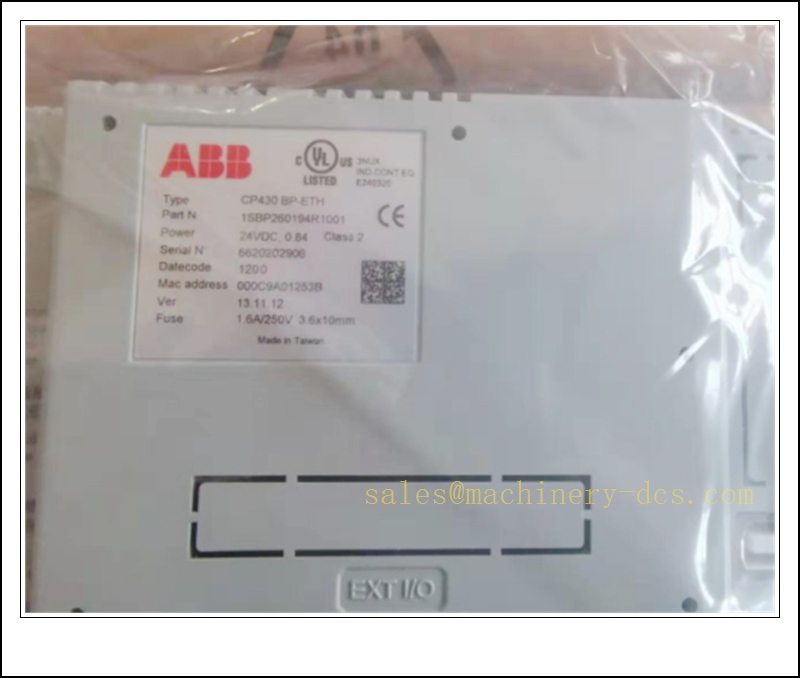
ABB CP430BP 1SBP260192R1001 Control Processor Module for Procontic CS31 System
Model & Part Number
- Type: CP430BP
- Order Code: 1SBP260192R1001
- Manufacturer: ABB
- Product Category: CPU / Control Processor Module
- Series: Procontic CS31
- Compatible System: ABB Procontic CS31 Distributed Control System
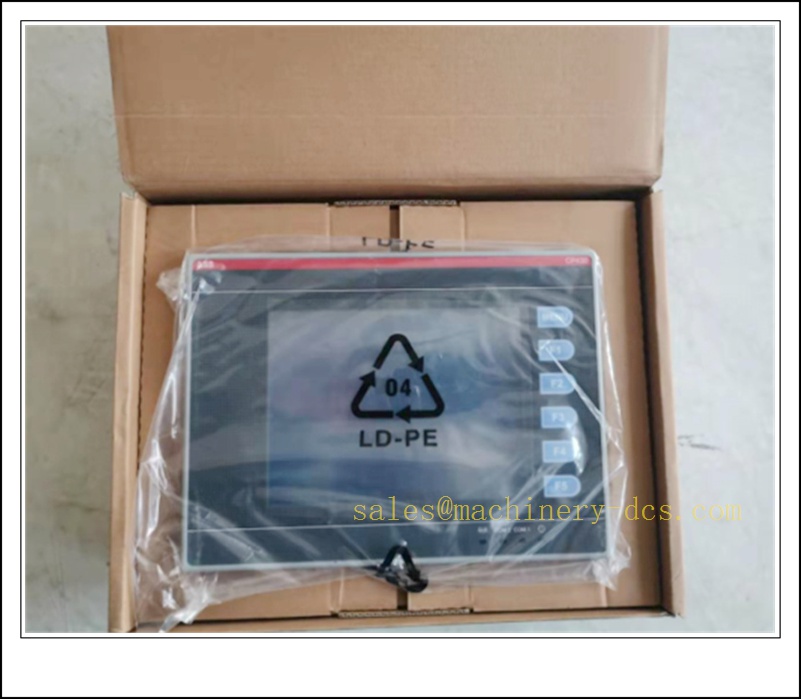
CP430BP 1SBP260192R1001
Product Description
The CP430BP (1SBP260192R1001) is a core control processor module for the ABB Procontic CS31 automation system, widely used in legacy industrial control applications. It executes user control programs, handles CS31 fieldbus communication, processes digital and analog I/O signals, manages alarms and provides local diagnostic information. This processor supports structured control logic, data acquisition and closed-loop regulation for standalone or networked CS31 stations. It is an end-of-life product, and most market demand comes from plant spare replacement, system maintenance and life extension projects for existing installations.
Technical Specifications
| Item | Specification |
|---|---|
| Processor | 16-bit industrial CPU |
| Program Memory | Flash memory for application program storage |
| Data Memory | RAM with backup support |
| Power Supply | 24 VDC, 19.2 ~ 30 VDC |
| Fieldbus Interface | bus (Procontic internal bus) |
| I/O Connection | Connects to series remote and local I/O modules |
| Programming Port | Serial interface for program download / upload |
| Max Nodes on Bus | Up to 31 stations |
| Operating Temperature | 0°C ~ +55°C |
| Storage Temperature | -40°C ~ +70°C |
| Relative Humidity | 5% ~ 95%, non-condensing |
| Protection Class | IP20 (for cabinet mounting) |
| Mounting | DIN rail / rack mount |
| Net Weight | Approx. 0.48 kg |
| Compliance | CE certification |
Application Fields
- Water supply and wastewater treatment plants
- Building automation and HVAC control
- Conveyor and material handling systems
- Small power auxiliary control systems
- Food & beverage production lines
- Light chemical industry
- Tunnel and pumping station control
- Legacy Procontic system maintenance and retrofit
Brand Profile (ABB Procontic )
ABB Procontic is a proven distributed automation family launched for compact and mid-range industrial control. The system adopts a simple, robust fieldbus architecture with dedicated CPU, I/O, communication and power modules. It gained popularity for pumping stations, water treatment and general machinery automation thanks to its low complexity and stable field performance. As modern PLC and DCS platforms replace in new projects, the installed base still relies on spare processors like CP430BP to sustain operation.
Related News & Industry Events
CP430BP belongs to the discontinued Procontic product line. Original ABB serial production has stopped, leading to limited availability of brand-new original units. End users maintain stocked spare modules to avoid sudden system outage. Many facilities schedule gradual migration to ABB AC500 PLC during turnaround, while keeping tested CP430BP modules as emergency spares for the transition period. The aftermarket supply of tested surplus modules has become a key resource for system owners globally.
Usage Scenarios
- Master control unit of a standalone Procontic control station
- Logic control and closed-loop regulation for pump groups and valve interlocks
- Data collection from I/O modules and transmission to SCADA/HMI
- Alarm generation, fault detection and local status indication
- Program modification, upload and download via programming cable
- Replacement for failed original module during plant maintenance
- Distributed slave station coordination on the fieldbus network
- Auxiliary machine control for skid-mounted equipment
Functional Advantages
- Optimized for the bus protocol, stable communication with all I/O modules
- Compact size, easy installation inside standard control cabinets
- Built-in diagnostic LEDs for quick fault localization
- Supports digital logic, timer, counter and PID closed-loop control
- Simple programming environment, familiar to maintenance teams with experience
- Low power consumption, suitable for continuous 24/7 operation
- Strong anti-interference performance for general industrial environments
- Flexible network configuration with up to 31 stations on one bus
- Cost-effective spare solution for extending the service life of legacy systems
Recommended Related Products (16 pcs)
- ABB CP430B 1SBP260191R1001 Processor
- ABB DI401 1SBP260010R1001 Digital Input Module
- ABB DO401 1SBP260020R1001 Digital Output Module
- ABB AI401 1SBP260030R1001 Analog Input Module
- ABB AO401 1SBP260040R1001 Analog Output Module
- ABB DI402 1SBP260011R1001 Digital Input
- ABB DO402 1SBP260021R1001 Digital Output
- ABB TB401 1SBP260050R1001 Terminal Base
- ABB SU401 1SBP260060R1001 Power Supply Module
- ABB BT401 1SBP260070R1001 Bus Terminal
- ABB TK401 Programming Cable
- ABB RS401 1SBP260080R1001 Repeater
- ABB CP405 1SBP260180R1001 Processor
- ABB DC501 1SBP260090R1001 Counter Module
- ABB AC500 PM573 PLC Controller
- ABB AC500 PM592 PLC Controller
Installation Instruction
- Cut off the 24 VDC power supply of the rack before installation.
- Check the DIN rail or backplane slot for damage, oxidation or loose contacts.
- Mount firmly on the DIN rail, lock the bottom buckle to secure the module.
- Connect the bus cable to the bus terminal; use shielded twisted-pair cable and proper grounding.
- Wire the 24 VDC power input strictly following polarity requirements.
- Connect the programming cable only when program upload/download or commissioning is needed.
- Check bus station address setting, ensure no duplicate node address on the same bus.
- Restore power supply and observe front status LEDs for power, run and fault signals.
- Download the valid user control program, verify communication with all connected I/O modules.
- Test input signal acquisition, output action and alarm functions one by one.
- Check bus communication stability under normal working conditions.
- Arrange cable routing properly to reduce electromagnetic interference.
Maintenance Guide
- Daily Inspection: Check LED status, module temperature, cable tightness and signs of dust accumulation.
- Periodic Maintenance: Clean dust on the module surface and ventilation gaps with dry anti-static brush; avoid liquid detergent.
- Routine Operation: Back up the user program regularly and store copies offline. Test bus communication during planned shutdown.
- Troubleshooting: If the fault LED is on, first verify 24 VDC power quality. For communication failures, check bus address, cable, shielding and bus terminator. If program loss occurs, reload the backup project.
- Spare Storage: Keep spare in anti-static packaging, store in cool and dry environment.
- Repair Notice: Do not open the module housing or repair internal circuit on site. Send faulty unit to a qualified automation service provider for testing.
- Lifecycle Note: is an end-of-life processor. Prepare migration plan to ABB AC500 series while maintaining spare inventory.

 Send an Email