
Description
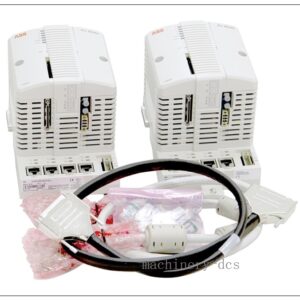
ABB AI880A High Integrity Analog Input Module: Full Technical Introduction
The AI880A (official catalog number 3BSE039293R1) is a SIL3-certified high-integrity 8-channel analog input module purpose-built for the ABB S800 I/O distributed platform, engineered to deliver ultra-reliable process signal acquisition for safety-critical industrial automation systems. As a core component of ABB’s 800xA DCS architecture, it supports both single and fully redundant configurations, making it a trusted choice for mission-critical deployments where zero data loss and continuous operation are non-negotiable.
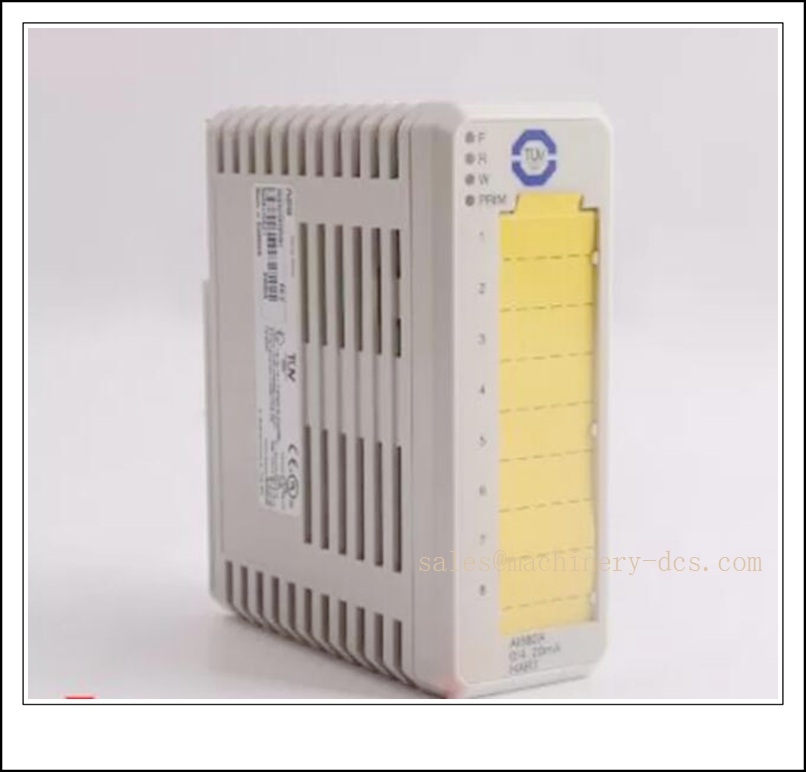
AI880A
Core Product Information
| Parameter | Detailed Specification |
|---|---|
| Official Part Number | AI880A (3BSE039293R1) |
| Manufacturer | ABB (Sweden) |
| Product Series | S800 I/O Distributed System |
| Device Type | High Integrity Redundant Analog Input Module |
| Compatible Platforms | ABB 800xA DCS, AC 800M Controller Series |
| Supported Termination Units | TU834, TU844, TU845, TU854 series base units |
| Keying Code | FD |
| Safety Certifications | SIL3 (IEC 61508), Category 4 (EN 954-1) |
| Communication Protocol | HART pass-through for smart transmitter integration |
| Warranty | 1-year original factory standard warranty |
| Typical Use Cases | Safety Instrumented Systems (SIS), ESD emergency shutdown loops, high-availability process control, legacy S800 system retrofitting |
Key Technical Specifications
Signal Acquisition Performance
- Input Channels: 8 fully independent current input channels
- Supported Signal Ranges: 4–20mA (standard), 0–20mA (extended), with over-range tolerance of +12% for 0-20mA and +15% for 4-20mA
- Input Resistance: 250 ohms for current inputs, fully compliant with NAMUR NE43 recommendations for over/under range limit configuration
- Resolution: 12-bit with sign bit, delivering industry-standard ±0.1% acquisition accuracy for process variables
- Transmitter Power Management: Integrated loop power supply with current limiting and full supervision for 2-wire and 3-wire field transmitters
- Loop Supervision: Built-in loop diagnostic DI function that detects open-circuit, short-circuit, and power loss conditions in real time
Electrical & Power Characteristics
- ModuleBus Current Draw: 45mA @ +5V DC, max 50mA @ +24V DC
- External Transmitter Supply: 4mA base current plus individual transmitter current, total maximum 260mA across all channels
- Total Power Dissipation: 2.4W, with heat dissipation rated at 8.2 BTU/hour
- Isolation Design: All 8 channels are fully galvanically isolated from the ModuleBus in a single isolated group, eliminating ground loop interference and common-mode noise
- Power Generation: On-board power regulation derived directly from the 24V ModuleBus, no separate external power supply required for core operation
Physical & Environmental Ratings
- Dimensions: 45mm (W) × 102mm (D) × 119mm (H)
- Net Weight: ~0.15kg, optimized for dense cabinet mounting
- Protection Class: IP20, designed exclusively for installation in sealed industrial control cabinets
- Operating Temperature: 0°C to +55°C under full load conditions
- Storage Temperature: -40°C to +70°C for long-term spare part storage
- Humidity Tolerance: 5% to 95% non-condensing
- Corrosion Resistance: Fully compliant with ISA-S71.04 G3 corrosion standards for harsh industrial atmospheres
- Regulatory Compliance: RoHS 2011/65/EU compliant, CE marked, UL/CSA certified for global industrial deployment
Core Functional Advantages
- SIL3 High-Integrity Safety Performance: The module’s hardware architecture meets the strictest IEC 61508 SIL3 safety requirements, making it suitable for direct integration into safety instrumented loops that protect personnel, assets, and process continuity.
- Native Redundancy Support: It is engineered for seamless dual-module redundant deployment, enabling bumpless failover with zero data interruption if the primary acquisition unit experiences an anomaly.
- HART Smart Device Compatibility: Integrated HART pass-through communication allows maintenance teams to remotely access diagnostic data, configuration parameters, and health status from connected HART field transmitters without disrupting normal process operation.
- Full Loop Supervision: Every channel continuously monitors transmitter power, loop continuity, and signal validity, automatically flagging faults to the DCS controller for immediate operator alerting and rapid troubleshooting.
- NAMUR NE43 Compliance: Pre-configurable over-range and under-range limit thresholds ensure consistent, standardized fault signaling across all connected field devices, eliminating ambiguous process alarm conditions.
- S800 Platform Native Integration: The module fits directly into existing S800 I/O backplanes, requiring no special hardware modifications to add high-integrity analog input capacity to pre-installed 800xA systems.
Recommended Compatible ABB Models
- AI810 Analog Input Module
- AI830 Analog Input Module
- AI835 Analog Input Module
- TU834 Termination Unit
- TU844 Termination Unit
- TU845 Termination Unit
- TU854 Termination Unit
- AC 800M Controller Series
Compatibility Notes & Installation Pitfalls
- Termination Unit Matching: The AI880A must be paired exclusively with the specified TU834/TU844/TU845/TU854 series termination units; using non-validated base units will break loop supervision functionality and void safety certifications.
- Redundancy Configuration Requirement: For redundant deployments, two identical AI880A modules must be installed in separate S800 chassis, with their respective channels mapped 1:1 in the Control Builder project to ensure full signal mirroring.
- HART Channel Limitation: HART communication is only active when the connected field transmitter is a HART-compatible 4-20mA smart device; standard analog transmitters will operate normally but will not expose HART diagnostic data.
- Safety Manual Mandate: All safety-related configurations must strictly follow the official AI880A Safety Manual to maintain SIL3 compliance; improper parameterization will invalidate the safety certification.
- Over-Range Handling: The module’s extended over-range tolerance allows it to capture transient process spikes that would trigger faults on standard analog input modules, preventing unexpected process trips during normal operational fluctuations.
Standard Operating Procedure (SOP) for Deployment
- Power off the I/O chassis, seat the module into the designated slot, and confirm the FD keying code on the module aligns with the matching slot on the termination unit.
- Wire all field transmitters to the corresponding channels on the TU-series termination unit, verifying 2-wire/3-wire loop polarity and ensuring all shield connections follow single-point grounding best practices.
- Launch Control Builder, add the hardware object to your 800xA project, configure signal ranges, over/under limit thresholds, and enable loop supervision for all safety-related channels.
- Download the completed project configuration to the connected AC 800M controller, then power up the chassis and observe the module status LEDs to confirm normal initialization.
- Inject calibrated 4mA, 12mA, and 20mA reference signals to each channel using a process calibrator, verifying the controller reads values within the specified ±0.1% accuracy tolerance.
- Document all channel configurations, safety loop parameters, and calibration results in the site safety maintenance log, confirming full SIL3 compliance for the installed system.
Typical Industrial Application Scenarios
The is the industry standard for high-reliability analog acquisition across segments including oil and gas production, petrochemical refining, thermal power generation, pharmaceutical manufacturing, and municipal water treatment safety systems. It is specifically deployed to collect critical process variables such as reactor temperature, pipeline pressure, tank level, and flow rate in safety-related control loops where signal loss could trigger hazardous process conditions.

 Send an Email