
Bently Nevada 3500/72-A03-B00 4-Channel Reciprocating Rod Position Monitor Product Introduction
Product Overview
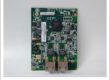
The Bently Nevada 3500/72-A03-B00 is a dedicated 4-channel reciprocating piston rod position monitor module in the 3500 Machinery Protection System, purpose-built exclusively for critical reciprocating compressor assets. As the core specialized monitoring hardware for reciprocating machinery, it natively accepts input signals from non-contact Proximitor displacement probes installed on the compressor pressure packing case, continuously measuring the real-time position and dynamic vibration of the reciprocating piston rod on a revolution-to-revolution basis. It performs high-precision signal analysis, independent alarm judgment, and waveform data transmission to the System 1 predictive diagnostics platform through the 3500/22M Transient Data Interface (TDI) module, providing full-time machinery protection for high-value reciprocating compressors in heavy industrial facilities .
This module is fully compliant with API 674 reciprocating machinery protection standards. It eliminates the need for customers to use complex signal splitters to route probe signals to multiple separate monitors, drastically reducing system integration complexity and intermediate fault points. It is the industry-standard dedicated piston rod condition monitoring solution for critical reciprocating assets.
Core Technical Specifications
| Parameter | Specification |
|---|---|
| Manufacturer | Bently Nevada (Baker Hughes) |
| Part Number | 3500/72-A03-B00 |
| Product Model | 3500/72 4-Channel Reciprocating Rod Position Monitor |
| Number of Independent Channels | 4 fully configurable proximity probe input channels |
| Supported Sensors | Non-contact Proximitor displacement probes for reciprocating piston rod measurement |
| Measurement Functions | Rod drop (rider band wear), piston rod position, peak-to-peak rod vibration, combined rod condition monitoring |
| Resolution | 24-bit high-precision AD conversion |
| Sampling Rate | Synchronized with compressor crankshaft keyphasor signal, revolution-to-revolution high-speed sampling |
| Alarm Configuration | 2 programmable thresholds per channel (Alert/Danger) with adjustable time delay |
| Data Output | Real-time measurement values, full waveform data transmitted to System 1 via TDI module |
| Power Consumption | 7.5 W typical operating power |
| Operating Temperature Range | -30°C to +65°C (-22°F to +149°F) |
| Storage Temperature Range | -40°C to +85°C (-40°F to +185°F) |
| Relative Humidity | 95% non-condensing |
| Form Factor | Standard 3500 series full-height plug-in module |
| Hot Swap Support | Fully supported for online replacement without interrupting other channels |
| Certifications | CE, UL, CSA, ATEX, Class 1 Division 2 / Zone 2 hazardous area certified |
Key Features
- Dual Combined Rod Condition Monitoring: The module supports the latest Bently Nevada integrated channel type that combines both rod drop (rider band wear) and piston rod position measurement on a single channel. This eliminates the historical limitation where customers had to choose between monitoring rider band wear or piston rod vibration, and removes the need for complex external signal splitters that introduce extra signal attenuation and fault points .
- Crankshaft Keyphasor Synchronized Measurement: All 4 channels are fully synchronized with the compressor crankshaft keyphasor signal, ensuring that every piston rod position measurement is accurately mapped to the exact angular position of the crankshaft. This allows operators to track rod position changes across every single compression stroke, capturing transient abnormal rod movement events that non-synchronized monitors completely miss.
- Full Waveform Data Transmission to System 1: The module transmits complete high-resolution piston rod position waveform data to the Bently Nevada System 1 predictive diagnostics platform through the 3500/22M TDI module. This enables advanced post-processing analysis such as rod position trend tracking, abnormal stroke pattern identification, and early rider band wear prediction, supporting condition-based maintenance strategies for reciprocating compressors.
- Full Self-Diagnostic Protection: The module continuously monitors sensor health, signal integrity, and keyphasor synchronization status in real time, automatically detecting sensor open circuit, short circuit, and synchronization loss faults, and triggering “Sensor Not OK” alarms immediately. The front-panel LED indicators provide intuitive visual feedback of each channel’s operating status for on-site technicians.
- Zero-Interference Safety Architecture: This module operates completely outside the critical machinery protection trip path. All configuration changes or hot-swap replacement operations will never interfere with the normal protection logic of other 3500 monitoring modules, ensuring zero risk of unintended machine trips during maintenance.
Installation & Compatibility Notes
- This front-panel main processing module must be paired with a matching dedicated rear I/O termination module to form a complete functional monitoring unit. It cannot work independently without the corresponding rear I/O module installed in the rack.
- The module requires a valid crankshaft keyphasor signal input to perform accurate revolution-synchronized rod position measurement. Without a properly configured keyphasor signal, the module cannot correctly map rod position data to individual compression strokes, resulting in inaccurate measurement readings.
- This 3500/72-A03-B00 module is fully backward-compatible with all 3500/05 racks, 3500/15 universal AC power supplies, 3500/22M TDI and all other M-series modules, making it the ideal direct drop-in replacement for legacy 3500/72 units in existing 3500 system deployments.
Typical Applications
This dedicated reciprocating rod position monitor module is widely deployed on critical high-power reciprocating compressors across oil & gas, petrochemical, refining, and natural gas pipeline transmission facilities. It provides continuous real-time monitoring for critical failure modes including rider band excessive wear, piston rod bending, crosshead pin loosening, and abnormal rod vibration, helping operators detect early reciprocating machinery faults weeks or even months before catastrophic failure occurs, effectively preventing unplanned downtime and costly compressor component damage such as broken piston rods and cylinder scoring .


 Send an Email