
Bently Nevada 3500/46-03-00 4-Channel Differential Expansion Monitor Product Introduction
Product Overview
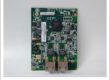
The Bently Nevada 3500/46-03-00 is a dedicated 4-channel differential expansion monitoring module designed exclusively for the 3500 Machinery Protection System. As a specialized high-precision measurement hardware for large steam turbines and heavy rotating machinery, it natively accepts input signals from eddy-current proximity probes installed on turbine casing expansion reference points, accurately measuring the relative axial thermal expansion displacement between the turbine rotor and the casing during unit startup, shutdown, and load change processes.
This module is fully compliant with API 670 industry machinery protection standards. It integrates advanced low-frequency signal conditioning, 24-bit high-resolution AD conversion, and independent alarm judgment functions. It can independently complete full protection logic for up to 4 differential expansion measurement points, and seamlessly transmit all real-time displacement trend and alarm status data to the 3500/22M TDI or System 1 diagnostic platform through the 3500 rack backplane. It is the industry-standard dedicated differential expansion monitor for large-scale thermal power and heavy industrial facilities.
Core Technical Specifications
| Parameter | Specification |
|---|---|
| Manufacturer | Bently Nevada (Baker Hughes) |
| Part Number | 3500/46-03-00 |
| Number of Independent Channels | 4 fully configurable independent channels |
| Supported Sensor Types | Bently Nevada standard eddy-current Proximitor proximity transducers |
| Measurement Parameter | Differential expansion (relative axial thermal displacement between rotor and casing) |
| Frequency Response Range | 1 Hz to 1 kHz, optimized for slow thermal expansion displacement signals |
| Measurement Accuracy | ±0.5% of full scale |
| Sensitivity Options | 0.394 mV/μm (10 mV/mil) or 0.787 mV/μm (20 mV/mil) for large-range displacement measurement |
| Proximitor Sensor Power Supply | -24 Vdc constant negative voltage output |
| Alarm Configuration | 2 independent programmable setpoints (Alert / Danger) per channel, with 0–60 s adjustable delay |
| Analog Output | Buffered 4-20 mA retransmission output per channel, corresponding to full-scale measurement range |
| Power Consumption | Typical 9 W, powered via 3500 rack backplane |
| Operating Temperature Range | -40°C to +85°C (-40°F to +185°F) |
| Storage Temperature Range | -40°C to +85°C (-40°F to +185°F) |
| Relative Humidity | 5% to 95% non-condensing |
| Form Factor | Standard 3500 series half-height module |
| Hot Swap Support | Fully supported for online replacement without interrupting other channels |
| Certifications | CE, UL, CSA, ATEX, Class 1 Division 2 / Zone 2 hazardous area certified |
Key Features
- High-Precision Low-Frequency Signal Processing: The dedicated low-frequency signal conditioning circuit is optimized for the extremely slow thermal expansion displacement signals of large steam turbines, ensuring accurate and stable measurement of tiny axial displacement changes during long-duration unit startup and shutdown processes, avoiding measurement drift caused by signal noise.
- Multi-Point Expansion Monitoring Capability: The 4 independent channels can simultaneously monitor the differential expansion values of multiple key sections of a large steam turbine (high-pressure cylinder, intermediate-pressure cylinder, low-pressure cylinder), providing comprehensive data support for operators to judge the thermal expansion matching state between the rotor and the entire casing.
- Full Self-Diagnostic Protection: Built-in continuous sensor health monitoring function automatically detects probe open circuit, short circuit, extension cable disconnection and other faults, and triggers “Sensor Not OK” alarm immediately. The front-panel LED indicators (OK, Bypass, Channel Alarm) provide intuitive visual feedback of operating status for on-site technicians.
- Seamless System Integration: It communicates with other 3500 series modules through the high-speed backplane bus, no extra signal wiring required. It works perfectly with 3500 Configuration Software and System 1 diagnostic platform, enabling unified correlation analysis between differential expansion data and shaft vibration, thrust position parameters, helping technicians quickly identify abnormal thermal expansion faults such as cylinder expansion jamming and rotor differential expansion out of limit.
- Zero-Interference Safety Architecture: This module operates completely outside the critical machinery protection trip path. All configuration changes or hot-swap replacement operations will never interfere with the normal protection logic of other 3500 monitoring modules, ensuring zero risk of unintended machine trips during maintenance.
Installation & Compatibility Notes
- This half-height module can be installed in any general-purpose slot of the 3500 rack, no fixed slot restriction. When performing hot-swap replacement, confirm that the “Bypass” state of the corresponding channels is activated in the 3500 configuration software in advance, to avoid false alarms caused by signal interruption during the replacement process.
- All field Proximitor sensor signal cables must use shielded dedicated Bently Nevada 129525 series cables, and the shielding layer must be single-point grounded at the rack side. Signal cables must be routed separately from high-voltage power cables to avoid EMI interference that causes measurement data drift.
- This 3500/46-03-00 module is fully backward-compatible with all 3500/05 racks, 3500/15 universal AC power supplies, 3500/22M TDI and all other M-series modules, making it the ideal upgrade replacement for legacy differential expansion monitoring units in existing 3500 system deployments.
Typical Applications
This dedicated differential expansion monitor is widely deployed on large steam turbine-generator sets across thermal power generation, nuclear power, and heavy industrial facilities. It provides continuous, reliable monitoring for the relative axial thermal expansion displacement between the turbine rotor and casing, helping operators detect early abnormal thermal expansion faults such as cylinder expansion jamming, uneven heating of the unit, and differential expansion out of limit, effectively preventing catastrophic equipment damage such as dynamic and static friction and shaft bending caused by abnormal thermal expansion.


 Send an Email