
Bently Nevada 3500/22M 138607-01 + 146031-01 Transient Data Interface (TDI) Product Introduction
Product Overview
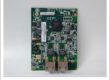
The Bently Nevada 3500/22M assembly, consisting of the 138607-01 front panel TDI module and the matching 146031-01 backplane I/O module, is a full-height standard Transient Data Interface (TDI) designed exclusively for the 3500 Machinery Protection System. As the core communication and data acquisition gateway for the entire 3500 rack, it fully integrates the legacy 3500/20 Rack Interface Module (RIM) functionality with high-performance transient waveform processing capabilities, eliminating the need for separate external communication processors .
This module pair is strictly installed in Slot 1 (the leftmost full-height slot adjacent to the power supply) of the 3500 rack. It continuously polls all M-series monitoring modules (such as 3500/40M, 3500/42M, 3500/53M) via the backplane bus, collecting both steady-state static parameters and high-speed dynamic transient waveform data. It then routes this consolidated data to Bently Nevada System 1 diagnostic software, plant DCS, or ETS systems through multiple communication interfaces. Critically, the 3500/22M operates completely outside the critical protection trip path — its communication failures, maintenance operations, or firmware updates will never interfere with the normal machinery protection logic of the 3500 system, ensuring zero risk of unintended machine trips .
Core Technical Specifications
| Parameter | Specification |
|---|---|
| Manufacturer | Bently Nevada (Baker Hughes) |
| Part Number Combination | 3500/22M (138607-01 Front Panel + 146031-01 Backplane I/O Module) |
| Module Type | Standard Non-TMR Transient Data Interface (TDI) |
| Mandatory Installation Slot | Slot 1 (adjacent to power supply) in 3500 rack |
| Power Consumption | 10.5 W (powered via 3500 backplane) |
| Communication Interfaces | 10/100 Base-TX Ethernet (RJ45), 100Base-FX Fiber Ethernet, Front-panel USB-B |
| Maximum Sampling Rate | Up to 102.4 kHz per channel (DC-coupled) |
| Simultaneous Acquisition Channels | Up to 48 channels for synchronized steady-state + transient data capture |
| Pre-Trigger Buffer | Configurable up to 10 seconds of pre-event waveform storage |
| Operating Temperature Range | -30°C to +65°C (-22°F to +149°F) |
| Storage Temperature Range | -40°C to +85°C (-40°F to +185°F) |
| Relative Humidity | 5% to 95% non-condensing |
| Dimensions | 241.3 mm × 24.4 mm × 241.8 mm |
| Weight | ~0.91 kg (2.0 lbs) |
| Hot Swap Support | Fully supported for online replacement without disrupting protection functions |
| Certifications | CE, UL, CSA, ATEX, Class 1 Division 2 / Zone 2 hazardous area certified |
Key Features
- Seamless System Integration: The 138607-01 + 146031-01 assembly natively communicates with all 3500 M-series monitoring modules through the rack backplane, no extra signal wiring required. It works perfectly with 3500 Configuration Software and System 1 diagnostic platform, allowing users to flexibly define sampling parameters, trigger rules, and data storage policies .
- Advanced Transient Capture Capability: It supports multiple trigger modes including alarm-based triggers from other 3500 modules, external voltage triggers, manual activation, and scheduled captures. The configurable pre-trigger buffer preserves full waveform data before the event occurs, while high-resolution post-trigger recording captures the complete evolution of transient faults such as critical-speed passing, load mutation, and surge events .
- Multi-Interface Redundant Communication: Equipped with both copper Ethernet and fiber Ethernet ports, it adapts to different industrial network topologies. The front-panel USB-B interface enables ultra-convenient local configuration, firmware upgrade, and on-site data export without relying on network access .
- Zero-Interference Safety Architecture: Since the 3500/22M does not participate in any protection trip logic, technicians can perform hot-swap replacement, network maintenance, or software debugging on this module without shutting down the protected machinery. This design eliminates the common safety risk of accidental trips caused by communication system failures in traditional protection systems .
- Comprehensive Built-In Diagnostics: Front-panel status LEDs (OK, TX/RX, USB, Fault) provide immediate visual health feedback. The module continuously sends communication status, data transmission quality, and internal fault alarm signals to the 3500 system, enabling remote monitoring and predictive maintenance .
Installation & Compatibility Notes
- The 138607-01 front panel and 146031-01 backplane I/O module are strictly matched components for the standard non-TMR 3500/22M. They cannot be intermixed with TMR-version TDI backplane modules or legacy 3500/20 RIM assemblies, as mismatched hardware will fail to initialize or cause backplane communication conflicts .
- This module must only be installed in Slot 1 of the 3500 rack; it cannot be placed in general-purpose I/O slots for monitoring or relay modules, otherwise the backplane communication bus will not work properly .
- Always use shielded Ethernet/fiber cables routed separately from high-voltage power lines to avoid EMI interference that may cause waveform data distortion or intermittent communication drops. Ensure the 3500 rack is reliably grounded to maintain signal integrity .
- This standard 3500/22M assembly is fully backward-compatible with all 3500/05 racks, 3500/15 universal AC power supplies, and all M-series monitoring modules, making it the preferred modern replacement for legacy 3500/20 RIM units in existing 3500 deployments .
Typical Applications
This TDI module pair is widely deployed on critical rotating assets including large steam turbines, centrifugal compressors, gas turbines, generators, and high-speed pumps across power generation, oil & gas, petrochemical, and heavy industrial facilities. It captures complete Bode plots, polar plots, orbit diagrams, and full-spectrum transient data during machine startup, shutdown, and fault events, providing engineers with the high-resolution diagnostic data required to accurately identify complex faults such as rotor imbalance, misalignment, oil whirl, and seal rubs, helping avoid unplanned downtime and catastrophic equipment damage .


 Send an Email