
Description
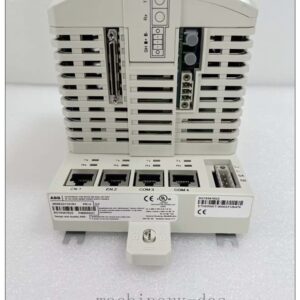
Product Profile: Yokogawa CP471-00 Processor Module
Title Description
Yokogawa CP471-00 Processor Module for CENTUM VP Distributed Control System (DCS)
Executive Summary
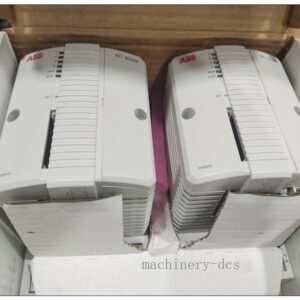
The CP471-00 is a high-performance Processor Module designed by Yokogawa Electric Corporation for its CENTUM VP and CENTUM CS 3000 Distributed Control Systems (DCS). It serves as the central computing unit within specific Field Control Stations (FCS), executing control strategies, managing I/O processing, and ensuring real-time communication within the DCS architecture. The module is engineered to support high-availability configurations, including dual redundancy, which is critical for continuous process industries where operational reliability and minimal downtime are paramount. The CP471-00 represents a key component in Yokogawa’s robust and scalable automation solutions, designed for complex and demanding industrial applications.
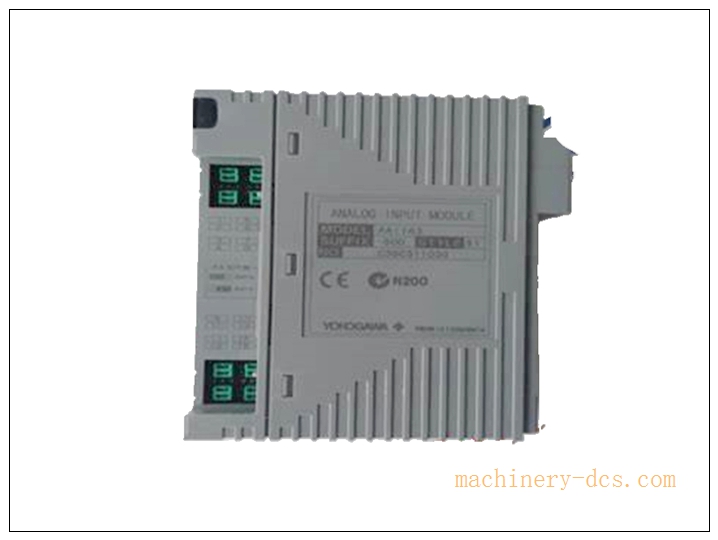
CP471-00
Core Technical Specifications
| Specification | Details |
|---|---|
| Product Name | CP471 Processor Module (Variant -00) |
| Manufacturer | Yokogawa Electric Corporation |
| System Compatibility | CENTUM VP, CENTUM CS 3000 DCS |
| Supported Field Control Units (FCUs) | AFV30S, AFV30D, AFV40S, AFV40D, A2FV50S, A2FV50D, A2FV70S, A2FV70D |
| Suffix Code Meaning (-00) | Basic type without explosion protection option |
| Redundancy Support | Dual-redundant configuration supported (two CP471 modules per duplexed FCU) |
| Operating System | CENTUM VP Control Function for Field Control Station (requires R6.05 or later) |
| Environmental Conditions | Industrial standard (0-60°C operating temperature, 5-95% non-condensing humidity – *Verify specific limits in manual*) |
| Physical Mounting | Mounts on Yokogawa CENTUM Field Control Units (FCUs) |
| Power Supply | Powered via the Field Control Unit backplane (Voltage and current consumption per FCU specifications) |
| Dimensions | Standard Yokogawa Processor Module form factor (Confirm exact dimensions in hardware manual) |
| Weight | Approximately 1.5 kg (3.3 lbs) – *Verify exact weight in manual* |
Key Features and Advantages
- High-Performance Processing: The CP471-00 is equipped with a powerful processor capable of executing complex control algorithms, function blocks, and user applications with high speed and precision, ensuring timely responses to process changes.
- Seamless Redundancy: Its support for dual-redundant configuration is a standout feature. Two modules can be installed in a duplexed FCU, operating in a hot-standby mode. If the primary module fails, the secondary module takes over seamlessly without interrupting the process, maximizing system availability and reliability.
- Robust System Integration: Designed as an integral component of the CENTUM VP DCS, the -00 provides deep integration with Yokogawa’s comprehensive engineering tools (e.g., CENTUM VP Engineering Studio), operator interfaces, and information management systems. This ensures a unified and highly efficient automation environment.
- Advanced Communication Capabilities: The module handles communication between the FCS and other system components, including operator stations, engineering stations, and other controllers via high-speed networks like Vnet/IP and Ethernet, enabling real-time data exchange and coordinated control.
- Scalability and Flexibilityhe is part of a scalable system architecture. It supports a wide range of I/O modules and communication interfaces, allowing the control system to be tailored to the specific needs of the application, from small unit processes to large-scale plant-wide control.
- Reliability in Harsh Environments: Built to withstand the demanding conditions of industrial plants, including electrical noise, temperature variations, and vibration, ensuring stable and continuous operation even in challenging environments.
Application Scenarios
he is deployed in the core of Yokogawa’s DCS solutions across various process industries:
- Oil and Gas: Used in upstream platforms, refineries, and petrochemical plants for critical process control, including separation, distillation, and compression units.
- Chemical and Pharmaceutical: Applied in batch and continuous processes for precise control of reactions, mixing, and purification steps where recipe management and compliance are essential.
- Power Generation: Employed in fossil fuel and nuclear power plants to control boiler, turbine, and balance-of-plant systems, ensuring efficient and safe power generation.
- Water and Wastewater Treatment: Used in large-scale treatment facilities for monitoring and controlling clarification, filtration, and disinfection processes.
- Pulp and Paper: Applied in digesters, bleaching plants, and paper machines for controlling consistency, temperature, and flow rates.
Recommended Related Models (Brand: Yokogawa)
| Model | Description | Relationto |
|---|---|---|
| CP461 | Processor Module (Predecessor to ) | An earlier generation processor module. Many FCUs may have shipped with CP461 installed, but is the current, more powerful replacement option. |
| CP451 | Processor Module (for Specific FCUs) | Another processor module variant designed for specific older Field Control Units (e.g., AFV10S/D, AFV20S/D). The is designed for newer AFV30, AFV40, A2FV50, A2FV70 series FCUs. |
| AFV30D / AFV40D / A2FV50D / A2FV70D | Duplexed Field Control Units | The Redundant FCUs that can accommodate two modules for high-availability configurations. |
| AFV30S / AFV40S / A2FV50S / A2FV70S | Simplex Field Control Units | The Non-Redundant FCUs that can accommodate one module. |
| VI701 / VI702 | Vnet/IP Communication Modules | These modules handle network communication. The works in conjunction with them to communicate over the control network. |
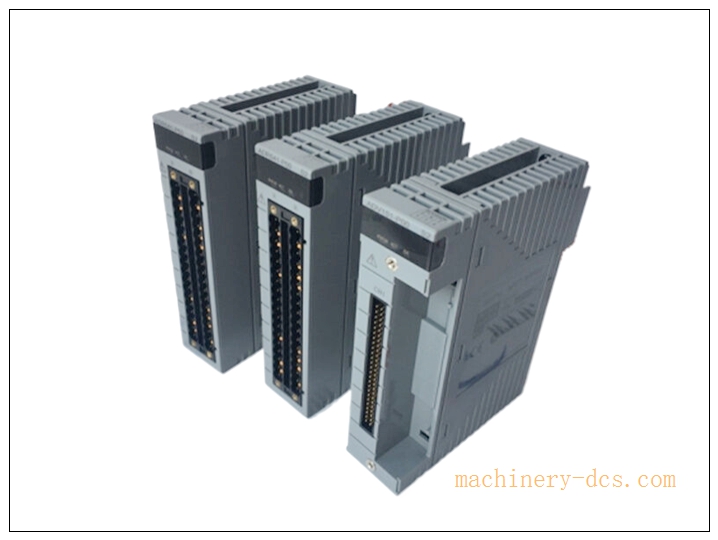
CP471-00
Frequently Asked Questions (FAQ)
Q: What is the difference betwhe and the -01?
A: The suffix code indicates the explosion protection option. According to the model and suffix code information:
- : Basic type without explosion protection option.
- : Variant with explosion protection option (e.g., for installation in hazardous areas requiring specific certifications).
The core processing functionality is the same, but the -01 variant is certified for use in more stringent hazardous area classifications.
Q: Can I replace a CP461 processor module a ?
A: Yes, generally. The is designed as a compatible and more powerful upgrade for the CP461. However, you must:
- Verify that the Field Control Unit (AFV30, AFV40, A2FV50, A2FV70) is compatible whe .
- Ensure the control system software (CENTUM VP Control Function for Field Control Station) is version R6.05 or later to support the .
- Follow Yokogawa’s recommended procedures for swapping processor modules, which may involve backing up configuration, performing a controlled shutdown, and potentially performing a system restoration after replacement.
Q: How do I implement redundancy whe ?
A: To implement dual redundancy, you need:
- A Duplexed Field Control Unit (e.g., AFV30D, AFV40D, A2FV50D, A2FV70D).
- Two idal modules (both should be the same variant, e.g., both -00 or both -01).
- The modules are installed in the designated redundant slots on the FCU.
- The system is configured so that one module operates as the Primary (Active) and the other as the Secondary (Standby). The secondary module continuously synchronizes its state with the primary. In the event of a primary module failure, the secondary takes over control automatically and seamlessly.
Q: What is the role of the Control Function for Field Control Station software whe ?
he hardware requires the Control Function for Field Control Station software (a component of the CENTUM VP DCS) to operate. This software provides the execution environment for control logic, function blocks, and I/O processihe is the physical engine that runs this software. The requirement for version R6.05 or later ensures that the software can leverage the full capabilitieshe hardware and is compatible with its architecture.
Q: How can I obtain technical documentation or manuals he ?
A: Comprehensive documentation, including hardware manuals, installation guides, and system configuration manuals, is typically available from:
- Yokogawa’s Official Website: Their support portal or product page often has a documentation section.
- Yokogawa Direct Contact: Contacting your local Yokogawa sales or support representative is the most reliable way to get the most current and accurate documentation.
- Authorized Distributors: If your system was purchased through an authorized Yokogawa distributor, they can also assist in obtaining documentation.
Q: What are the common indicators a module might need replacement?
A: Indicators include:
- System Alarms: The DCS operator station may generate alarms related to processor module failure, communication loss, or self-diagnostics.
- Status LEDs: The module itself may have status LEDs that indicate operational status, errors, or fault conditions (e.g., red LED for error, green for normal).
- Process Upsets: Unexplained process control anomalies, loops failing to respond, or the entire FCS becoming unresponsive.
- Physical Damage: Visible signs of damage, such as burn marks, blown components, or corrosion.
- Age and End-of-Life: While modules are robust, they have a finite lifespan. Planning for proactive replacement before end-of-life support is announced is wise for critical systems.

 Start Chat


 Send an Email