
Description
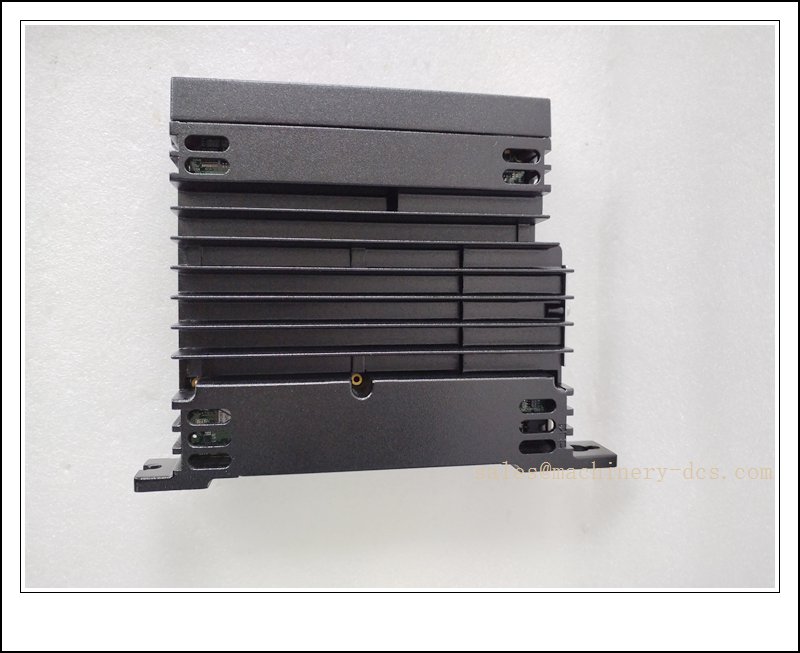
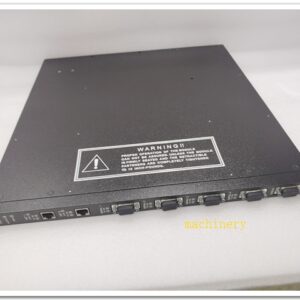
IS220UCSAH1A GE Mark VIe Universal Controller Module
Executive Brief
The IS220UCSAH1A is the high-performance core processing unit of General Electric’s Mark VIe Speedtronic turbine control ecosystem, engineered as a standalone embedded controller for mission-critical power generation and heavy industrial automation. Built around a 667 MHz Freescale 8349 processor running the QNX real-time operating system, it supports both simplex operation and full Triple Modular Redundancy (TMR) architectures with 2-out-of-3 voting logic, achieving SIL 3 safety certification from TÜV Rheinland. Manufactured in Salem, Virginia, USA, this module integrates 2 GB program memory, 16 GB local data storage, 6 dedicated Ethernet ports and 1 USB configuration port, delivering deterministic real-time control for gas turbines, steam turbines, combined cycle plants and heavy industrial safety interlock systems. Its conformal coated reinforced metal housing, fanless thermal design and -40°C to +70°C wide operating temperature range make it fully compliant with NFPA Class 1, Div. 2 hazardous location standards, ensuring uninterrupted performance in the harshest industrial environments.
IS220UCSAH1A
Core Technical Specifications
- Part Number: IS220UCSAH1A
- Manufacturer: General Electric (GE)
- Series: Mark VIe Speedtronic Turbine Control System
- Product Type: Universal Controller / Core Processor Module (UCSA)
- Functional Revision: A
- Safety Rating: SIL 3 certified by TÜV Rheinland
- Main Processor: Freescale 8349 Power Architecture CPU, 667 MHz clock speed
- Redundancy Support: Triple Modular Redundancy (TMR) with 2-out-of-3 fault-tolerant voting logic
- Operating System: QNX real-time operating system
- Program Memory: 2 GB
- Local Data Storage: 16 GB
- Power Input: 24 VDC nominal, 18–32 VDC wide operating range
- Power Consumption: ≤ 12 W
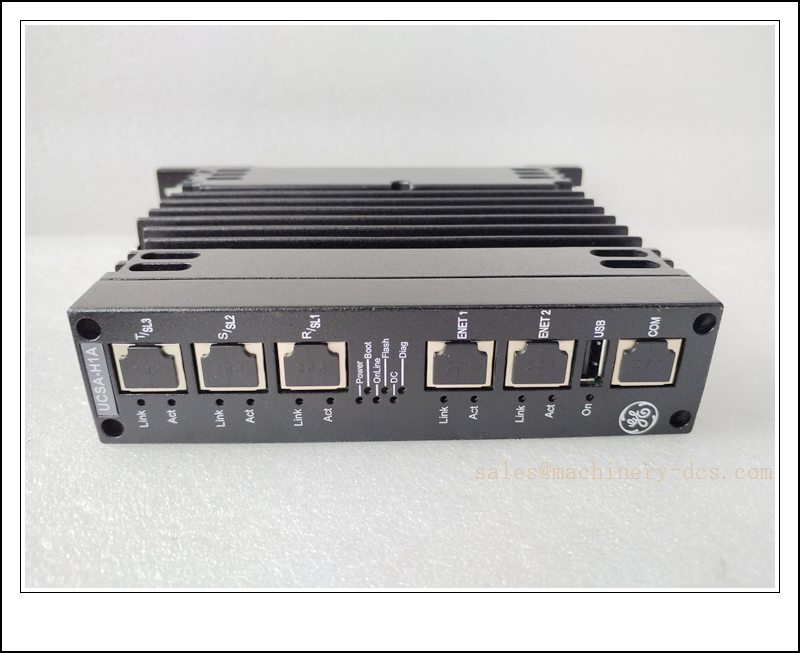
- Communication Interfaces: 6 × 10/100Base-TX RJ45 Ethernet ports, 1 × USB 2.0 configuration port
- Safety Function Response Time: ≤ 50 ms
- I/O Compatibility: Full native support for IS200 and IS400 series Mark VIe safety-rated I/O modules
- Operating Temperature Range: Standard 0°C to 65°C, extended -40°C to +70°C
- Protection Features: Conformal PCB coating, fanless passive cooling, ESD and surge protection circuits
- Dimensions: 204 mm × 152 mm × 55 mm (8.0 in × 6.0 in × 2.2 in)
- Net Weight: Approximately 1.2 kg (2.6 lbs)
- Country of Origin: Salem, Virginia, USA
- Warranty: 12 months for original new units, 24 months for authorized refurbished units
- Supported Software: GE Proficy Machine Edition, CIMPLICITY HMI development environment
- Compliance Standards: NFPA Class 1, Div. 2, IEC 62443 industrial cybersecurity, CE marked
Brand Development Background
General Electric’s Speedtronic turbine control lineage spans over 60 years of continuous innovation, evolving from the original Mark I analog control systems in the 1960s through the fully digital Mark V generation that dominated global power plants in the 1990s. The Mark VIe platform, launched in the early 2000s, represented a revolutionary architectural shift by replacing traditional centralized control racks with distributed Ethernet-connected I/O and modular standalone controllers. The IS220UCSAH1A was introduced as the flagship processing node for this new ecosystem, designed to eliminate the single-point failure vulnerabilities of older shared-backplane controller designs. Over the past two decades, this module has become the global industry benchmark for heavy-duty turbine control reliability, with over 15,000 units deployed across power generation, oil and gas, and industrial critical control facilities worldwide.
Key Industry Milestones
- In 2007, the IS220UCSAH1A completed full GE factory certification and was formally released as the standard controller for all new Mark VIe gas turbine installations.
- In 2013, it obtained official SIL 3 functional safety certification from TÜV Rheinland, qualifying it for deployment in high-risk safety interlock and emergency shutdown (ESD) systems.
- In 2019, GE released a major firmware update that added full IEC 62443 cybersecurity compliance, including secure boot, encrypted communication and role-based access control for critical infrastructure protection.
- In 2023, the module was validated for extended -40°C to +70°C operation, expanding its applicability to remote wind farms, offshore oil platforms and arctic-region power generation facilities.
- Throughout 2025-2026, the IS220UCSAH1A has remained the most widely specified replacement controller for global Mark VIe system modernization and retrofit projects, with consistent global stock availability from GE-authorized industrial automation suppliers.
Application Scenarios & Functional Advantages
This controller is primarily deployed in heavy-duty gas turbine main control systems, steam turbine governing and protection loops, combined cycle power plant distributed control architectures, EX2100e excitation control systems, LS2100e large motor drive control, wind turbine pitch and torque regulation, oil and gas pipeline safety interlock systems, and critical process safety control loops in petrochemical facilities.
Its core operational advantages include:
- Deterministic Real-Time Performance: The QNX real-time operating system paired with the 667 MHz Power Architecture processor guarantees consistent sub-50ms response for all critical turbine control functions, eliminating the jitter and latency risks associated with general-purpose operating systems.
- TMR Fault-Tolerant Architecture: When deployed in triple redundant configuration with 2-out-of-3 voting logic, the system can continue full operation even if one complete controller unit suffers a total hardware failure, delivering 99.999% system availability for non-stop power generation operations.
- Unmatched Communication Bandwidth: 6 independent 10/100 Mbps Ethernet ports allow complete physical segmentation of control networks, HMI traffic, I/O networks and remote diagnostic links, eliminating network congestion and cybersecurity attack surfaces.
- Zero-Maintenance Thermal Design: The fanless passive cooling architecture removes all moving parts from the controller, eliminating fan failure points and preventing dust and particulate contamination from entering the internal circuitry, extending service life to over 15 years under normal operating conditions.
- Seamless Ecosystem Integration: It natively communicates with all legacy Mark VIe I/O modules, existing CIMPLICITY HMI stations and GE turbine control software libraries, enabling drop-in replacement upgrades for older Mark VI installations without requiring full system rewiring or logic reprogramming.
- Advanced Built-In Diagnostics: 7 front-panel LED indicators (Power, Boot, Online, Flash, DC, Diag, Link/Act) provide instant visual status feedback, allowing maintenance technicians to identify power faults, boot failures, communication drops and internal diagnostic alerts in seconds without requiring external software tools.
10 Recommended Related Models
- IS220PDIOH1A – Mark VIe discrete input/output module, the most widely used field signal interface that connects directly to the UCSA controller for all discrete turbine interlock signals
- IS200TPROH1A – Mark VIe turbine protection terminal board, dedicated overspeed and critical condition signal processing partner for the
- IS220PAICH1A – Mark VIe high-resolution analog input module, responsible for transmitting all temperature, pressure and process variable data to the controller
- IS220PSVOH1A – Mark VIe servo output module, executes precise valve position control commands issued by the UCSA controller for turbine fuel and airflow regulation
- IS220PAOH1A – Mark VIe analog output module, expands the controller’s capability to drive 4-20mA analog field indicators and control loops
- IS220PRTDH1A – Mark VIe RTD temperature input module, delivers high-accuracy machine winding and bearing temperature data to the controller for condition monitoring
- 80026-524-01-R – Mark VIe rack dedicated power supply module, provides regulated 24 VDC power to the and all associated I/O modules
- IS220PCTAH1A – Mark VIe high-speed counter module, transmits turbine rotational speed and pulse frequency measurement data to the controller for precise speed governing
- IS220PSCAH1A – Mark VIe servo control module, works in tandem with the UCSA to implement closed-loop position control for large turbine actuation systems
- IS200EXCIG1A – EX2100e excitation control interface board, enables seamless integration between the and GE’s generator excitation control system for full plant coordinated control
Frequently Asked Questions
- Q: Can I install the directly into an older Mark VI (non-VIe) control rack?
A: No, this module is purpose-built for the Ethernet-distributed Mark VIe architecture. It cannot operate on the older Mark VI VME parallel backplane, and requires corresponding Mark VIe system firmware upgrades to function correctly. - Q: What is the maximum number of I/O modules that a single controller can support?
A: Under standard configuration, one UCSA controller can manage up to 64 Mark VIe I/O modules across redundant control networks, covering all signal acquisition and output requirements for a complete heavy-duty gas turbine control system. - Q: Does the module support hot-swapping during live system operation?
A: In simplex configurations, the controller cannot be hot-swapped without interrupting control. In TMR triple-redundant architectures, one of the three parallel units can be safely removed and replaced while the remaining two units maintain full 2-out-of-3 voting control, with zero disruption to turbine operation. - Q: What should I do if the “Diag” LED on the front panel turns solid red?
A: First, check the system diagnostic log in the CIMPLICITY HMI to identify the specific fault code. Most red Diag alerts are caused by configuration mismatches, corrupted firmware or temporary communication errors. Performing a controlled warm restart will resolve over 80% of non-hardware-related diagnostic faults. - Q: Can I mix different hardware revisions of units in the same TMR redundant group?
A: GE strongly recommends using identical hardware revisions with matching firmware versions for all three controllers in a TMR set. Mismatched revisions can cause inconsistent voting logic behavior, leading to unexpected system faults or reduced fault tolerance performance.

 Send an Email