
Description
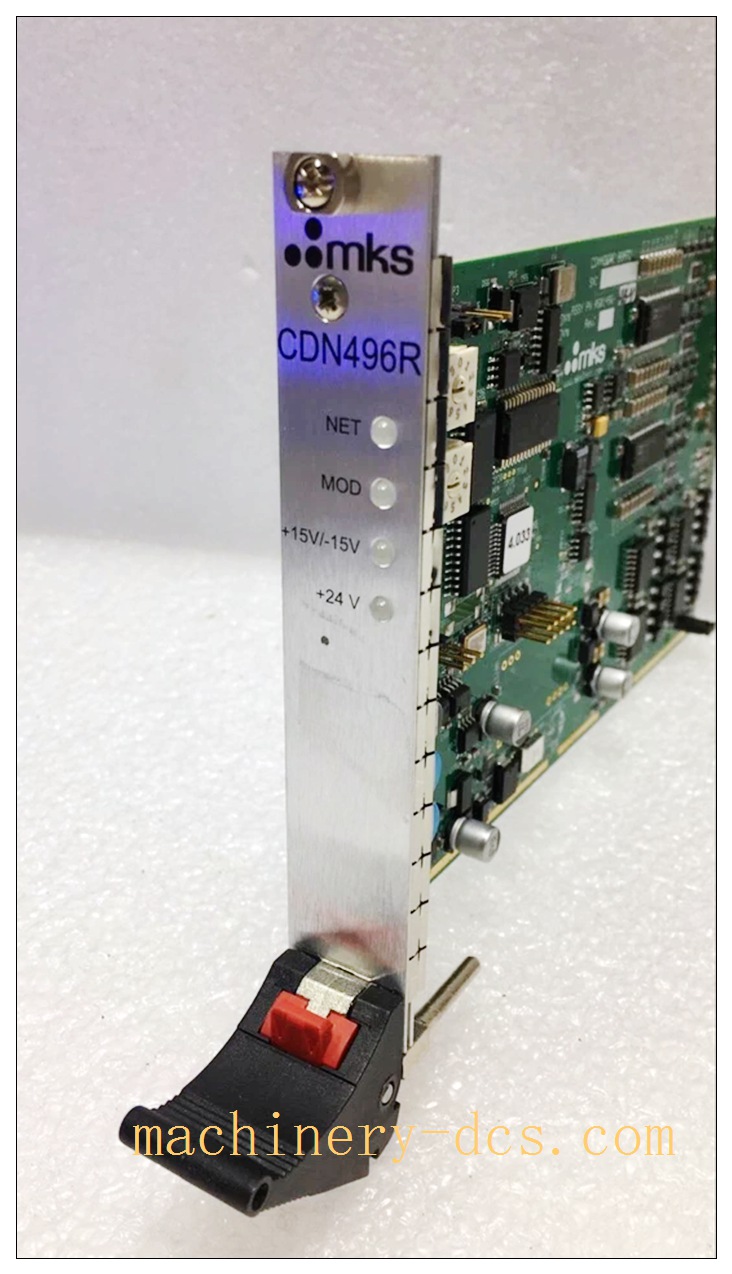
APPLIED MATERIALS 0190‑34055 CompactPCI cPCI‑3U Arc Detection Control Board (MKS CDN496R)
Product Detailed Description
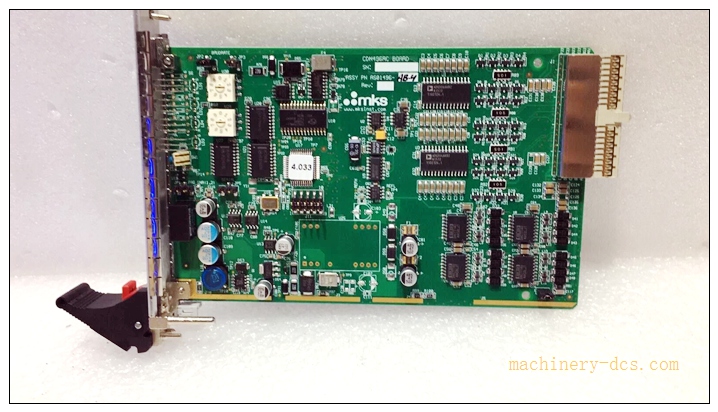
0190‑34055 is a 3U Compact‑PCI arc detection & plasma monitoring board, OEM‑branded for Applied Materials and manufactured by MKS Instruments (internal MKS part number CDN496R / AS01496‑AB‑4). This specialized PCB monitors RF plasma arc events inside semiconductor process chambers, performs real‑time arc‑fault capture, arc‑count statistics, and sends interlock trigger signals to the tool host controller. It samples RF power‑feed signatures, detects transient arcing faults during etch / PVD / CVD recipes, and provides hardware‑level fast response to suppress destructive plasma arcs that may damage wafer substrates and chamber hardware. Original AMAT series production is discontinued. Available stock includes new‑old‑stock surplus, factory‑calibrated refurbished units and pulled used spares for fab equipment maintenance and tool life‑extension retrofits.
0190-34055
Technical Parameters
| Item | Specification |
|---|---|
| Manufacturer | Applied Materials (AMAT), OEM by MKS Instruments |
| AMAT Part‑No | 0190‑34055 |
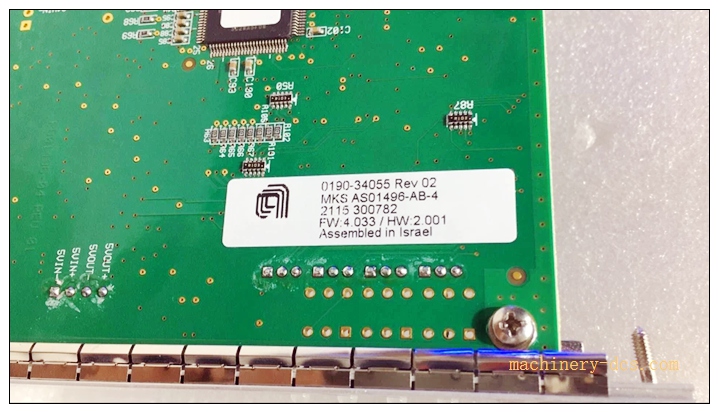
| MKS Equivalent Part | CDN496R, AS01496‑AB‑4 |
| Hardware Form Factor | 3U Compact‑PCI (cPCI) card |
| Product Status | OEM Discontinued, spare‑part‑only supply |
| Core Function | RF plasma arc detection, arc event logging, hardware interlock output |
| System Bus Interface | Compact‑PCI backplane cPCI bus |
| Signal Input | High‑speed arc sensing analog inputs coupled to RF delivery network |
| Response Latency | Sub‑microsecond arc fault detection response |
| On‑board Storage | Non‑volatile memory for arc event history log storage |
| Auxiliary Power | +5 V, +12 V supplied via cPCI backplane |
| Operating Temperature | 10 °C ~ +50 °C (Fab electronics rack environment) |
| Storage Temperature | ‑20 °C ~ +70 °C |
| Humidity | 5‑85 % RH, non‑condensing |
| Mechanical Dimension | 3U cPCI standard: 160 × 100 × 22 mm |
| Weight | Approx. 0.42 kg |
| Revision Note | Rev 02 is the most common hardware revision variant |
| Compliance | CE, SEMI‑S2 fab equipment safety standard |
Compatibility & Installation Pitfalls
Compatibility
- AMAT Centura / Endura semiconductor process platform cPCI electronics card cage
- RF plasma processing chambers: Etch, PVD sputter, CVD deposition chambers
- MKS / AMAT RF generator and matching network assemblies
- Tool host controller running AMAT process control software with CDN496 driver support
Critical note: This board cannot operate standalone. It requires matching tool firmware, dedicated MKS driver software and proper arc‑sensor signal cabling. Different hardware revisions (Rev01 / Rev02) are not fully plug‑and‑play without software configuration update.
Installation Pitfalls
- ESD extreme sensitivity: High‑speed analog front‑end circuits are extremely static‑sensitive. ESD wrist strap and anti‑static mat are mandatory for all handling operations; invisible static damage will cause missed‑arc detection or false arc triggering without visible board burn marks.
- cPCI backplane insertion mis‑alignment: Bent cPCI connector pins lead to intermittent bus communication, incomplete event logging or random board drop‑out. Never force insert the card into the slot.
- Firmware & driver revision mismatch: Mismatched tool software / CDN496 driver version will disable arc‑detection function, interlock outputs fail to activate, risking wafer and chamber hardware damage. Confirm driver compatibility before swap‑out.
- Arc‑sense signal cable routing: Sensing cables must be separated from high‑power RF cables. Poor routing introduces RF crosstalk, generating large volumes of false‑arc fault alarms during normal plasma ignition.
- Revision mix‑up risk: Verify both AMAT label
0190‑34055and MKS silkscreenCDN496R. Do not confuse with CDN496 non‑R variant; hardware sensing threshold differs and cannot direct substitute. - Hot‑swap caution: Although cPCI hardware supports hot‑swap, replace this board only under full tool chamber idle & rack power‑down status for production fab tools. Live hot‑swap may trigger unexpected chamber interlock.
- Post‑swap calibration requirement: Used / refurbished spare units require arc‑threshold re‑calibration after installation; factory default thresholds are not guaranteed to match existing chamber process recipes.
0190-34055
Standard Operating Procedure (SOP)
- Pre‑work: Lock‑out‑tag‑out target semiconductor process tool, set chamber to safe idle state, power‑down cPCI rack chassis. Wear certified ESD anti‑static wrist strap.
- Record data: Backup tool recipe configuration, record existing arc detection threshold parameters, log current MKS CDN driver software revision.
- Module removal: Unscrew front‑panel retention screw, operate cPCI ejector levers, extract arc‑detection board smoothly. Inspect cPCI backplane slot pins for bending or burn damage. Disconnect front‑panel arc‑sense signal cabling.
- Incoming inspection: Visual inspect spare PCB for trace damage, component corrosion. Verify AMAT part‑number, MKS model code and hardware revision marking.
- Mechanical mounting: Align card with cPCI card‑cage guide rails, use ejector levers for smooth full insertion, fasten front‑panel retention screw.
- Signal wiring: Re‑connect arc‑sense high‑speed signal cables strictly follow original drawing; separate signal cables from high‑power RF harness.
- Power‑on commissioning: Restore cPCI rack power supply. Confirm board power‑on LED status. Upload matching MKS CDN496 driver if version mismatch occurs. Restore original arc‑detection threshold parameters.
- Functional validation: Execute tool diagnostic test sequence. Run simulated arc fault test to validate detection response and interlock triggering. Verify arc‑event log can be correctly captured and stored. Perform short plasma ignition test, confirm zero false‑arc alarms under normal recipe conditions.
- Documentation: Fill equipment maintenance log, archive arc‑threshold setting record. Properly package defective removed board. Release lock‑out‑tag‑out only after full diagnostic acceptance test passed.
Application Scenarios
‑ 200 mm / 300 mm wafer semiconductor fab: AMAT Centura / Endura PVD sputtering chambers ‑ Dielectric & conductor plasma etch process chamber arc fault protection ‑ CVD thin‑film deposition equipment plasma‑arc monitoring and hardware interlock ‑ Semiconductor tool preventive maintenance & spare‑part replacement ‑ Legacy AMAT platform retrofit & asset life‑extension projects for fabs
Matching & Supporting Components
- AMAT Centura / Endura cPCI 3U electronics card cage & backplane
- MKS CDN496 series driver software for AMAT tool host controller
- High‑speed shielded arc‑sense signal coaxial cables
- AMAT RF generator / impedance matching network assemblies
- ESD‑shielded anti‑static storage container for spare board storage
- Tool diagnostic software for arc‑threshold calibration and event log review
Brand‑Related Alternative & Recommended Models
- CDN496: Non‑R baseline MKS arc‑detect board; hardware sensing threshold differs, recipe re‑tuning mandatory if used as substitute
- 0190‑34056: Updated AMAT arc‑monitor variant for newer tool hardware revision, check software compatibility
- MKS CDN600 series: Modern arc‑detection platform for new‑generation semiconductor equipment migration

 Start Chat


 Send an Email